Mars News
The latest from NASA, ESA, SpaceX, and the global Mars exploration community.
📰
NASA Jet Propulsion Lab
NASA Unveils Winning Designs for Mars Space Food Systems Challenge
NASA has crowned the winners of its Deep Space Food Challenge: Mars to Table competition, with Philadelphia's Chinyere Ukeje taking home the top $300,000 prize for an innovative concept called the Adaptive Nourishment Infrastructure (ANI) system. The challenge pushed innovators to rethink how astronauts could reliably grow and prepare safe, nutritious food during long-duration deep space missions. Solving the food problem is a critical milestone on the road to Mars, where supply resupply missions are impossible and crews will need self-sufficient, sustainable nutrition systems to survive.
📰
NASA Jet Propulsion Lab
NASA’s Machines for Mars Make Beer Bubbly
NASA technology originally designed to capture and recycle carbon dioxide on Mars has found a surprising new home in craft breweries, where it's being used to carbonate beer more efficiently. This kind of cross-industry spinoff highlights how the engineering challenges of keeping humans alive on another planet can yield practical innovations right here on Earth. It's a reminder that investing in Mars exploration pays dividends in unexpected ways, and that the life-support systems of tomorrow may share DNA with your next pint.
📰
NASA Jet Propulsion Lab
NASA to Study Human Health, Performance During Crew-13 Mission
NASA's upcoming Crew-13 mission to the International Space Station will serve as a living laboratory for human health research, with astronauts participating in studies ranging from blood flow and clotting in microgravity to vision changes and manual piloting performance. These investigations are critical stepping stones toward long-duration deep space travel, as understanding how the human body responds to spaceflight is one of the biggest challenges standing between us and a crewed mission to Mars. The data gathered could help engineers and medical teams develop better countermeasures to keep future Mars-bound astronauts healthy and mission-ready throughout a journey that could last years.
📰
NASA Jet Propulsion Lab
NASA Welcomes Côte d’Ivoire as Newest Artemis Accords Signatory
Côte d'Ivoire has become the 75th nation to sign the Artemis Accords, joining a rapidly expanding international coalition committed to peaceful and responsible exploration of the Moon, Mars, and beyond. The signing ceremony took place in Abidjan, marking a significant diplomatic milestone as the accords continue to build a broad global consensus around the shared principles that will govern humanity's next chapter in deep space. For Mars exploration, a growing roster of committed nations signals stronger international cooperation and a wider foundation of support for the ambitious missions ahead.
📰
NASA Jet Propulsion Lab
NASA Shares SpaceX Crew-14 Assignments for Space Station Mission
NASA has announced the four-person crew for the SpaceX Crew-14 mission to the International Space Station, targeting launch no earlier than spring 2027. The multinational team includes NASA astronauts Kayla Barron and Chris Birch alongside a JAXA astronaut and a Roscosmos cosmonaut, reflecting the continued spirit of international cooperation in human spaceflight. Long-duration ISS missions like this one remain essential stepping stones for Mars, as they generate critical data on how the human body and mind cope with extended time in space — knowledge that will be vital for the years-long journey to the Red Planet.
📰
Universe Today
Perseverance Reveals How Complex Water Systems Shaped the Jezero Crater on Early Mars
NASA's Perseverance rover has uncovered new evidence that Jezero Crater experienced a rich and layered water history, including ancient lakes, subsurface groundwater, and hydrothermal activity. This complex sequence of water systems shaped the crater's so-called "Margin Unit," a geological feature that has long puzzled scientists. For Mars explorers and astrobiologists, this finding is significant — where water flowed and interacted with rock in so many ways, the chances of finding preserved signs of ancient life grow considerably stronger.
New Scientist Space
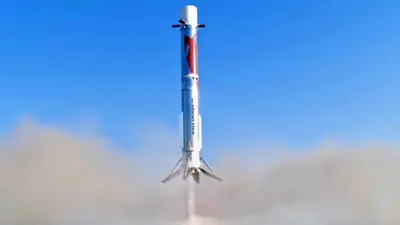
Is China catching up to the US and SpaceX on reusable rockets?
The new space race isn't about raw power or size — it's about who can reuse rockets reliably and affordably, a capability that could define which nations lead the push to Mars and beyond. SpaceX has set the benchmark with its Falcon 9 and Starship programs, but China is working hard to close the gap with its own reusable launch vehicles. Whether Beijing can match or challenge American dominance in this arena will have major implications for the future of deep space exploration and the global balance of power in space.
📰
NASA Jet Propulsion Lab
NASA Tests Dual Mode Propulsion CubeSat Ahead of Launch
NASA engineers at Marshall Space Flight Center have successfully completed a battery of environmental and physical tests on a new CubeSat featuring an innovative dual-mode propulsion system that ditches traditional volatile fuels in favor of a safer, more compact design. By combining multiple maneuvering capabilities into a single, streamlined system, this technology could dramatically reduce the complexity and risk associated with operating small spacecraft. For future Mars missions, where every kilogram and every safety margin counts, breakthroughs like this in efficient, reliable propulsion could prove essential for deploying orbital scouts, communication relays, and other small satellites around the Red Planet.
📰
Universe Today
JWST Finds Dynamic Structural Evolution in Chariklo’s Rings
The James Webb Space Telescope has made a fascinating discovery about Chariklo, a Centaur asteroid with its own ring system, revealing that those rings are actively changing and evolving over time. Centaurs are a unique class of small bodies whose unstable orbits carry them across the paths of the outer planets, making them valuable windows into the early dynamics of our solar system. Understanding how ring systems form and shift around smaller bodies like Chariklo could deepen our knowledge of planetary formation processes that ultimately shaped the inner solar system, including Mars itself.
📰
Universe Today
Carbon Rocks Deep Underground Could Hold the Evidence of Mars' Watery Past.
Where did all of Mars' carbon go? A new geochemical modeling study from JAXA and the University of Tokyo suggests that vast deposits of carbonate rocks may be locked deep beneath the Martian surface, potentially explaining a long-standing mystery about the planet's ancient, water-rich past. For future explorers, locating these hidden carbon stores could be key to understanding Mars' climate history and assessing its potential to have once supported life.
Space.com
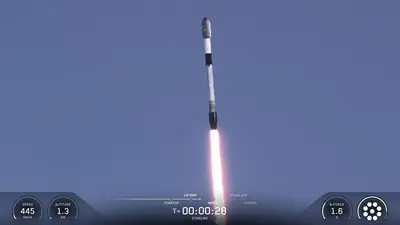
SpaceX launches Starlink satellites on 90th Falcon 9 flight of the year (video)
SpaceX continues its relentless launch cadence, completing its 90th Falcon 9 flight of 2026 with another batch of 24 Starlink satellites delivered to low Earth orbit. This rapid reusability and high launch frequency demonstrates the operational maturity that will be critical when Starship begins routine cargo and crew missions to Mars. Every successful Falcon 9 flight reinforces the reliability and cost-reduction strategies that underpin SpaceX's long-term vision of making humanity a multi-planetary species.
Space.com
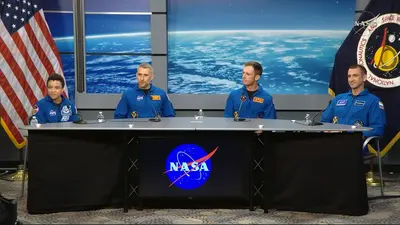
'A very busy mission': SpaceX on track to launch 4 astronauts to the ISS on Sept. 12
SpaceX and NASA are gearing up for the Crew-13 mission, set to launch four astronauts to the International Space Station on September 12. Officials and crew members offered a confident progress update during an early August media briefing, signaling the mission is on schedule. Continued crewed ISS missions like this one are essential for refining the long-duration spaceflight expertise and life support technologies that will ultimately be needed for future journeys to Mars.

Space.com
A 9,000-pound SpaceX rocket will crash into the moon tonight. Will you be able to see it?
A spent SpaceX Falcon 9 upper stage is set to make an uncontrolled crash landing on the moon, marking one of the more dramatic examples of space debris making its final descent. While the impact itself won't be directly visible from Earth, skygazers with the right equipment may catch a glimpse of a debris plume rising above the lunar limb. Events like this serve as a reminder of the growing need for responsible space debris management — a challenge that will only become more critical as humanity pushes toward long-duration missions to Mars and beyond.
Space.com
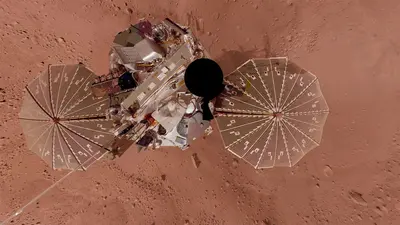
On this day in space! Aug. 4, 2007: NASA launches Phoenix Mars lander to Red Planet
On August 4, 2007, NASA launched the Phoenix Mars Lander, marking a historic first as it was designed to touch down in the Martian arctic regions — terrain no mission had explored before. Phoenix went on to confirm the presence of water ice just beneath the Martian surface, a landmark discovery with profound implications for the planet's habitability. For those dreaming of human settlement on Mars, that frozen water represents a potential lifeline for future colonists.
Space.com
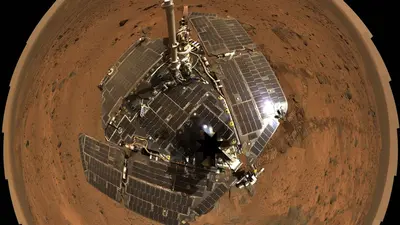
'Significant areas of Mars may have once been covered by water': Scientists find hidden clue in Spirit rover data
Researchers combing through old data from NASA's Spirit rover have made a surprising discovery — subtle mineral signatures that were originally missed now point to widespread ancient water activity on Mars. The presence of crystalline hematite and chemically altered magnetite suggests liquid water once shaped large portions of the Martian surface, far beyond what was previously understood. For future human missions, this is a tantalizing reminder that Mars holds secrets still waiting to be unlocked, and that even decades-old rover data can reshape our understanding of the planet's wet past.

Space.com
A SpaceX rocket will crash into the moon this week. Why is it on a collision course?
A spent SpaceX Falcon 9 upper stage is set to make an uncontrolled impact with the lunar surface early Wednesday morning, the result of a years-long drift through space after it lacked the fuel needed to return to Earth following a 2015 mission. While the crash is unintentional, scientists are treating it as a rare opportunity to study the resulting crater and ejecta, which could yield valuable data about the moon's subsurface composition. Understanding how to manage orbital debris and plan for controlled versus uncontrolled hardware disposal will be a critical lesson as humanity ramps up both lunar and eventual Mars mission infrastructure.

Space.com
This Week In Space podcast: Episode 221 — Starship Can Float?
SpaceX's Starship reached a remarkable milestone during Flight 13 when the vehicle survived reentry and remained intact enough to float — a stunning demonstration of the rocket's durability. Hosts Tariq Malik and Rick Jenet of the National Space Society break down what this means for the program on Episode 221 of This Week In Space. For Mars mission planners, a Starship that can withstand the brutal forces of reentry and stay structurally sound is a critical step toward the reliable, reusable vehicle humanity will need to make interplanetary travel a reality.
Space.com
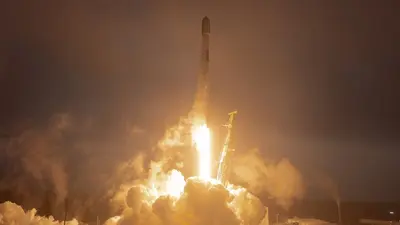
SpaceX launches 24 Starlink satellites to orbit from California (video, photos)
SpaceX successfully deployed another batch of 24 Starlink satellites into orbit via a Falcon 9 rocket launched from Vandenberg Space Force Base in California. The mission continues to expand the Starlink constellation, which aims to provide global broadband internet coverage. Reliable, high-bandwidth communication infrastructure developed through programs like Starlink could prove critical for future Mars missions, where maintaining consistent data links between Earth and the Red Planet will be essential for both crewed operations and remote science.
Space.com
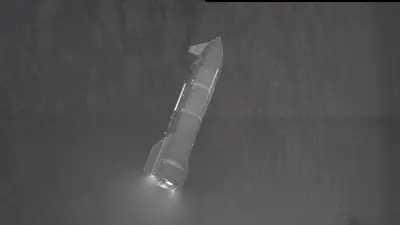
SpaceX's Starship seen in space by next-gen Starlink satellite (video)
SpaceX's latest Starlink V3 satellite has captured striking footage of Starship in orbit, offering a remarkable new perspective on the vehicle that could one day carry humans to Mars. The imagery highlights just how far SpaceX's integrated launch system has come, with both Starship and next-generation Starlink hardware now operating in tandem in space. As Starship continues to mature, each successful milestone brings the dream of interplanetary travel — and a permanent human presence on Mars — measurably closer.

Space.com
Watch SpaceX's Starship land at sea in these stunning new videos
SpaceX has released breathtaking new footage of Starship's upper stage executing a controlled splashdown in the ocean following its seventh integrated flight test on July 24, captured by drones and an innovative buoy-mounted camera. The successful soft landing demonstrates that Starship's reusability systems are maturing rapidly, a critical milestone for a vehicle designed to one day carry humans and massive cargo payloads to Mars. Each successful test brings us closer to the point where Starship can be refurbished and reflown at the pace needed to make large-scale Mars colonization economically viable.
📰
SpaceNews
Future of Crew Dragon weighs on commercial spaceflight industry
The long-term fate of SpaceX's Crew Dragon spacecraft is becoming a pressing question for the broader commercial spaceflight industry, as uncertainty grows around how much longer the vehicle will remain in active service. While SpaceX acknowledges the fleet still has meaningful life ahead, the company has stopped short of committing to a clear timeline — leaving partners and competitors alike to wonder what comes next. For Mars ambitions, the transition away from Crew Dragon toward next-generation vehicles like Starship will be a critical milestone in proving that humanity can sustain reliable, scalable crewed spaceflight beyond low Earth orbit.
📰
SpaceNews
SpaceX’s new Starfall program offers validation and competition for reentry startups
SpaceX's commercial reentry capsule program, Starfall, took its first test flight on June 23, signaling growing momentum in the microgravity research and manufacturing sector. The entry of SpaceX into this market both validates the commercial potential of reentry vehicles and raises the competitive stakes for smaller startups working in the same space. For Mars mission planners, advances in reentry technology are critically relevant, as reliable capsule return systems will be essential for bringing samples, cargo, and eventually crew safely back from the Red Planet.
📰
SpaceNews
NASA, SpaceX studying how to prevent future upper stage lunar collisions
As a Falcon 9 upper stage prepares to make an unplanned impact with the lunar surface, NASA and SpaceX are joining forces to develop protocols that could prevent similar incidents from happening again. The collaboration highlights a growing awareness that as deep space activity increases, responsible management of spent rocket hardware will become critical. For future crewed missions to Mars, establishing clear guidelines for upper stage disposal could help protect both lunar and Martian orbital environments from dangerous debris.
📰
SpaceNews
Hughes files for bankruptcy after GEO business loses ground to Starlink
SpaceX's Starlink continues to reshape the satellite internet industry, with EchoStar's Hughes Network Systems filing for bankruptcy after failing to compete with the low-Earth orbit constellation's speed, affordability, and expanding reach. The collapse of a once-dominant geostationary broadband provider underscores just how dramatically Starlink has disrupted the market. For Mars mission planners, this consolidation of space communications power within SpaceX is worth watching, as reliable, affordable connectivity infrastructure will be a critical foundation for any sustained human presence beyond Earth.