Mars News
The latest from NASA, ESA, SpaceX, and the global Mars exploration community.

Space.com
Falcon Heavy brings the heat | Space photo of the day for Sept. 2, 2026
SpaceX's Falcon Heavy roared to life on August 30, 2026, carrying NASA's Roman Space Telescope into the cosmos in a launch captured in a stunning photograph showcasing the rocket's raw power. While the Roman Space Telescope is focused on unraveling cosmic mysteries rather than Mars directly, advances in heavy-lift launch capabilities remain critical to humanity's long-term ambitions of sending crews and cargo to the Red Planet. Every successful Falcon Heavy mission builds confidence in the rocket systems that will underpin future deep space exploration.

Space.com
SpaceX Falcon 9 rocket launches Starlink satellites to orbit on its 35th flight
SpaceX continues to demonstrate the reliability of its reusable rocket technology, with a Falcon 9 first stage completing its impressive 35th flight by successfully delivering 27 Starlink satellites into orbit from California. This kind of booster reusability is central to SpaceX's long-term cost reduction strategy, which is essential for making ambitious crewed Mars missions economically viable. Every successful reuse milestone brings the dream of affordable, large-scale space transportation one step closer to reality.
Space.com
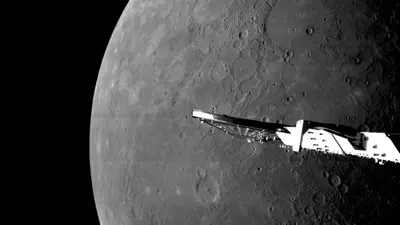
2 spacecraft will soon reach Mercury after 8 years in space. Here's what BepiColombo can do
After eight years of interplanetary travel, the BepiColombo mission is closing in on Mercury and preparing to separate into two independent spacecraft for science operations. The probe will investigate Mercury's geology, magnetic field, and composition, helping scientists better understand how rocky planets form and evolve in our solar system. Insights gained from studying Mercury, the least-explored inner planet, could deepen our understanding of planetary processes that are also relevant to Mars and future human exploration efforts.
📰
NASA Jet Propulsion Lab
Curiosity Blog, Sols 4988-4994: More New Tricks for an Old Dog
After 14 years roving the Martian surface, Curiosity is still making discoveries that leave scientists scratching their heads in the best possible way. During sols 4988–4994, the veteran rover encountered unusual geological features — including broad, shallow pits — that don't match anything previously documented in its long mission history. These kinds of unexpected finds remind us that Mars continues to hold surprises, and that understanding the planet's complex surface will be essential groundwork for any future human presence there.
📰
NASA Jet Propulsion Lab
Igniting Roman’s Journey
NASA's Nancy Grace Roman Space Telescope is now en route to its final orbit after a successful August 30 launch aboard a SpaceX Falcon Heavy rocket from Kennedy Space Center. The observatory will spend the next three months traveling roughly one million miles to its operational position, where it will begin probing some of the universe's deepest mysteries. While primarily a cosmology mission, advances in space telescope technology and long-duration mission operations contribute to the broader infrastructure of knowledge and capability that supports humanity's push toward Mars and beyond.
Wired Science
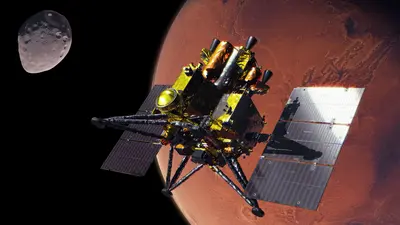
Japan Is Launching a Probe to Collect the First-Ever Samples From a Martian Moon
Japan is making a bold return to Mars exploration with the launch of its Martian Moons eXploration (MMX) mission, targeting Phobos for the first-ever sample retrieval from a moon of Mars. The mission is particularly exciting because scientists believe Phobos may harbor material ejected from the Martian surface itself, meaning the returned samples could offer indirect but valuable insights into Mars's geology and history. For those following humanity's long-term ambitions at the Red Planet, this mission represents another important step in building the scientific foundation needed for future exploration and eventual human presence.

Space.com
This NASA-funded 'Slingshot' spacecraft idea could map minerals on planets and moons across our solar system
NASA has funded a creative early-stage spacecraft concept called "Slingshot" that could revolutionize how we survey mineral resources across planetary bodies, including Mars's moons Phobos and Deimos. By developing new techniques for remote mineral mapping, this technology could give future mission planners a clearer picture of what raw materials are available in the Martian system before crews ever arrive. For long-term colonization efforts, knowing what minerals are accessible nearby could prove critical for in-situ resource utilization strategies.
Space.com
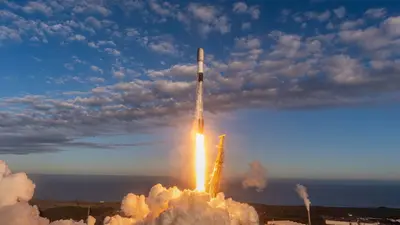
SpaceX Falcon 9 rocket launches 27 Starlink satellites, lands on ship at sea (video)
SpaceX successfully deployed 27 more Starlink satellites into orbit on September 6, launching from California's central coast aboard a Falcon 9 rocket that later landed on a drone ship at sea. The mission adds to SpaceX's ever-expanding broadband constellation, which continues to demonstrate the reusable rocket technology that will be essential for future Mars missions. Every successful Falcon 9 landing refines the precision landing capabilities that Starship — humanity's best hope for reaching the Red Planet — will ultimately depend on.

io9 / Gizmodo
xAI Loses Legal Battle Against Minnesota Nudification Law, War Rages on
This story has little direct connection to Mars exploration or colonization, but it does touch on the broader ecosystem surrounding SpaceX and Elon Musk's ventures. A Minnesota court has ruled against xAI, the artificial intelligence company linked to Musk, in a case challenging the state's law prohibiting AI-generated nonconsensual sexual imagery. The legal battle signals growing regulatory scrutiny of AI technologies developed within Musk's orbit, which could have downstream implications for how AI tools are governed across his interconnected companies, including SpaceX.

Space.com
SpaceX rocket taxi returns after Roman Telescope launch | Space photo of the day for Sept. 8, 2026
The Nancy Grace Roman Space Telescope lifted off aboard a SpaceX Falcon Heavy on August 30, marking another milestone in humanity's expanding reach into deep space. Equally impressive was the synchronized return of the Falcon Heavy's twin side boosters, touching down safely after deployment — a testament to the growing reliability of reusable rocket technology. For Mars mission planners, every successful Falcon Heavy flight and booster recovery builds the operational experience and cost efficiency that will be essential for the ambitious launches needed to send humans to the Red Planet.
Space.com
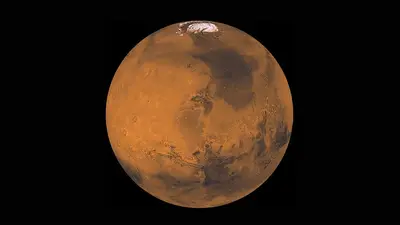
China on track to launch Mars sample-return mission in 2028: 'If accurate, this represents a Sputnik moment'
China's ambitious Tianwen 3 mission is moving steadily toward a 2028 launch window, with the goal of bringing actual Martian soil and rock samples back to Earth by 2031. If successful, it would mark a historic first and a major leap forward in our scientific understanding of the Red Planet. The milestone has drawn comparisons to Sputnik, signaling a new era of competition and urgency in deep space exploration.
📰
NASA Jet Propulsion Lab
Artemis II Crew at NASA Marshall
The four-person crew of NASA's Artemis II mission made a stop at Marshall Space Flight Center in Huntsville, Alabama, connecting face-to-face with the engineers and scientists who are helping make their journey possible. This kind of crew-workforce engagement is a vital part of building the human spaceflight pipeline that will eventually carry humans beyond the Moon and toward Mars. Keeping that collaborative spirit alive between astronauts and ground teams is essential as NASA works to develop the deep-space experience needed for future crewed Mars missions.
📰
NASA Jet Propulsion Lab
Curiosity Blog, Sols 4995-5001: 5,000 (Martian) Days on Mars
NASA's Curiosity rover has hit a remarkable double milestone, surpassing both 5,000 Martian days of operation and 1 kilometer of elevation climbed from its original landing site on the Martian surface. These achievements highlight the rover's extraordinary longevity and the wealth of geological data it continues to gather as it scales Mount Sharp. For future human missions to Mars, Curiosity's endurance and the terrain knowledge it's building serve as invaluable groundwork for planning where colonists might one day explore or settle.
📰
Universe Today
Tiny Salt Crevices Could Act As Miniature "Greenhouses" For Martian Microbes
A new study from researchers at ELTE Eötvös Loránd University suggests that tiny crevices within Martian salt crystals could simultaneously provide the liquid water and survivable temperatures that life requires — two conditions that rarely overlap on the Red Planet's harsh surface. The crystals would act as miniature greenhouses, potentially sheltering microbial life from Mars's extreme environment. This discovery could reshape how and where scientists focus their search for life, pointing future missions toward salt deposits as prime targets for investigation.

Space.com
Watch SpaceX launch classified mission for the US Space Force today
SpaceX is set to launch the classified USSF-153 mission for the U.S. Space Force, with a live stream available for those eager to watch. While the mission's details remain under wraps, continued collaboration between SpaceX and military space programs helps strengthen the infrastructure and expertise that will ultimately support deeper space ambitions. Every successful launch builds on the cadence and reliability that makes future crewed missions to Mars more achievable.
📰
Universe Today
A New Surface Atlas of Phobos Will Help JAXA's MMX Mission Collect its Samples
Japan's MMX spacecraft is set to launch next month on a mission to collect and return samples from Phobos, Mars's enigmatic inner moon. To support that effort, scientists have developed a detailed morphodynamic atlas of Phobos's surface, mapping its terrain to identify the best sampling sites and help researchers interpret what the collected material reveals about the moon's origins. Understanding Phobos up close is a critical stepping stone toward deeper Mars exploration, as the moon could one day serve as a staging point for human missions to the Red Planet.

io9 / Gizmodo
This NASA Color Trick Was Meant for Mars. Now It’s Unveiling Rock Art on Earth
A color-enhancement technique originally developed by NASA to analyze Martian terrain is now proving its worth a little closer to home, helping researchers reveal ancient rock art here on Earth. The method, known as decorrelation stretching, works by redistributing colors across a much wider visual spectrum rather than simply boosting contrast, making subtle differences in surface composition far easier to spot. Its successful application in archaeology underscores just how versatile and powerful this tool will be when future Mars missions use it to identify minerals, geological features, and potentially habitable environments on the Red Planet.

Space.com
Wavy alien dune fields stretch across Mars | Space photo of the day for Sept. 11, 2026
NASA's Mars Reconnaissance Orbiter has captured a stunning image of sweeping dune fields rippling across the Martian surface, offering a striking reminder of how dynamic and geologically active Mars truly is. These formations, shaped by Martian winds over vast timescales, provide scientists with valuable clues about the planet's atmospheric behavior and surface conditions. Understanding dune activity is also critical for future mission planners, as shifting sands could pose real challenges for rovers, landers, and eventual human settlements.
📰
NASA Jet Propulsion Lab
NASA’s SpaceX Crew-12 to Discuss Station Mission, Upcoming Return
The four-member Crew-12 team aboard the International Space Station will hold a public news conference on September 16th ahead of their return to Earth, offering a chance to hear firsthand accounts of life and work in orbit. The crew includes NASA astronauts Jessica Meir and Jack Hathaway, ESA astronaut Sophie Adenot, and Roscosmos cosmonaut Andrey Fedyaev. Missions like this continue to build the scientific foundation for long-duration human spaceflight, generating critical data on how the human body adapts to space — knowledge that will be essential for future crewed missions to Mars.
📰
Universe Today
What's Carving Active Gullies on Mars? It's Not Water
Mars has long puzzled scientists with its Earth-like gullies that appear to shift and change over time, despite the planet being far too cold and thin-atmosphered to support liquid water on its surface. New research from Apolline Leclef and colleagues at Université Paris-Saclay suggests the culprit is CO2 frost, which under the right conditions can transition into a fluid state capable of carving these features. For future Mars explorers and colonists, understanding these dynamic surface processes is critical for assessing terrain stability and identifying areas that may pose unexpected environmental hazards.
Space.com
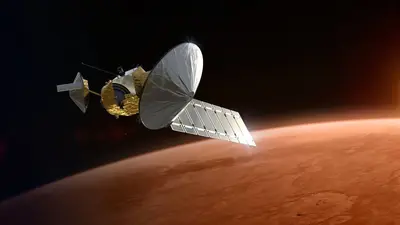
Rocket Lab protests NASA's decision to award Blue Origin $700 million Mars orbiter contract
Rocket Lab has formally challenged NASA's selection of Blue Origin to build a $700 million Mars orbiter, arguing the award violates Congressional eligibility guidelines. The protest adds uncertainty to an important mission that would expand humanity's understanding of the Red Planet. How NASA resolves this dispute could have lasting implications for how future Mars contracts are competed and awarded among emerging space companies.

Space.com
SpaceX launches 3 telecom satellites to orbit on 700th Falcon mission of all time (video)
SpaceX reached a major milestone this week, completing the 700th flight in the history of its Falcon rocket family by successfully delivering three SES O3b mPOWER communications satellites to orbit. The mission underscores the remarkable reliability and reusability that SpaceX has built into its launch infrastructure — qualities that will be absolutely critical when the company begins sending crewed missions to Mars. Every successful Falcon flight adds to the mountain of operational data and engineering confidence that will ultimately inform the development and cadence of Starship launches destined for the Red Planet.

Space.com
Is there a hidden 'Planet 9' in our solar system?
The tantalizing possibility of a hidden ninth planet lurking in the outer solar system has fascinated astronomers for over a hundred years, and the hunt continues today. If confirmed, Planet 9 would dramatically reshape our understanding of how the solar system formed and evolved — knowledge that could inform long-term deep space mission planning. For those with eyes on Mars and beyond, unraveling the mysteries of our cosmic neighborhood is a foundational step toward humanity's future as a spacefaring species.
📰
NASA Jet Propulsion Lab
NASA Welcomes Djibouti as Newest Artemis Accords Signatory
The Artemis Accords just got a little bigger, with Djibouti becoming the 72nd nation to sign on to the international framework governing peaceful and cooperative space exploration. As the eighth African country to join, Djibouti's participation signals the growing global commitment to the shared principles that will guide humanity's push toward the Moon, Mars, and beyond. A broader coalition of signatory nations strengthens the foundation of trust and coordination that any long-term Mars exploration effort will ultimately depend on.