Mars News
The latest from NASA, ESA, SpaceX, and the global Mars exploration community.
Space.com
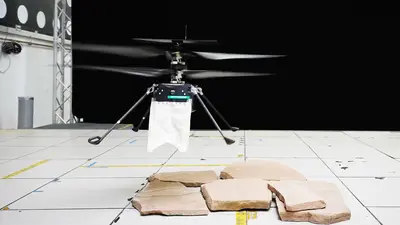
NASA's SkyFall Mars helicopters will wear tiny capes
These tiny capes carry some serious technology.
Space.com
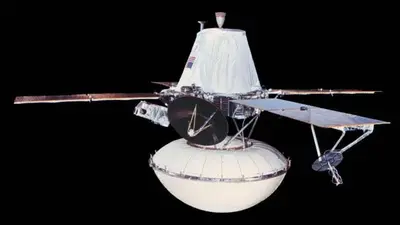
On this day in space! Aug. 7, 1980: NASA's Viking 1 Mars orbiter shuts down 4 years into a 90-day mission
On this day in 1980, NASA's Viking 1 orbiter finally went silent after an extraordinary four years circling Mars — far outlasting its original 90-day mission timeline. The spacecraft had already made history as part of the broader Viking program, which delivered the first successful landers to the Martian surface and transformed our understanding of the Red Planet. Viking 1's remarkable longevity remains a testament to the durability of space hardware and the kind of long-term commitment that future crewed missions to Mars will depend on.
New Scientist Space
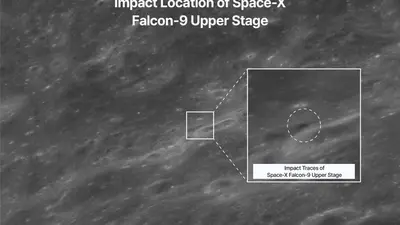
SpaceX crash site on moon revealed by South Korean orbiter
A rogue SpaceX rocket booster that slammed into the lunar surface this week has left its mark, with South Korea's KASA lunar orbiter capturing before-and-after images that confirm a fresh impact crater. The discovery is a reminder of how even uncontrolled hardware can yield valuable scientific data, as researchers can now study the crater's characteristics to better understand lunar geology and surface response to high-velocity impacts. For future Mars mission planners, such real-world impact data helps refine models for landing, debris management, and planetary protection protocols.
Space.com
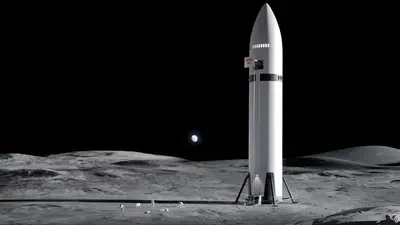
SpaceX serious about building factories on the moon: 'It’s going to happen,' Elon Musk says
Elon Musk doubled down on SpaceX's ambitions beyond Earth orbit during the company's inaugural quarterly earnings call, declaring that robotic lunar factories are not a distant dream but an inevitability. The moon would serve as a critical proving ground for the industrial and manufacturing techniques that will ultimately be needed to build sustainable infrastructure on Mars. Mastering the art of off-world production with minimal human labor could be the key that unlocks long-term colonization of the Red Planet.
Space.com
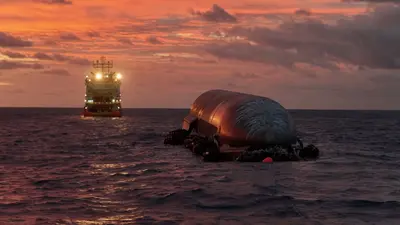
'Not looking good right now': Starship likely to be lost at sea 2 weeks after epic 13th test flight, Elon Musk says
SpaceX's ambitious attempt to recover Starship's upper stage from the ocean following its 13th test flight appears to be coming to an unsuccessful end, with Elon Musk warning the vehicle will likely be lost at sea. While disappointing, the recovery effort itself represents a bold new frontier in reusability ambitions for the rocket that SpaceX plans to one day carry humans to Mars. Each test flight and recovery attempt — successful or not — generates critical engineering data that edges the program closer to the reliable, reusable spacecraft Mars colonization will ultimately demand.
📰
Universe Today
SpaceX Junk Hits the Moon. Not a Good Sign
A spent SpaceX Falcon 9 upper stage recently made an unplanned impact with the Moon, highlighting a growing concern about debris cluttering cislunar space. As traffic to the Moon and beyond ramps up in preparation for future crewed missions, managing orbital and interplanetary junk becomes increasingly critical. For those planning long-duration missions to Mars, the lessons learned now about debris tracking and mitigation could prove essential to keeping spacecraft and crews safe.

Space.com
Don't miss the crescent moon shine close to the red light of Mars before dawn on Aug. 9
Early risers on August 9 are in for a treat, as a thin crescent moon glides close to the distinctively ruddy glow of Mars in the predawn sky, set against the backdrop of the constellation Taurus. This kind of naked-eye encounter serves as a reminder of just how tangible our planetary neighbor has become in the public imagination as missions continue to chart a course toward human exploration. Step outside before sunrise and take a moment to gaze at the world that humanity is actively working to one day call a second home.
📰
Ars Technica Space
The first self-driving vehicle on Mars has proven to be a smashing success
NASA's Perseverance rover has become a remarkably capable self-driver on Mars, handling roughly nine out of ten miles traveled under its own navigation without human input. This milestone demonstrates that autonomous systems can reliably guide vehicles across Mars's rugged, unpredictable terrain — a capability that will be absolutely essential for future crewed missions, where astronauts and robotic support vehicles will need to operate far faster and more independently than Earth-based controllers can manage. As we look toward human settlement, this kind of proven autonomy lays critical groundwork for the self-sufficient technology a Mars colony will depend on.
Wired Science
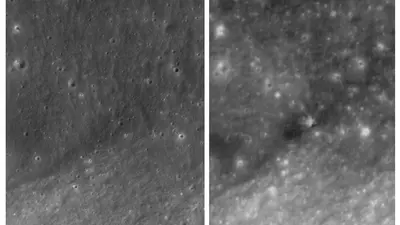
Here Are the First Images of the Crater Left on the Moon by SpaceX’s Rocket
South Korea's lunar orbiter has captured the first images of the crater created when a SpaceX Falcon 9 rocket stage accidentally struck the Moon earlier this year, offering scientists a rare opportunity to study an unplanned impact event. The crater, while relatively modest in size, provides valuable data on lunar surface composition and impact dynamics. Understanding how objects interact with the Moon's surface is directly relevant to future Mars mission planning, as engineers must account for similar risks when landing hardware on other worlds.
Space.com
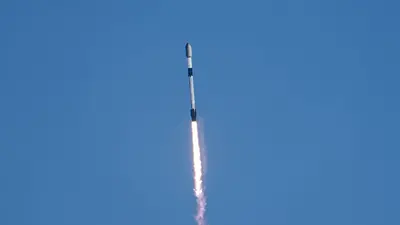
SpaceX launches 24 Starlink satellites to orbit from California (video)
SpaceX continues to expand its Starlink constellation with another successful Falcon 9 launch from the California coast, deploying 24 additional satellites into orbit. Growing the Starlink network strengthens the global communications infrastructure that will underpin future deep space missions, including eventual crewed expeditions to Mars. Every successful launch also refines SpaceX's rocket reusability and operational cadence — capabilities that will be essential when sending cargo and colonists to the Red Planet.
📰
Universe Today
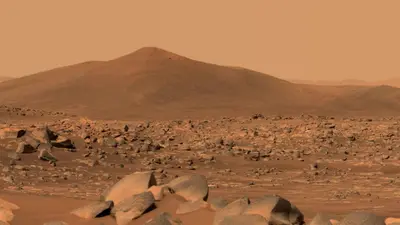
NASA's MAVEN Illuminates New Understanding of Auroras at Mars
NASA's MAVEN spacecraft has made a fascinating discovery about Martian auroras, revealing that some form through the same fundamental processes as the spectacular light shows we see on Earth. This surprising parallel between two very different planets — one with a global magnetic field, one without — deepens our understanding of how Mars interacts with solar wind and radiation. For future human explorers on the Martian surface, understanding these auroral events is more than just pretty science; it helps us better map the radiation environment that any long-term mission will need to contend with.
New Scientist Space
Earth extremophile can grow in near-Mars-like conditions
A hardy salt-loving microbe native to Earth's harshest environments, including the Dead Sea, has shown it can do more than merely survive in near-Martian conditions — it can actively grow. This finding raises intriguing possibilities about whether microbial life could exist just beneath the Martian surface, where conditions may be less hostile than the radiation-blasted exterior. For researchers searching for signs of life on Mars, this discovery narrows the gap between "possible" and "plausible."

io9 / Gizmodo
Why Is SpaceX’s Starship Still Adrift in the Indian Ocean?
SpaceX is facing unexpected challenges in retrieving a Starship upper stage currently drifting in the Indian Ocean following a test flight, with recovery efforts proving more difficult than anticipated. Getting hardware back for thorough post-flight analysis is critical to the iterative development process that SpaceX relies on to refine Starship — the rocket that remains humanity's best near-term hope for reaching Mars. Every delay in recovery potentially slows the engineering feedback loop needed to make the vehicle safe and reliable enough for crewed deep-space missions.
📰
Universe Today
The Odds of Finding Water on Mars
Finding water on Mars just got a lot less like a guessing game. Two new studies from the Planetary Science Institute have moved beyond simply asking whether buried ice might exist in Mars's mid-latitudes, and can now assign actual probability estimates — up to 64% in some locations — to where subsurface ice is likely hiding. For future crewed missions, which need to land near the equator but also need accessible water, this kind of predictive mapping could be a game-changer in selecting the right landing site.

Space.com
1-billion-year-old Mars meteorite found in Algeria is like nothing we've seen from the Red Planet
A remarkable Martian meteorite discovered in Algeria is giving scientists their first glimpse into a previously mysterious chapter of Mars geological history, bridging a nearly 2-billion-year gap in our understanding of the planet's evolution. The ancient rock, approximately 1 billion years old, represents a type of Martian material never encountered before, offering clues about volcanic and crustal activity during a period that has long puzzled researchers. For those invested in humanity's future on Mars, discoveries like this help paint a clearer picture of the planet's long-term stability and surface conditions — critical knowledge for planning permanent human settlements.
Space.com
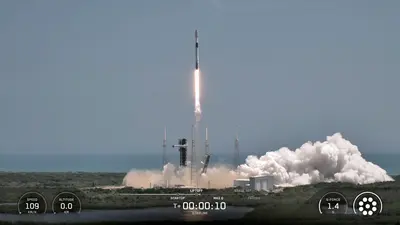
SpaceX launches 29 Starlink satellites to orbit from Florida (video, photos)
SpaceX continues to build momentum with another successful Starlink launch, sending 29 additional satellites into orbit from Florida's Space Coast. While Starlink primarily serves Earth-based internet connectivity, the growing constellation represents SpaceX's broader operational prowess and revenue stream that helps fund ambitious deep-space goals, including crewed missions to Mars. Each successful launch refines the reusable rocket technology and rapid-launch cadence that will be essential for sustaining a future Mars colony.
Space.com
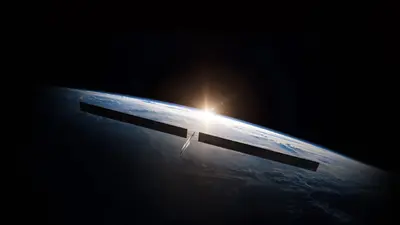
SpaceX wants to put 1 million AI satellites in orbit. What would that do to Earth's climate?
SpaceX has floated the idea of launching up to one million AI-powered satellites into orbit, but scientists are raising serious concerns about what that scale of space infrastructure would mean for Earth's atmosphere. Repeated rocket launches and the toxic metallic ash generated when old satellites burn up on reentry could significantly worsen air quality and accelerate climate change. For the Mars community, this is a critical reminder that the path to becoming a multi-planetary species must grapple honestly with the environmental costs of the launch economy that makes it all possible.
📰
SpaceNews
SpaceX increasing footprint in missile defense
SpaceX is rapidly expanding its role in U.S. missile defense, securing billions in Pentagon contracts for satellite networks, sensing systems, and launch services. The company's ability to design, build, and launch its own hardware under one roof gives it a significant competitive edge in winning these high-stakes government deals. A stronger financial and operational relationship with the Pentagon could ultimately provide SpaceX with additional resources and infrastructure that support its longer-term ambitions, including the development of Starship and the push toward Mars.
📰
NASA Jet Propulsion Lab
NASA Shares Station Research Today Supporting Moon, Mars Tomorrow
The International Space Station continues to serve as a critical proving ground for the technologies and biological research that will one day carry humans to Mars, with 2026 marking a particularly active year of scientific progress aboard the orbiting laboratory. Building on the momentum of NASA's historic Artemis II crewed lunar flyby in April — the first of its kind in over half a century — researchers are gathering invaluable data on how the human body and essential systems perform in deep space environments. Each experiment conducted on the ISS brings us one step closer to making a crewed Mars mission not just a dream, but a viable reality.
📰
NASA Jet Propulsion Lab
Curiosity Blog, Sols 4968-4974: Rock Climbing Towards the Discontinuity
NASA's Curiosity rover is scaling rocky terrain on Mount Sharp to investigate a major geological feature known as an "erosional supersurface," a ancient boundary in the rock record that marks a dramatic shift in Mars' depositional history. Understanding this transition could shed light on how Mars transformed from a world capable of sustained geological and potentially biological activity into the barren landscape we see today. For future human explorers, decoding these layered clues in Gale Crater brings us one step closer to understanding the full timeline of Martian habitability.
📰
Universe Today
Percy Sees An 'Eclipse' of Earth, From Mars
NASA's Perseverance rover has captured a rare and striking sight from the Martian surface: the moon Phobos passing directly in front of Earth as seen from Mars. While the image may appear subtle at first glance, its significance is profound — it's a reminder that Mars is a real place with its own sky, its own moons, and its own unique view of our home planet. For future Mars colonists, moments like this offer a glimpse of what everyday life on the Red Planet might look like, including watching Earth hang in the Martian sky like a distant star.

io9 / Gizmodo
‘All You Have to Do Is Be Bought’: A SpaceX-Tesla Merger Could Be Musk’s $1 Trillion Payout Cheat Code
A potential merger between SpaceX and Tesla is raising eyebrows, with analysts suggesting it could hand Elon Musk a staggering trillion-dollar payday by satisfying the lofty performance targets tied to his controversial compensation package. The deal would essentially use Tesla shareholders as a vehicle to turbocharge Musk's personal wealth, rather than relying on genuine market milestones. For Mars watchers, the financial maneuvering matters because SpaceX's ambitions — including Starship development and eventual crewed Mars missions — are deeply tied to Musk's ability to consolidate resources and maintain control over both companies.
Space.com
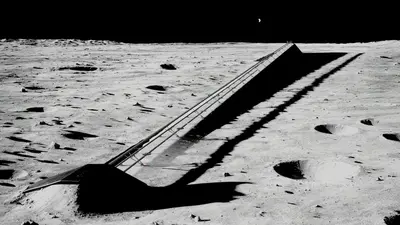
SpaceX could make $500 billion in 2028, Elon Musk says
Elon Musk is projecting that SpaceX could generate a staggering $500 billion in revenue by 2028, driven in part by the company's expanding pivot into artificial intelligence alongside its launch operations. For Mars exploration advocates, this financial outlook is significant — a massively profitable SpaceX would have far greater resources to accelerate Starship development and fund the ambitious interplanetary missions Musk has long championed. If those projections hold, the economic engine behind humanity's Mars ambitions could be running at full throttle within just a few years.
Space.com
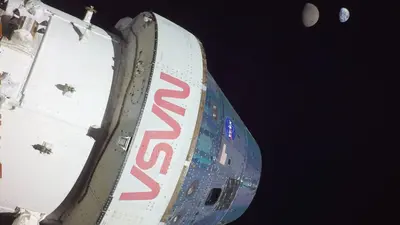
Radiation-shielding vest aced Artemis I lunar test, could protect astronauts on moon and Mars missions
A radiation-shielding vest called AstroRad successfully proved its worth during the uncrewed Artemis I lunar mission in 2022, offering a promising layer of protection for future human explorers venturing beyond Earth's protective magnetosphere. This is a significant development for Mars mission planning, as deep-space radiation remains one of the most serious health risks astronauts would face on a years-long journey to the Red Planet. Wearable shielding technology like this could be a practical, lightweight solution that complements spacecraft-level radiation protection and brings crewed Mars missions one step closer to reality.