Mars News
The latest from NASA, ESA, SpaceX, and the global Mars exploration community.
Space.com
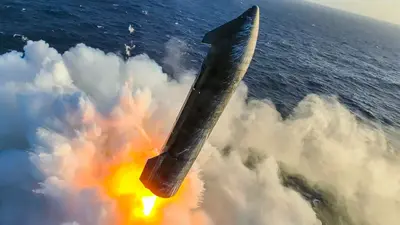
SpaceX wants to launch next Starship this month (and catch it, too), Elon Musk says in 1st earnings call since historic IPO
SpaceX is aiming to launch its next Starship test flight as soon as late August, with Elon Musk revealing ambitious plans that include attempting to catch the returning Super Heavy booster with the launch tower's mechanical arms. If successful, this milestone would mark a massive leap forward in the rapid reusability that SpaceX considers essential for making regular crewed missions to Mars economically viable. Each successful test brings humanity one step closer to the fully reusable, high-capacity transportation system that will be needed to establish a permanent human presence on the Red Planet.
Space.com
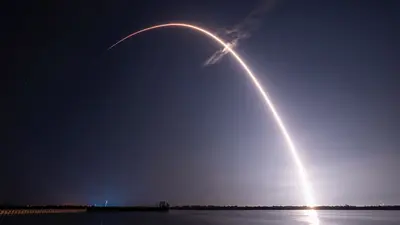
Watch SpaceX launch 3 giant BlueBird direct-to-cell satellites early on Aug. 5
SpaceX is set to loft three of AST SpaceMobile's massive BlueBird direct-to-cell satellites into orbit in the early hours of August 5, with live coverage available for space enthusiasts. These large satellites are designed to beam connectivity directly to standard mobile phones without specialized hardware, a capability that could eventually inform how future Mars colonies maintain robust communication networks across vast distances. The launch marks another step forward in pushing the boundaries of satellite-based global connectivity.
📰
SpaceNews
SpaceX to begin Starship orbital flights
SpaceX is gearing up to take a major leap forward with Starship, planning to deploy upgraded Starlink satellites into orbit as soon as the end of this month — marking the vehicle's transition from test flights to real operational missions. This milestone is significant for Mars exploration, as Starship is the very rocket NASA and SpaceX are counting on to one day carry humans and cargo to the Red Planet. Each successful orbital mission builds the flight heritage and reliability that will ultimately be required before anyone can attempt the journey to Mars.
📰
NASA Jet Propulsion Lab
NASA Will Attempt to Observe Rocket Part’s Lunar Impact
A spent SpaceX Falcon 9 upper stage is set to crash into the Moon on August 5, striking near the Einstein and Bell craters in an unplanned but scientifically valuable event. NASA and SpaceX are mobilizing ground-based telescopes and orbital assets to capture data from the impact, turning an otherwise routine piece of space debris into a rare research opportunity. The lunar data gathered could help scientists better understand surface composition and impact dynamics — knowledge that will prove useful as humanity plans long-term outposts on the Moon and, eventually, Mars.
📰
Universe Today
Scientist Constructs "Big Picture" of Mars Water from Rover Data
A fresh look at decades-old data from NASA's Spirit Rover has uncovered compelling evidence that ancient Mars was far wetter than previously thought. By analyzing years of mineralogical readings from the Mössbauer Spectrometer in aggregate rather than individually, scientist Paolo de Souza found consistent patterns pointing to minerals that could only have formed in the presence of liquid water. This discovery reminds us that the answers to Mars's watery past may already be hiding in existing datasets — and has exciting implications for understanding whether the Red Planet could once have supported life, and whether subsurface water sources might still exist for future explorers and colonists.

io9 / Gizmodo
SpaceX Stock Drops After First Earnings Call as Musk Fails to Woo Investors With AI Goals
SpaceX held its first-ever earnings call this week, but Elon Musk's pitch to investors fell flat after he revealed plans to funnel the majority of the company's $18.4 billion capital expenditure budget into AI development, using visions of robots on the Moon as justification. Investors pushed back, sending SpaceX's stock lower as many questioned whether the AI pivot aligns with the core aerospace mission that made the company valuable in the first place. For Mars exploration advocates, the tension is worth watching closely, as any significant shift in SpaceX's strategic priorities and spending could have real implications for the timeline of Starship development and future crewed missions to the Red Planet.
Space.com
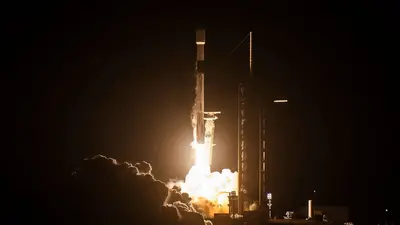
A SpaceX rocket just crashed into the moon. Now, the race is on to get a look at the impact site
A spent SpaceX Falcon 9 upper stage has made an uncontrolled impact with the lunar surface, striking at roughly seven times the speed of sound. Lunar orbiters are now maneuvering to photograph the resulting crater, which could yield valuable data about the moon's subsurface composition. Understanding how hardware behaves during unplanned lunar impacts is a useful reminder of the precision required for the controlled landings that future crewed Mars missions will depend on.
Space.com
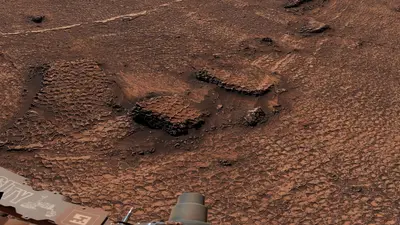
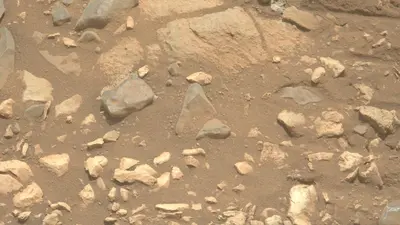
Curiosity rover spots mysterious honeycombs on Mars | Space photo of the day for Aug. 5, 2026
NASA's Curiosity rover has captured a fascinating image of honeycomb-patterned formations in Martian soil, adding another intriguing geological mystery to the Red Planet's complex landscape. These unusual structures could offer valuable clues about Mars' past environmental conditions, including ancient freeze-thaw cycles or chemical processes that shaped the surface over billions of years. Understanding formations like these helps scientists build a clearer picture of Mars' history — knowledge that will be essential for future human explorers and colonists navigating and utilizing the planet's terrain.
Space.com
Mars dust is toxic. How will future astronauts deal with it?
Mars dust poses a serious health threat to future astronauts, containing toxic compounds like silica and heavy metals that could cause long-term respiratory and cellular damage. As mission planners look toward crewed Mars exploration, developing effective dust mitigation strategies — from advanced suit filtration to habitat air purification — will be critical to crew safety. Solving this challenge is one of the less glamorous but most urgent hurdles standing between us and sustainable human presence on the Red Planet.
📰
Ars Technica Space
SpaceX spooks investors with debut earnings report
SpaceX made its long-awaited debut as a publicly reporting company, but the market's initial reaction was lukewarm — shares dipped in pre-market trading despite the company nearly doubling its quarterly revenues. For Mars advocates, the financials of SpaceX matter enormously, as the company's funding and investor confidence directly shape the pace of Starship development and future deep-space missions. Whether this early market jitter proves temporary or signals deeper concern could have real implications for the timeline of humanity's first crewed journey to the Red Planet.
New Scientist Space
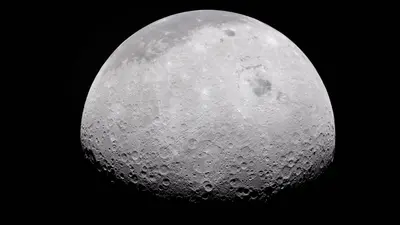
SpaceX rocket crashes into moon at 8700 kilometres per hour
A SpaceX rocket stage that had been drifting uncontrolled through space since its 2015 launch finally met its end, slamming into the lunar surface at roughly 8,700 kilometres per hour and carving out a brand-new crater. While the crash was unintentional, scientists are eager to study the impact site, as it offers a rare opportunity to analyze the moon's subsurface composition. For future Mars mission planners, the event serves as a reminder of the critical importance of debris management and trajectory control when operating hardware across vast interplanetary distances.
📰
NASA Jet Propulsion Lab
NASA’s Perseverance Captures Phobos and Earth
NASA's Perseverance rover has captured a remarkable composite image showing Earth appearing as a tiny bright dot passing behind the Martian moon Phobos, offering a stunning reminder of how far humanity's robotic ambassadors have traveled. Taken on Sol 1,907 using the rover's Mastcam-Z instrument, the seven-image sequence highlights the precision imaging capabilities that continue to make Perseverance an invaluable scientific asset on the Martian surface. For future Mars colonists, such imagery serves as both a navigational and emotional touchstone — a literal view of home from the world we are working toward inhabiting.
📰
NASA Jet Propulsion Lab
NASA’s Perseverance Rover Watches Earth Vanish Behind Martian Moon
NASA's Perseverance rover has achieved a remarkable first by capturing images of Earth disappearing behind Phobos, one of Mars' two small moons, marking the first time this type of occultation has ever been photographed from the Martian surface. The striking sequence shows our home planet as a faint point of light swallowed by the crescent shadow of the moon, offering a perspective no human has ever seen with their own eyes — yet. For future Mars colonists, moments like this will be part of everyday life, and milestones like this one help us better understand the orbital dynamics and sky conditions that those pioneers will one day experience firsthand.

io9 / Gizmodo
Despite Critic’s Warnings, Kids Online Safety Act Advances to Senate for Full Vote
This news item has no connection to Mars exploration, space travel, or colonization — it covers U.S. Senate legislation regarding children's online safety and Big Tech regulation. As such, it falls outside the editorial scope of missiontomars.cc and would not be an appropriate fit for the site's audience or mission.

io9 / Gizmodo
SpaceX Is Betting on Cybertrucks to Save NASA Astronauts in an Emergency
SpaceX has chosen Tesla's Cybertruck as its emergency crew transport vehicle at launch facilities, swapping out a ruggedized military vehicle previously used for astronaut evacuations. The electric pickup's durability and rapid response capabilities apparently make it a practical fit for getting crews to safety in the event of a launch emergency. While this is an Earth-based logistics decision for now, SpaceX's increasing reliance on Tesla technology reflects the kind of cross-platform innovation that could eventually influence how emergency vehicles and transport solutions are designed for future Mars surface operations.

Wired Science
Welp, Nobody Saw SpaceX’s Falcon 9 Rocket Crash Into the Moon
A spent SpaceX Falcon 9 rocket booster made an uncontrolled impact with the Moon, and while no one caught it on camera, scientists confirmed the collision through instrument readings. Lunar orbiters are expected to photograph the crash site in the coming days, offering a rare close-up look at what happens when hardware meets the lunar surface at high velocity. For future Mars mission planners, this serves as a timely reminder of the challenges involved in managing space debris and executing precise, controlled landings far from Earth.
Space.com
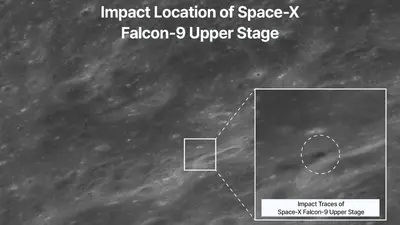
SpaceX rocket's impact crater on the moon spied by Korean lunar orbiter (photos)
South Korea's Danuri lunar orbiter has captured striking images of the fresh crater left behind after a SpaceX rocket booster crashed into the moon's surface on August 5th. The impact site offers scientists a rare, real-time opportunity to study how rocket hardware behaves upon high-velocity lunar collision, yielding data that could inform safer disposal and landing strategies for future missions. As humanity ramps up plans for sustained lunar and eventually Martian operations, understanding how hardware interacts with low-gravity, airless surfaces becomes increasingly critical for mission planning and safety.

Space.com
Mars rover watches Earth disappear behind Phobos | Space photo of the day for Aug. 6, 2025
NASA's Curiosity rover has captured a rare and stunning moment on Mars: watching Earth slip behind Phobos, the planet's small, potato-shaped moon, as seen from the Martian surface. Pulling off this shot required careful timing, since Phobos zips across the Martian sky three times daily while Earth's position shifts constantly. For future Mars colonists, moments like this serve as a vivid reminder that home will still be visible in the night sky — even if it's nearly 100 million miles away.
Space.com
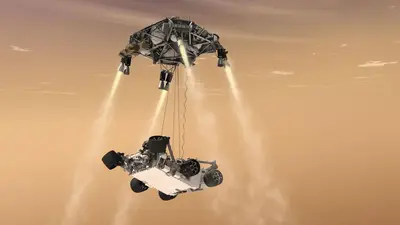
On this day in space! Aug. 6, 2012: NASA lands huge Curiosity rover on Mars with a rocket-powered sky crane
Thirteen years ago today, NASA pulled off one of the most audacious landings in space exploration history, gently lowering the car-sized Curiosity rover onto Mars using a never-before-tried rocket-powered sky crane system. The successful touchdown proved that humanity could safely deliver large, sophisticated payloads to the Martian surface — a critical capability that paved the way for even heavier missions in the future. Curiosity's legacy continues to inform the engineering and ambition behind plans to one day land humans on the Red Planet.
Space.com
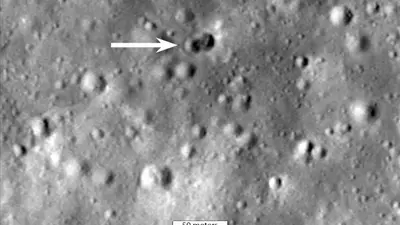
SpaceX’s Falcon 9 wasn't the first rocket to crash into the moon. Here's a rundown
A SpaceX Falcon 9 upper stage made an uncontrolled impact on the lunar surface on August 5th, joining a surprisingly long list of rockets and spacecraft that have crashed into the Moon since the Space Age began. From the Soviet Luna 2 to various mission debris over the decades, the Moon has quietly served as a graveyard for spent hardware. As humanity plans more ambitious missions to both the Moon and Mars, understanding and managing rocket debris will become an increasingly important part of responsible deep space exploration.
📰
SpaceNews
Lessons for the future of NASA Mars exploration from a 1970s mission
Half a century after Viking 1 made history as the first spacecraft to successfully land on Mars, NASA is looking back at the lessons that groundbreaking 1970s mission still holds for the future of Red Planet exploration. The Viking program demonstrated both the enormous potential and the daunting challenges of sending robotic missions to Mars, laying a foundation that continues to inform how we approach the planet today. As humanity sets its sights on eventual crewed missions and permanent settlements, understanding what Viking taught us about Martian conditions and mission design remains more relevant than ever.
📰
SpaceNews
Redwire to fly dedicated Starfall mission for microgravity research
Redwire is expanding its space biotech capabilities by securing a dedicated mission on SpaceX's Starfall reentry vehicle to conduct microgravity research focused on pharmaceutical and biological applications. This kind of work is critical for future Mars missions, as understanding how drugs and biological systems behave in low-gravity environments will be essential for keeping astronauts healthy during long-duration deep space travel and surface operations. Advances in space-based pharmaceutical research could ultimately support the development of on-demand medical solutions for a self-sufficient Mars colony.
📰
NASA Jet Propulsion Lab
NASA’s SkyFall Helicopters at Work (Artist’s Concept)
NASA has unveiled an artist's concept showcasing three SkyFall helicopters working in concert above the Martian surface, using advanced radar and near-infrared imaging systems to probe both the ground beneath and the terrain above. The helicopters' large antennas would scan subsurface layers while their sensors capture detailed data on the regolith — the loose rock and dust that future colonists would need to understand and work with. This kind of multi-helicopter, multi-sensor approach could dramatically accelerate our ability to map and analyze Mars at scale, laying critical groundwork for human settlement.
📰
NASA Jet Propulsion Lab
I Am Artemis Tom Percy
Tom Percy, systems engineering and integration manager for NASA's Human Landing System Program, plays a crucial behind-the-scenes role in making the Artemis missions a reality. By coordinating with commercial partners like SpaceX, Percy helps ensure the technical pieces come together for returning humans to the Moon — a stepping stone that will directly inform how we one day land crews on Mars. His work represents the kind of methodical, systems-level thinking that will be essential as humanity builds toward its first crewed Mars missions.