Of all the obstacles standing between humanity and a permanent presence on Mars, radiation is the one that cannot be seen, cannot be felt, and cannot be fully escaped. A rocket failure is dramatic and obvious. Radiation is patient. It accumulates silently in the body over months and years, and it is arguably the single hardest problem a Mars mission has to solve.
Two Kinds of Radiation, Both Dangerous
Astronauts headed for Mars face two distinct threats. The first is galactic cosmic radiation — a constant sleet of high-energy particles from beyond the solar system, moving so fast and carrying so much energy that ordinary shielding does little to stop them. The second is solar particle events: sudden, violent bursts of radiation flung out by the Sun during flares and coronal mass ejections. A severe solar storm can deliver a dangerous dose in a matter of hours.
Earth protects its inhabitants from both with two invisible shields: a strong global magnetic field and a thick atmosphere. Mars has neither in any meaningful amount. Its magnetic field died billions of years ago, and its atmosphere is too thin to absorb much of what arrives. On the Martian surface, there is nowhere near the natural protection that every human has enjoyed for the entire history of the species.
The Journey Is Part of the Problem
The danger does not begin at Mars — it begins the moment the spacecraft leaves Earth's protective magnetic bubble. The transit to Mars can take the better part of a year, and for all of it the crew is exposed in deep space with only the hull of their vehicle between them and the cosmic background. The round trip, plus time on the surface, means a mission measured in years of cumulative exposure. The health risks compound over that time: elevated long-term cancer risk, potential effects on the central nervous system, and damage to cardiovascular tissue.
How to Survive It
There is no perfect shield, but there are workable strategies, and they shape nearly every aspect of mission design. Mass is the simplest defense: water, food, and even human waste can be arranged around sleeping quarters to soak up incoming particles. Some designs route the ship's water supply into the walls of a small storm shelter where the crew can retreat during a solar particle event.
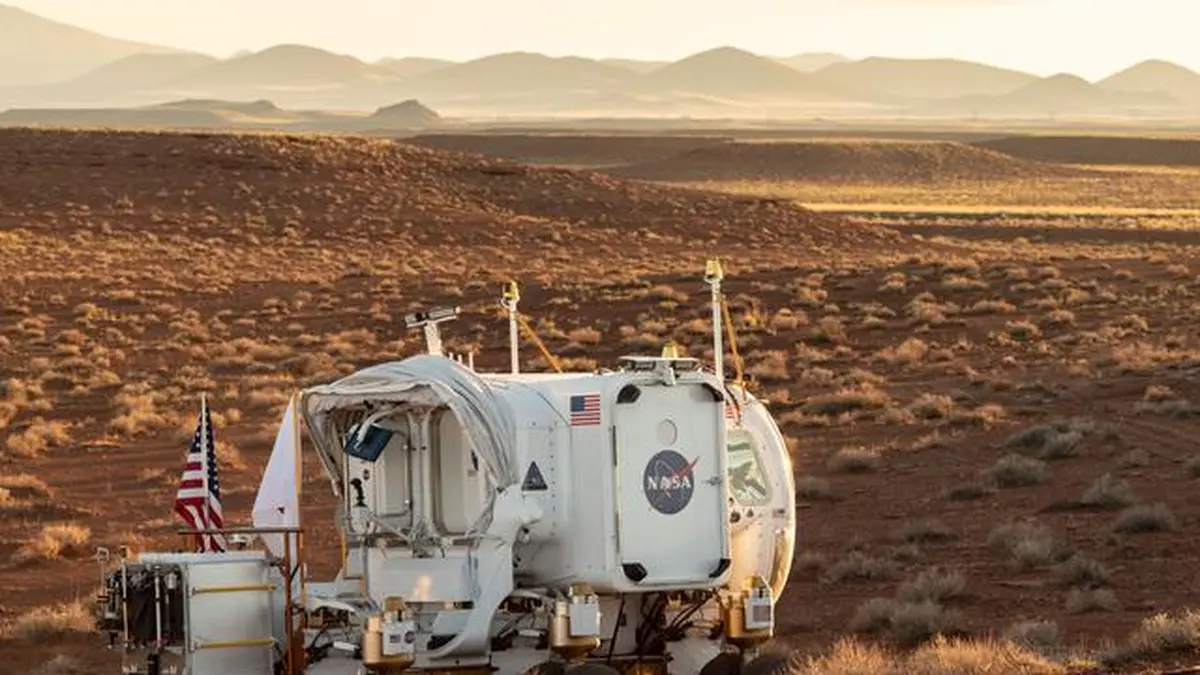
On the surface, the Martian environment itself offers protection to those willing to use it. Piling regolith — Martian soil — over a habitat provides cheap, abundant shielding. Building into the sides of cliffs or beneath the surface goes further still. Some of the most promising settlement concepts place the first Martian homes underground or inside lava tubes, natural caverns that block radiation as effectively as meters of engineered shielding. The same protective thinking extends to surface suits, which must balance shielding against the need to remain light enough to work in.
Radiation will not be defeated on Mars so much as managed — through smart engineering, careful mission timing, and a willingness to live partly beneath the surface of a world that offers no sky-shield of its own.
Frequently Asked Questions
Why is radiation worse on Mars than on Earth?
Earth shields its surface with a strong global magnetic field and a thick atmosphere. Mars lost its magnetic field billions of years ago and has an atmosphere far too thin to absorb most incoming radiation, leaving its surface much more exposed.
What are the two main types of space radiation?
Galactic cosmic radiation is a constant stream of high-energy particles from outside the solar system. Solar particle events are sudden bursts of radiation from solar flares and coronal mass ejections that can deliver a dangerous dose in hours.
How can astronauts be protected from radiation on Mars?
Strategies include using mass such as water and supplies as shielding, building dedicated storm shelters for solar events, covering habitats with Martian regolith, and living underground or inside lava tubes where the surface blocks most radiation.