A Wet World, Long Ago
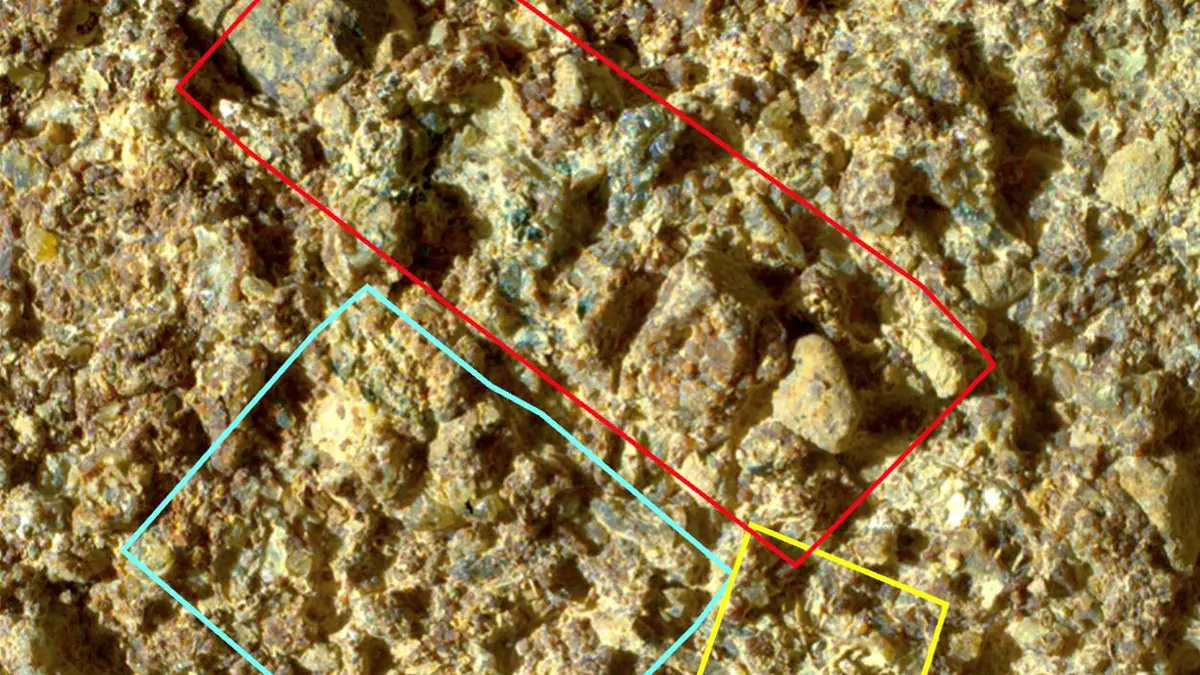
About 3.5 to 4 billion years ago, Mars looked remarkably different. Liquid water flowed across its surface, carving river valleys, filling crater lakes, and possibly pooling into a shallow northern ocean covering roughly one-third of the planet. Mineral evidence collected by rovers — including jarosite and hematite identified by Opportunity, and sulfate-rich layers mapped by Curiosity in Gale Crater — confirms that standing water persisted for thousands to millions of years in some regions.
Then something went catastrophically wrong. Over hundreds of millions of years, Mars shed nearly its entire atmosphere and surface water, transforming from a world that might have supported microbial life into the freeze-dried desert we observe today. Understanding exactly how that happened is one of planetary science's most important open questions.
The Magnetic Field Collapses
The story of Mars losing its water begins underground. Like Earth, early Mars likely generated a global magnetic field through convection in its molten iron core — a churning dynamo that wrapped the planet in a protective magnetosphere. That field deflected energetic particles streaming from the Sun before they could strip away the atmosphere.
Sometime around 4 billion years ago, Mars's dynamo shut down. The planet is smaller than Earth — roughly half the diameter and about 10 percent of the mass — which meant its interior cooled more rapidly. Once convection in the core slowed and stopped, the global magnetic field collapsed. Mars was left exposed.
Evidence for this early magnetic era survives in the ancient southern highlands, where orbiting spacecraft like Mars Global Surveyor detected magnetized stripes in the crust — fossil remnants of a field that no longer exists. The younger volcanic plains of the northern lowlands show almost no magnetization, indicating those regions formed after the dynamo failed.
Solar Wind Stripping
With its magnetic shield gone, Mars faced the full force of the solar wind: a continuous stream of charged particles — mostly protons and electrons — flowing outward from the Sun at roughly 400 kilometers per second. Without a magnetosphere to deflect them, these particles could interact directly with the upper atmosphere.
NASA's MAVEN spacecraft, which entered Mars orbit in September 2014, was designed specifically to measure this process. Its findings were striking. MAVEN detected ions being stripped from the Martian atmosphere at a rate of roughly 100 grams per second under normal solar conditions — and that rate spiked dramatically during solar storms. Scientists estimate that over billions of years, this sputtering and ion escape has removed the equivalent of a substantial fraction of Mars's original atmosphere.
Without atmospheric pressure above roughly 6.1 millibars — which is approximately what Mars has today at its mean surface elevation — liquid water cannot exist at the surface. Water either freezes or evaporates directly into vapor in a process called sublimation. The atmospheric stripping didn't just remove gas; it removed the conditions necessary for liquid water to persist.
Volcanic Activity: A Brief Reprieve
Mars's volcanic history complicates this picture. The enormous shield volcanoes of the Tharsis region — including Olympus Mons, the tallest volcano in the solar system at roughly 22 kilometers high — erupted on a massive scale, releasing enormous quantities of carbon dioxide, water vapor, and sulfur dioxide into the atmosphere. These eruptions may have periodically thickened the atmosphere enough to allow liquid water to flow again, at least temporarily.
But Tharsis volcanism is itself part of the problem. The sheer mass of the Tharsis bulge — estimated at around 3 × 10²⁶ grams — may have destabilized the planet's rotation and contributed to long-term climate shifts. And as volcanic activity declined over billions of years, there was no ongoing replenishment to offset the continuous atmospheric losses to space.
What the Landscape Remembers
Even as Mars dried out, it left a geological record. NASA's Mars Reconnaissance Orbiter has imaged thousands of ancient valley networks branching across the southern highlands — structures that closely resemble river drainage systems on Earth. Outflow channels near the Chryse Planitia region appear to have been carved by catastrophic floods, potentially released when subsurface ice melted suddenly due to volcanic heating or impact events.
Curiosity's traverse through Gale Crater revealed rhythmically layered sedimentary rocks consistent with deposition in a lake environment that persisted for potentially millions of years. Jezero Crater, where NASA's Perseverance rover landed in February 2021, was selected precisely because orbital data revealed it once held a lake fed by river delta systems — an ancient environment rich with potential biosignatures.
What This Means for Life
The window of habitability on Mars was real, even if it eventually closed. The relevant question is whether it lasted long enough — and offered stable enough conditions — for life to emerge.
On Earth, microbial life appeared within a few hundred million years of the planet's formation. If a similar timeline applied on Mars, life may have had time to gain a foothold before conditions deteriorated. Subsurface environments — insulated from radiation and retaining residual liquid water from geothermal heat — may have remained habitable far longer than the surface.
Perseverance is collecting rock cores from Jezero Crater that will be returned to Earth by a joint NASA-ESA campaign currently planned for the early 2030s. Those samples may finally tell us whether Mars's ancient wet period produced anything more than geology.
Frequently Asked Questions
When did Mars have liquid water?
Mars had liquid water on its surface roughly 3.5 to 4 billion years ago, when rivers, crater lakes, and possibly a shallow northern ocean existed. Mineral evidence from rovers confirms standing water persisted for thousands to millions of years in some regions.
Why did Mars lose its water?
Mars lost its water primarily because its global magnetic field collapsed around 4 billion years ago when its core cooled. Without that shield, the solar wind gradually stripped away the atmosphere, and once atmospheric pressure dropped too low, liquid water could no longer persist at the surface.
Could there still be life on Mars?
Possibly. Mars's early wet period may have lasted long enough for microbial life to emerge, and subsurface environments insulated from radiation may have stayed habitable far longer than the surface. Samples being collected by Perseverance aim to help answer this.