Japan Launches MMX: A Mission to Mars' Mysterious Moons
Japan launched its most ambitious interplanetary mission to date today, sending the Martian Moons eXploration (MMX) spacecraft on a journey to investigate Phobos and Deimos — the two small, enigmatic moons orbiting Mars. Developed by the Japan Aerospace Exploration Agency (JAXA) with significant contributions from NASA, ESA, and CNES, MMX represents a major leap forward in our understanding of the Martian system and the early solar system itself.
The spacecraft lifted off aboard a H3 launch vehicle from the Tanegashima Space Center in Japan. If all goes according to plan, MMX will arrive at Mars in 2026, spend approximately three years studying both moons in detail, and return a surface sample from Phobos to Earth by around 2031. It would be the first sample return mission from a Martian moon — and potentially one of the most scientifically significant returns since Apollo.
Why Phobos and Deimos?
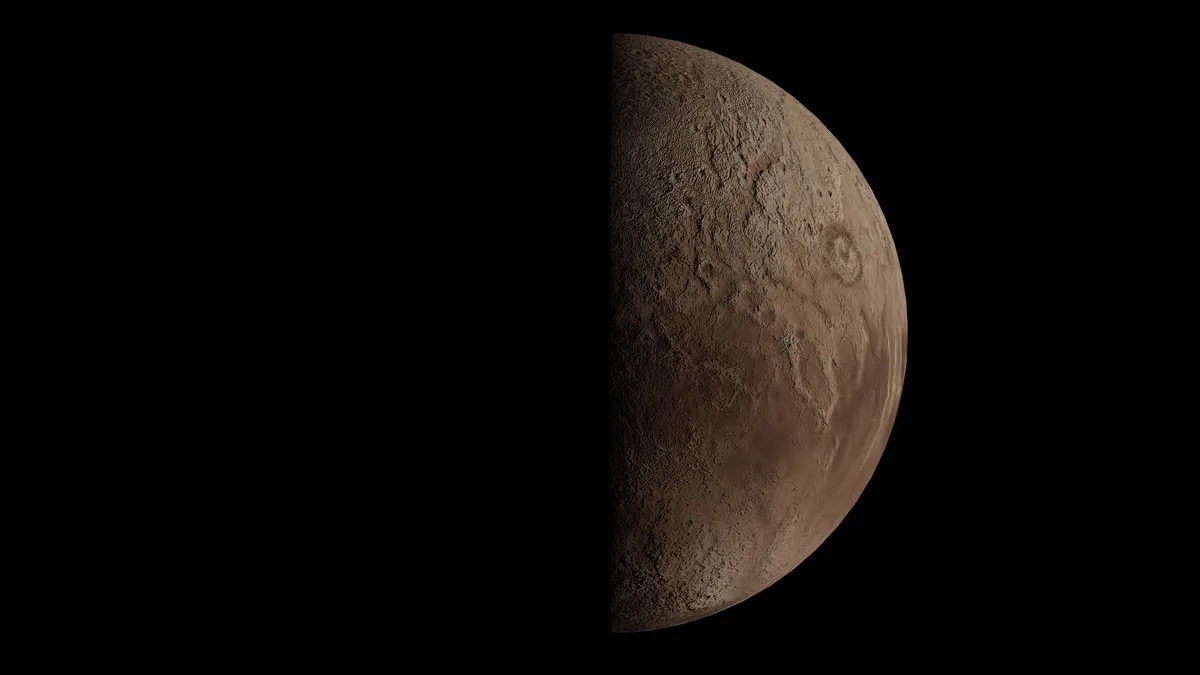
At first glance, Phobos and Deimos seem like unlikely destinations for such an ambitious mission. They are small — Phobos measures just 27 × 22 × 18 kilometers, while Deimos is even tinier at roughly 15 × 12 × 11 kilometers. Neither has an atmosphere. Neither has ever had a spacecraft land on it successfully. And yet, these two lumpy, cratered bodies hold answers to questions that planetary scientists have debated for decades.
The central mystery is their origin. There are two leading hypotheses:
- Captured asteroids: Phobos and Deimos may be primitive, carbon-rich asteroids from the outer main belt that were gravitationally captured by Mars billions of years ago. Their dark, low-albedo surfaces are consistent with D-type or C-type asteroids.
- Giant impact remnants: Alternatively, a massive collision between Mars and a large body early in the solar system's history could have ejected debris that later coalesced into the two moons — similar to the leading theory for how Earth's Moon formed.
The two scenarios predict fundamentally different compositions. A captured asteroid would be rich in volatile compounds and anhydrous silicates consistent with outer solar system material. An impact-formed moon would show a mixture of Martian crustal material and impactor rock. A sample from Phobos should settle this debate conclusively.
The Science of MMX: Seven Instruments, One Big Question
MMX carries a sophisticated suite of scientific instruments designed to characterize the moons from orbit before the spacecraft ever touches down. Each instrument targets a specific aspect of the moons' composition, structure, and environment.
Key Instruments Aboard MMX
- TENGOO (Telescopic Nadir imager for GeOmOrphology): A high-resolution optical camera for detailed imaging of surface morphology and geology.
- OROCHI (Optical RadiOmeter composed of CHromatic Imagers): A wide-angle, multi-band camera to map surface color and spectral properties across both moons.
- MIRS (MMX InfraRed Spectrometer): Developed with CNES, this near-infrared spectrometer will identify minerals and hydrated compounds on the surface — a key discriminator between the two origin hypotheses.
- MacrOmega: A hyperspectral imager also contributed by CNES, providing detailed mineralogical mapping in the near- and mid-infrared.
- MEGANE (Mars-moon Exploration with GAmma rays and NEutrons): Contributed by NASA/APL, this gamma-ray and neutron spectrometer will measure elemental abundances — including carbon, hydrogen, silicon, iron, and others — directly tied to distinguishing asteroid material from Martian rock.
- CMDM (Circum-Martian Dust Monitor): Measures dust particles in the Martian environment, characterizing the ring of material thought to be shed by Phobos and Deimos.
- MSA (Mass Spectrum Analyzer): Analyzes ions and neutral particles in the vicinity of the moons and the broader Martian magnetospheric environment.
Together, these instruments will produce the most complete portrait of Phobos and Deimos ever assembled — well before any sample is collected.
Touching Down on Phobos: The Sample Collection Plan
After an extended orbital study phase, MMX will attempt to land on Phobos — an extraordinarily difficult maneuver given the moon's weak gravity (less than one-thousandth of Earth's) and irregular shape. The surface of Phobos is covered in a deep layer of regolith, and its largest crater, Stickney (approximately 9 kilometers in diameter), dominates one hemisphere.
MMX is designed to collect at least 10 grams of surface and subsurface material from Phobos using a coring sampler. The mission will also carry a small rover — developed jointly by CNES and DLR (the German Aerospace Center) — that will be deployed onto the Phobos surface prior to MMX's own touchdown. This rover, roughly the size of a shoebox, will measure surface properties including temperature, hardness, and grain characteristics to help select the safest and most scientifically valuable landing site.
The collected sample will be sealed inside a Sample Return Capsule (SRC), which will be ejected from the spacecraft and return to Earth for recovery, tentatively in 2031. Laboratories around the world are already preparing to analyze the material, which could include pristine solar system material never before examined up close.
MMX and the Bigger Picture: Mars Science from a Moon's Perspective
One of the more unexpected scientific payoffs of MMX may be what it reveals about Mars itself. Phobos orbits just 6,000 kilometers above the Martian surface — closer than any other known moon to its parent planet. At that distance, ejecta from meteor impacts on Mars can reach Phobos, meaning the moon's surface likely contains fragments of Martian rock that were blasted skyward and deposited over billions of years.
Scientists estimate that a small but detectable fraction of Phobos surface material — perhaps around 0.1% — could be of Martian origin. This would make a Phobos sample a de facto partial sample of Mars, providing information about Martian geology and even potentially about the ancient Martian environment without the full complexity of a Mars surface mission. MEGANE's elemental mapping is specifically designed to look for these signatures.
MMX will also spend time in orbit around Mars itself, observing the planet's moons from a range of distances and conducting observations of the Martian atmosphere and dust environment. This broader orbital context adds value to the mission far beyond the sample return alone.
International Collaboration: A Truly Global Mission
While MMX is a JAXA-led mission, it exemplifies the kind of international scientific partnership that has come to define modern planetary exploration.
- NASA contributed the MEGANE instrument, which represents one of the agency's highest-priority contributions to an international planetary mission in recent years. NASA also provides Deep Space Network (DSN) support for communications.
- CNES (the French space agency) contributed the MIRS spectrometer and co-developed the MacrOmega imager, as well as playing a key role in the Phobos rover.
- DLR (German Aerospace Center) partnered with CNES on the small surface rover.
- ESA provides tracking support through its ground station network.
This collaboration reflects both the scientific weight of the mission and its cost — MMX is one of the most expensive interplanetary missions JAXA has undertaken, with the total mission budget estimated at approximately 51.4 billion yen (roughly $350 million USD at time of budget approval).
JAXA's Track Record: From Hayabusa to Hayabusa2 to MMX
Japan has earned its reputation as a world leader in small-body sample return missions. The original Hayabusa spacecraft returned samples from near-Earth asteroid Itokawa in 2010 — the first asteroid sample return in history, achieved despite numerous technical setbacks. Hayabusa2 then delivered approximately 5.4 grams of material from asteroid Ryugu to Earth in December 2020, yielding a scientific treasure trove that included amino acids, hydrated silicates, and organic compounds.
MMX is the natural next step in this lineage, but on a grander scale. The target is farther away, the object is larger and more complex, and the sample return timeline spans nearly a decade. The mission builds directly on technologies and lessons from the Hayabusa program, including the sampler design, re-entry capsule, and autonomous proximity operations needed to navigate near a low-gravity body.
What Happens If MMX Succeeds?
A successful MMX mission would be transformative for planetary science in several ways:
- It would definitively answer the origin question for Phobos — and likely Deimos by extension — resolving one of the longest-standing debates in Mars science.
- It would provide the first returned sample from the vicinity of Mars, enabling isotopic, mineralogical, and organic analyses impossible from orbit or remote sensing.
- It would validate Phobos and Deimos as potential waypoints for future human missions to Mars. The moons' low gravity and stable orbital positions make them attractive staging points for crewed operations in the Martian system — a concept studied seriously by both NASA and JAXA mission architects.
- It would strengthen the case for future dedicated Martian moon missions, potentially including landers or even a crewed visit.
Looking Ahead: Key MMX Mission Milestones
For those following the mission from launch day forward, here is the approximate timeline of major events:
- 2024: Launch and early cruise phase; instrument checkout
- 2025: Deep space cruise; trajectory correction maneuvers
- 2026: Mars Orbit Insertion; begin orbital science phase around Phobos and Deimos
- 2026–2028: Extended orbital observation; rover deployment and Phobos surface operations
- 2028: Sample collection from Phobos surface; departure from Mars
- 2031: Sample Return Capsule re-enters Earth's atmosphere; recovery and curation
Today's launch marks only the beginning of what promises to be one of the most scientifically rich missions of the 2020s. As MMX begins its long journey outward, it carries with it not just instruments and hardware, but decades of accumulated expertise and a set of questions that have waited long enough for answers.
We'll be tracking every milestone here at missiontomars.cc. Stay tuned.