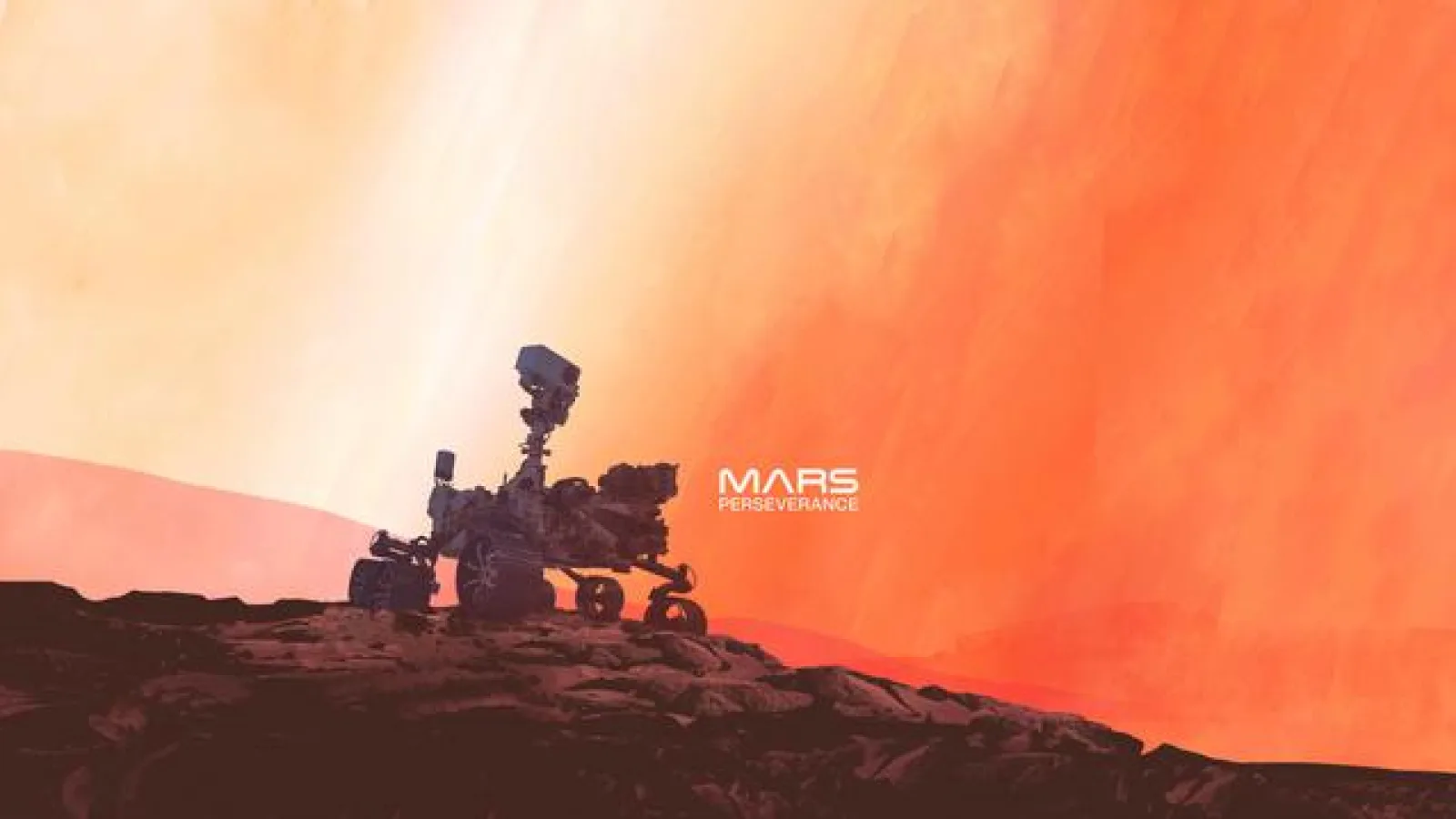
In April 2021, a device the size of a car battery did something no machine had ever done before: it made breathable oxygen on the surface of another planet. The instrument was called MOXIE — the Mars Oxygen In-Situ Resource Utilization Experiment — and though it produced only a small amount of gas, it may prove to be one of the most consequential experiments in the history of space exploration.
Turning Martian Air Into Oxygen
The Martian atmosphere is about 95 percent carbon dioxide — useless for breathing, but rich in oxygen atoms if you can pry them loose. That is exactly what MOXIE did. Riding aboard the Perseverance rover, it drew in the thin Martian air, compressed it, and ran it through a process that splits carbon dioxide into carbon monoxide and pure oxygen. The oxygen was measured, verified, and vented back out — the point was never to fill a tank, but to prove the chemistry works in real Martian conditions.
It did. Across repeated runs in varying conditions — day and night, through the shifting Martian seasons — MOXIE reliably produced oxygen, demonstrating that the technology is robust rather than a one-time fluke.
Why a Few Grams of Oxygen Matter So Much
The amounts MOXIE produced were modest, enough for only minutes of breathing. But breathing is not actually the main prize. The larger reason oxygen matters is propulsion. Getting a crew home from Mars requires an enormous quantity of oxygen — not for the astronauts to breathe, but to burn as rocket propellant for the return journey. Launching all of that oxygen from Earth is punishingly expensive; every kilogram of propellant sent to Mars costs many kilograms of fuel to deliver.
If instead that oxygen can be manufactured on Mars from the local atmosphere, the economics of a return mission change completely. A future full-scale version of MOXIE, running for months before the crew even arrives, could fill the tanks of a return vehicle using nothing but Martian air and power. This is the principle of in-situ resource utilization — living off the land rather than carrying everything from home — and it is widely regarded as essential to any sustainable human presence on Mars.
A Proof of Concept for Living Off the Land
MOXIE's success validated an idea that mission planners had long theorized but never tested: that Mars can supply its own colonists. Oxygen is the first and most dramatic example, but the same philosophy extends to extracting water from ice and soil and to producing rocket fuel through chemistry like the Sabatier reaction. Together these technologies point toward a Mars mission that does not have to carry every breath and every drop from Earth.
The experiment that proved a colonist could someday breathe Martian air flew on the same mission as Ingenuity, which proved a colonist could someday fly through it — two glimpses, on one rover, of what a human future on Mars might look like.
Frequently Asked Questions
What was MOXIE?
MOXIE, the Mars Oxygen In-Situ Resource Utilization Experiment, was a device aboard NASA's Perseverance rover that produced oxygen from the carbon-dioxide-rich Martian atmosphere, first doing so in April 2021.
How does MOXIE make oxygen?
MOXIE draws in Martian air, which is about 95 percent carbon dioxide, compresses it, and splits the carbon dioxide into carbon monoxide and pure oxygen through an electrochemical process.
Why is making oxygen on Mars important?
Beyond breathing, the biggest use is rocket propellant. Producing oxygen on Mars from local air could fuel a crew's return journey without shipping enormous quantities of propellant from Earth, dramatically lowering mission cost.