Feeding a Mars colony is not a side problem to be solved after the rockets and the habitats. It is one of the central challenges of settling another planet, and it shapes everything from the size of the crew to the design of the base. A mission to Mars is, among other things, a very long way to go without a grocery store.
The Problem With Packing a Lunch
The simplest approach is to bring all the food along, and for the first missions that is exactly what will happen. Prepackaged, shelf-stable meals are reliable and safe. But they are also heavy, they take up volume, and they do not last forever — the nutritional quality of stored food degrades over the years a Mars mission spans. A colony that depends entirely on resupply from Earth is a colony permanently tethered to a launch window that opens only once every 26 months. Real self-sufficiency means growing food on Mars.
Farming on a Dead World
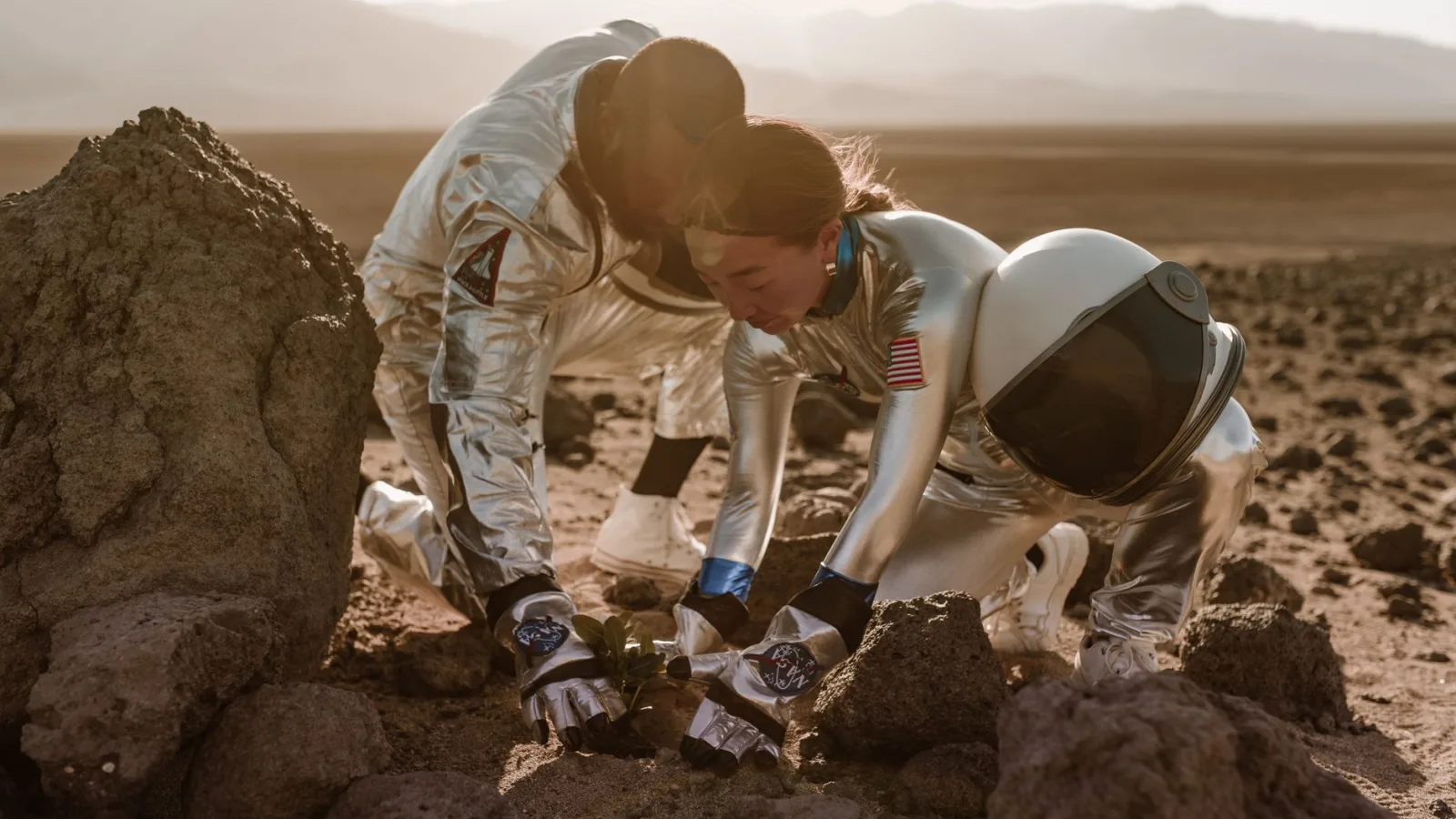
Growing crops on Mars means recreating, inside a sealed environment, conditions that the planet itself cannot provide. The outside air is unbreathable and the surface is bathed in radiation, so agriculture will happen indoors — in pressurized greenhouses or underground grow-rooms, under carefully tuned artificial light. Water, painstakingly extracted from Martian ice, will be recycled with near-total efficiency.
Then there is the soil, or rather the lack of it. Martian regolith is not soil in the Earthly sense — it contains no organic material and is laced with compounds called perchlorates that are toxic to humans. Before anything can be grown in it, that regolith has to be cleaned and conditioned, its perchlorates washed or broken down and organic nutrients introduced. Some colonists may skip soil altogether, growing crops hydroponically in nutrient-rich water instead.
What's Actually on the Menu
The first Martian farms will favor crops that deliver the most nutrition for the least space, water, and effort. Potatoes — made famous by one particular stranded astronaut — are a genuinely sensible choice: calorie-dense and hardy. Leafy greens, legumes, and fast-growing vegetables round out a plausible early diet. Protein is harder. Rather than raising livestock, which demands enormous resources, early colonists are more likely to turn to insects, which convert feed to protein with remarkable efficiency, or to lab-grown and plant-based alternatives.
More Than Just Calories
Food on Mars will have to feed the mind as well as the body. Years of bland, repetitive meals take a real psychological toll, and morale is a genuine survival factor on a mission this long and isolated. The ability to grow fresh herbs, to vary flavors, to share a genuinely good meal, becomes part of keeping a crew sane. In time, a settlement might even develop its own distinct cuisine — the first food culture born on another planet.
Frequently Asked Questions
Can you grow food on Mars?
Not in the open — the atmosphere is unbreathable and the surface is irradiated. Crops would be grown indoors in pressurized greenhouses or underground rooms under artificial light, using recycled water and either treated regolith or hydroponics.
Why can't crops grow in Martian soil directly?
Martian regolith contains no organic nutrients and is laced with toxic perchlorate compounds. It must be cleaned and conditioned before use, which is why many colonists may grow food hydroponically instead.
What foods would Mars colonists eat?
Likely staples include calorie-dense, hardy crops such as potatoes, plus leafy greens and legumes. Protein would more likely come from insects or lab-grown and plant-based sources than from resource-intensive livestock.