More Than a Science Mission
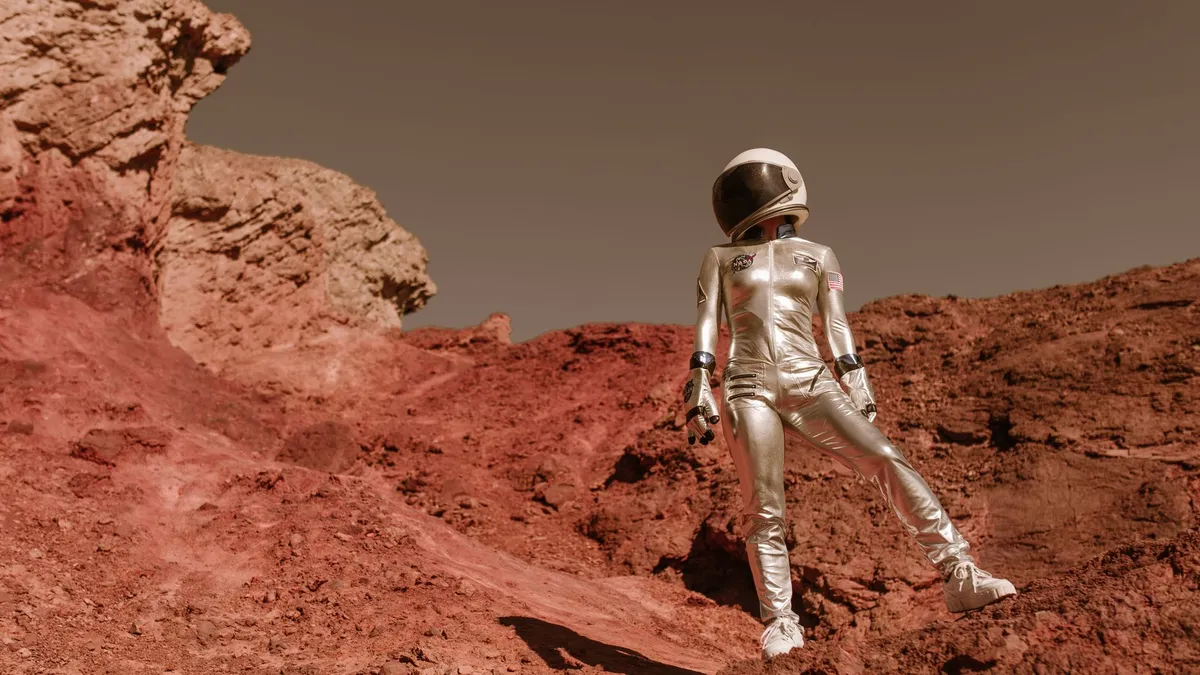
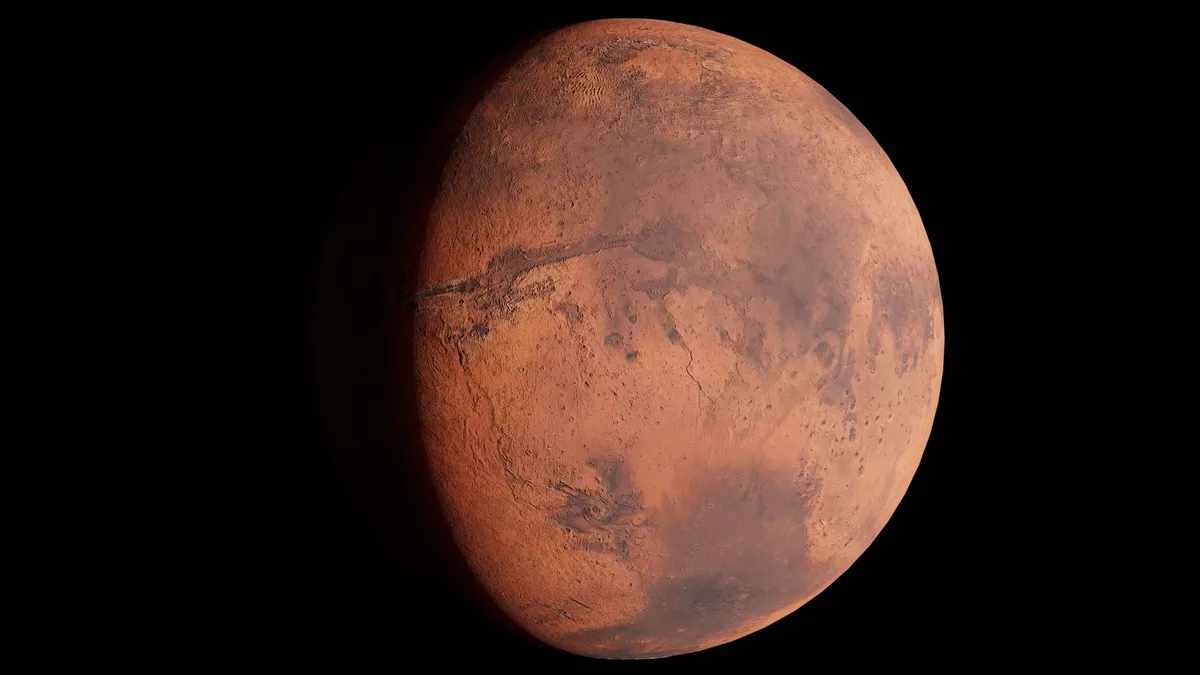
Ask most people why we should go to Mars and they'll mention water ice, ancient riverbeds, or the search for microbial life. Those are real and compelling reasons. But the deeper case for human presence on Mars goes well beyond collecting rock samples. It touches on human survival, economic necessity, technological progress, and something harder to quantify: purpose.
Mars is approximately 54.6 million kilometers away at its closest approach to Earth. Getting there takes roughly seven months with current propulsion technology. The challenges are enormous. So why go? Because the reasons — stacked together — form an argument that is difficult to dismiss.
A Backup for Civilization
Earth has experienced five mass extinction events. The most recent, approximately 66 million years ago, wiped out roughly 75 percent of all species on the planet when an asteroid struck what is now the Yucatan Peninsula. A similar impact today would not give humanity time to react. Neither would a sufficiently large supervolcanic eruption, a runaway pandemic, or a nuclear exchange.
Stephen Hawking argued repeatedly before his death in 2018 that humanity had perhaps 100 to 200 years before a catastrophic event on Earth became statistically likely. Elon Musk, whose SpaceX is actively developing the Starship vehicle for Mars transport, frames it more starkly: "I want to make humanity multiplanetary... to ensure the long-term survival of consciousness."
A self-sustaining Mars colony — even a modest one of 10,000 people, the minimum figure SpaceX has discussed for demographic viability — would represent the first true insurance policy for human civilization. Not a bunker. An independent branch of humanity, capable of surviving whatever befalls Earth and, crucially, of rebuilding it.
The Technological Dividend
Apollo cost the United States approximately $25.4 billion between 1960 and 1973, equivalent to roughly $150 billion in today's dollars. What did the country get back? Memory foam, scratch-resistant lenses, water filtration systems, CAT scan technology, and hundreds of other spinoffs documented by NASA. The agency estimates that every dollar invested in the Apollo program returned roughly $4 to $5 to the U.S. economy through these innovations.
A Mars program — far larger and more sustained than Apollo — would drive development across fields including:
- Closed-loop life support systems capable of recycling air, water, and waste with near-zero loss
- Compact nuclear fission reactors (NASA's Kilopower project has already demonstrated a working 10-kilowatt unit)
- Advanced radiation shielding materials applicable to cancer treatment and satellite design
- In-situ resource utilization (ISRU) — using local materials to manufacture fuel, building supplies, and breathable oxygen
- Long-duration human health monitoring and autonomous medical systems
These technologies don't stay on Mars. They come back, and they reshape life on Earth.
Economic Frontiers and Resource Access
Mars is not empty. The planet's crust contains iron, aluminum, titanium, magnesium, and sulfur. Its atmosphere, though thin at roughly 0.6 percent of Earth's sea-level pressure, is 95 percent carbon dioxide — a feedstock for producing methane fuel through the Sabatier reaction, a process already tested aboard the International Space Station.
More speculatively but not implausibly, the asteroid belt between Mars and Jupiter contains mineral wealth estimated at trillions of dollars. Mars, with its lower gravity (38 percent of Earth's) and proximity to the belt, is a natural staging point for future resource extraction operations. This is not science fiction — companies including Planetary Resources and AstroForge have already launched prospecting missions targeting near-Earth and main-belt asteroids.
An established Martian economy could eventually export processed materials, fuel, and manufactured goods, creating trade routes across the inner solar system. This sounds distant, but the infrastructure decisions being made today — launch vehicles, propulsion systems, habitat designs — are already laying that foundation.
The Human Need to Explore
There is a less quantifiable argument, but no less real for that. Humans have always pushed into unknown territory. The settlement of the Americas, the mapping of the Pacific, the crossing of Antarctica — these weren't purely rational economic decisions. They were driven by curiosity, restlessness, and the compulsion to see what lies beyond the horizon.
Mars is the next horizon. And unlike previous frontiers, it's one that humanity is choosing with open eyes, with full knowledge of the risks, and with the tools to manage them. NASA's Perseverance rover has been operating in Jezero Crater since February 2021, returning data that has already rewritten our understanding of Martian geology. The Ingenuity helicopter completed over 70 flights before its rotor blades were damaged in January 2024 — a reminder that success on Mars requires persistence as much as technology.
What a human geologist could accomplish in a single day on Mars would take a rover months. Human presence isn't just faster — it's categorically different.
The Unified Case
The argument for humans going to Mars is not one argument. It's five or six overlapping arguments that reinforce each other: survival insurance, technological acceleration, economic expansion, scientific discovery, and the deep human drive to explore. Remove any one of them and the others still hold. Together, they form a case that grows stronger, not weaker, as the years pass and the threats to Earth-only civilization accumulate.
The question isn't really whether humans need to go to Mars. It's how much longer we can afford to wait.
Frequently Asked Questions
Why should humans go to Mars?
Beyond science, advocates cite reasons like becoming a multiplanetary species to reduce existential risk, driving technological innovation, and inspiring global cooperation and a sense of shared human purpose.
Is going to Mars worth the cost?
Supporters argue the investment yields spinoff technologies, scientific knowledge, and long-term insurance for humanity's survival, while critics say the resources could address urgent problems on Earth. The article lays out both sides of that debate.
What's the strongest non-scientific argument for Mars?
Perhaps the survival argument: establishing a self-sustaining second home would protect humanity against planet-wide catastrophes that could threaten a single-planet species.