A New Kind of Human
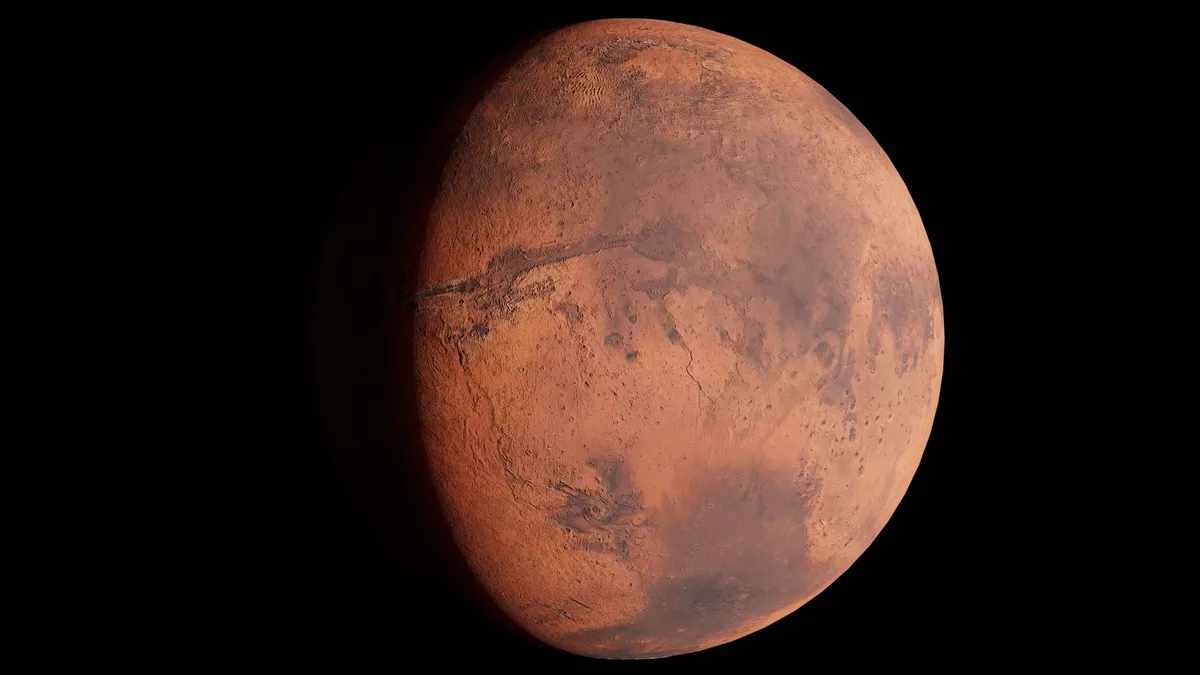
Sometime in the 2030s or 2040s, if current mission timelines hold, a small group of humans will step onto the rust-colored plains of Mars. They will breathe recycled air, eat food grown under artificial light, and look up at a sky that turns from blue at sunrise to pink at midday. They will be human in every biological sense — but will they still be Earthlings?
The question sounds philosophical, but it has real, practical dimensions that space agencies, ethicists, and mission planners are already beginning to wrestle with. Identity on Mars won't be an abstract concept. It will shape law, governance, psychology, and the daily texture of life in a habitat where every breath of oxygen has to be earned.
The Weight of Distance
At its closest approach, Mars sits about 54.6 million kilometers from Earth. At its farthest, that distance stretches to more than 400 million kilometers. Even at the speed of light, a message from Mars takes between 3 and 22 minutes to arrive — meaning a conversation with family back home involves delays measured in tens of minutes, not seconds.
That communication lag is more than an inconvenience. It severs the psychological thread that connects people to their places of origin. Astronauts on the International Space Station, orbiting just 408 kilometers above Earth, report profound shifts in perspective — what researchers call the overview effect. Mars colonists will be experiencing something categorically different: not a view of home, but an absence of it. Earth will be a bright dot in the Martian night sky, indistinguishable to the naked eye from a star.
Born Martian: The First Generation
The most dramatic identity shift won't happen with the first arrivals — it will happen with their children. The first humans born on Mars will never have stood under an open sky, felt rain, or experienced Earth's 1g gravity. Mars's gravitational pull is only 38% of Earth's, meaning a 70-kilogram person would weigh roughly 26.6 kilograms on the surface. Bones and muscles develop in response to gravity; children raised on Mars may be physically different from Earth-born humans within a single generation.
NASA and other research bodies have documented how microgravity affects the human body in space — including vision changes caused by intracranial pressure shifts, bone density loss of approximately 1-2% per month without countermeasures, and fluid redistribution throughout the body. Mars's partial gravity would reduce but not eliminate these effects. The long-term developmental consequences for children remain an open and urgent research question.
A child born on Mars would hold no nationality in any current legal framework. No existing treaty grants citizenship based on birth on another planet. The 1967 Outer Space Treaty, still the foundational document of space law, prohibits national appropriation of celestial bodies but says little about the people who might live on them.
Culture at the Frontier
Every human culture has been shaped by its environment — by climate, geography, available resources, and the challenges of survival. Mars will be no different. Early Martian culture will almost certainly be defined by:
- Radical interdependence: In a habitat where a single systems failure can be fatal, individualism will be tempered by the absolute necessity of collective survival.
- Resource consciousness: Water, air, and energy will be visibly finite in ways they never are on Earth. This will shape everything from daily habits to values.
- A new relationship with risk: Living on Mars means accepting a baseline level of danger that no Earth community faces. This shared risk is historically one of the fastest ways to forge group identity.
- Isolation and self-reliance: With resupply missions taking months to arrive and return trips even longer, Martian settlements will need to be functionally self-sufficient — culturally as well as materially.
Who Decides What It Means?
Early Mars colonists will almost certainly arrive as employees or representatives of space agencies and private companies — NASA, ESA, SpaceX, or international consortia. They will operate under mission rules, not democratic governance. But as populations grow, the question of self-determination becomes unavoidable.
History offers imperfect but instructive parallels. Colonial settlements on Earth often began as company outposts or government projects before developing their own political identities. The process was rarely smooth and almost never went according to plan. Mars will face the same pressures — compressed into a habitat the size of a small town, cut off from Earth by months of travel time.
A Living Question
There is no settled answer to what it means to be a Martian, because Martians don't exist yet. But the question is worth asking now, while mission architectures are still being designed and legal frameworks are still being negotiated. The people who first call Mars home will be shaped by decisions made on Earth long before they arrive — and they will spend their lives remaking those decisions in light of a world we can barely imagine.
That's not a warning. It's one of the most extraordinary things about the moment we're living in.
Frequently Asked Questions
What would it mean to be a Martian?
A true Martian identity would emerge from living on a world where air, water, and energy are visibly finite, shaped by physical differences, distinct culture, and eventually separate governance from Earth — becoming far more than just where someone was born.
Would people born on Mars be different from Earthlings?
Over generations, likely yes — physically adapted to lower gravity, culturally distinct, and psychologically shaped by a fragile, engineered environment where survival depends on cooperation.
Could Martians want independence from Earth?
History suggests distant colonies eventually develop their own identity and interests, so a distinct Martian identity could lead to pressure for self-governance and even independence over time.