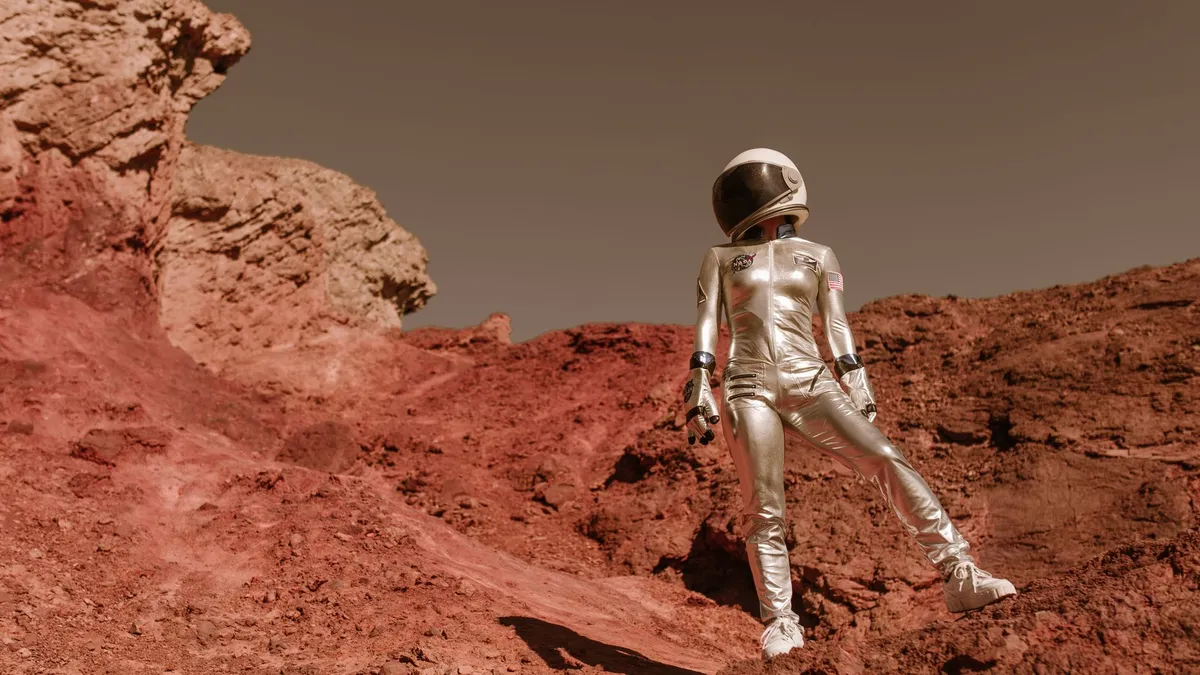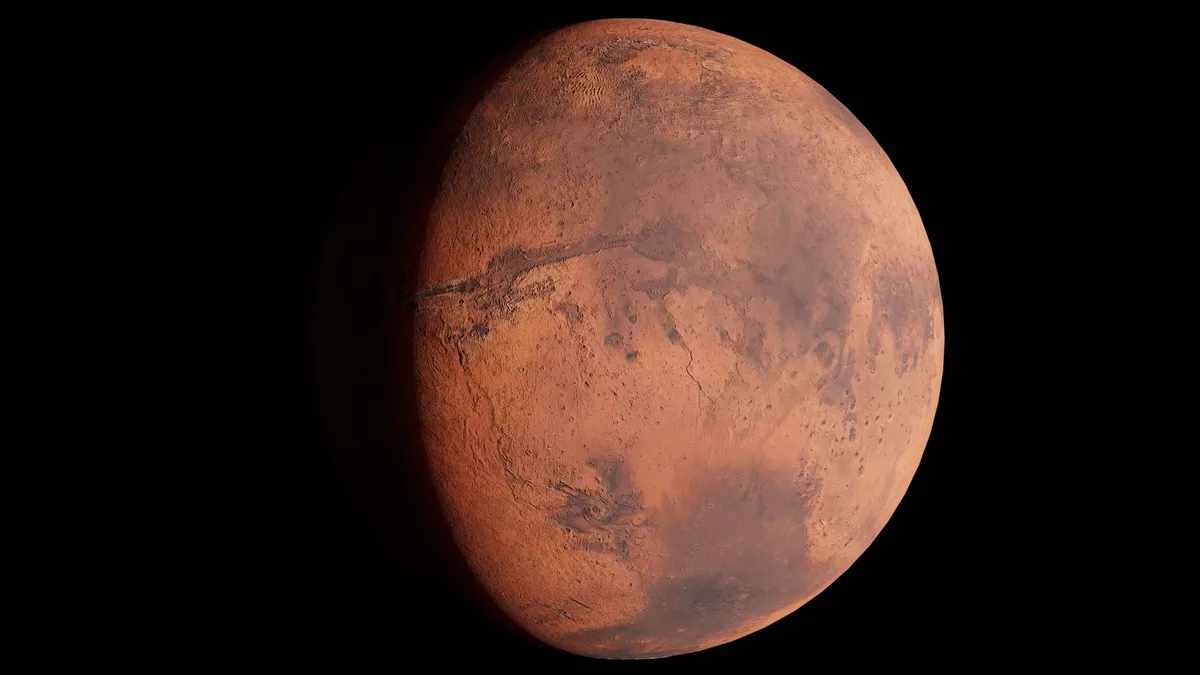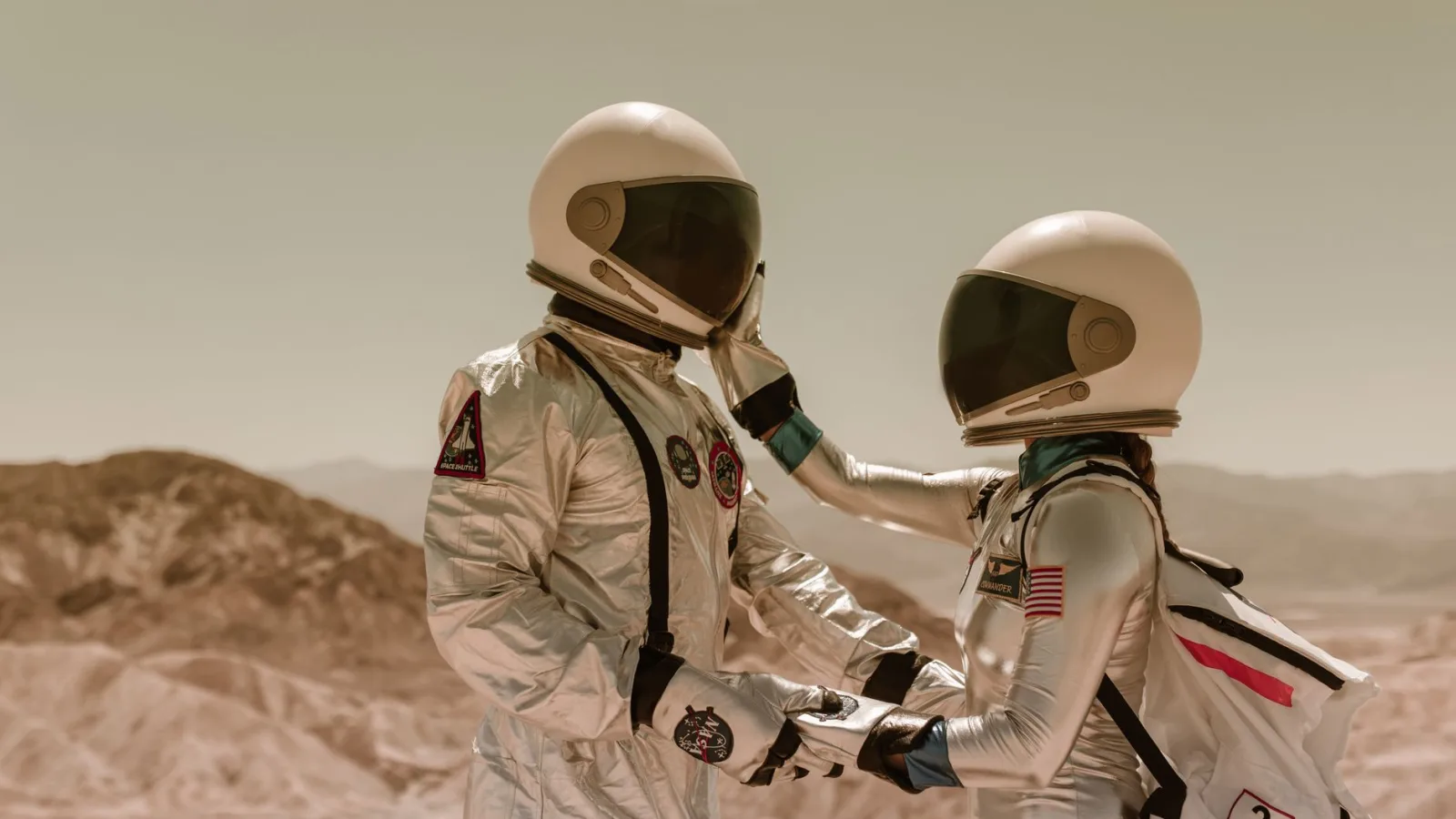
A Very Human Question About an Alien World
When serious scientists and space agencies talk about long-duration Mars missions, they tend to focus on propulsion, life support, and radiation shielding. But if humans are ever going to live on Mars — not just visit it — the full spectrum of human biology comes along for the ride. That includes reproduction and intimacy. Far from being a taboo topic, researchers in space medicine and long-duration spaceflight have begun examining what sustained human presence would actually mean for the body.
Mars isn't the Moon, and it isn't Earth. It sits in a gravitational, atmospheric, and radiation environment unlike anything our bodies evolved to handle. All of that has real implications for one of the most fundamental human activities.
How Low Gravity Changes Everything
Mars has a surface gravity of 3.72 m/s² — about 38% of Earth's. That's enough to keep you anchored to the floor, but not enough to make anything feel normal. For context, the Moon's gravity is roughly 17% of Earth's, so Mars is meaningfully stronger — but still dramatically different from what every human body has ever experienced.
In reduced gravity, blood and other fluids redistribute toward the upper body. Astronauts on the International Space Station — which has near-zero gravity — consistently report facial puffiness, nasal congestion, and a sensation of pressure in the head. These fluid shifts don't vanish the moment you land on Mars; they change with gravity level. Researchers don't yet know precisely how the body adapts at 38% g over months or years, because no human has ever experienced it for more than a few hours (during brief parabolic flight arcs).
Physical movement in lower gravity would feel lighter and more effortful to control simultaneously. Actions that rely on body weight and friction against a surface — sitting, standing, staying in place — all become less intuitive. NASA researchers studying microgravity locomotion have found that coordinated physical activity requires conscious adjustment. Intimacy, which depends heavily on intuitive body mechanics, would require the same kind of recalibration.
The Cardiovascular and Hormonal Picture
Prolonged spaceflight is known to suppress certain hormone levels. Studies of male astronauts on long ISS missions have shown measurable decreases in testosterone. Female hormonal cycles are also affected, though the data is more limited because fewer women have completed long-duration missions. Whether Mars's partial gravity mitigates, preserves, or worsens these effects compared to microgravity is genuinely unknown.
Cardiovascular changes matter too. The heart adapts to reduced gravitational load by becoming slightly more spherical and less efficient at pumping blood against gravity — a shift documented in ISS crew members. Aerobic capacity typically declines without countermeasures. On Mars, settlers would need rigorous exercise regimens just to maintain baseline health, which would in turn affect physical stamina for all activities.
Radiation: The Uncomfortable Background Risk
Mars has no global magnetic field and a thin atmosphere — roughly 0.6% the pressure of Earth's at sea level. This means the Martian surface receives significantly more ionizing radiation than Earth. NASA estimates surface radiation on Mars at approximately 0.67 millisieverts per day, compared to an average of about 0.01 millisieverts per day on Earth's surface.
Over time, this radiation poses risks to reproductive cells. Ionizing radiation can damage DNA in sperm and eggs, raising concerns about genetic mutations and fertility. Mars habitats would be built with radiation shielding — potentially using regolith (Martian soil) piled over structures, or underground construction — but no shielding approach eliminates the risk entirely. This is one of the most significant biological challenges facing any reproductive activity on Mars, and it's an active area of research.
The Psychology of Intimacy in Isolated Environments
Mars colonists would live in small, enclosed habitats — likely pressurized modules not unlike scaled-up versions of Antarctic research stations. Studies of crews in isolated, confined environments (including NASA's HI-SEAS analog missions in Hawaii and winter-over teams in Antarctica) consistently show that interpersonal dynamics — including attraction, conflict, and bonding — become intensified and complex.
Privacy would be scarce. Noise carries in small pressurized spaces. Crew composition, social norms, and mission rules would all shape whether and how intimate relationships develop. The psychological literature on isolated and confined environments suggests that close relationships can be both stabilizing and destabilizing for group cohesion — a dynamic mission planners will eventually need to address openly.
An Open Scientific Question
The honest answer is that nobody knows exactly what sex on Mars would feel like, because no research has been conducted in a true Martian gravity analog over meaningful timescales. What science does tell us is that the environment would make it physically and biologically different in measurable ways — from fluid dynamics to hormone levels to radiation exposure. These aren't reasons to avoid the question. They're reasons to take it seriously as part of the larger challenge of building a sustainable human presence on another world.
Frequently Asked Questions
Would sex be different on Mars?
Almost certainly. Mars's gravity is about 38% of Earth's, which alters how fluids move through the body and how intuitive body mechanics feel, so intimacy would require physical recalibration. Hormonal and cardiovascular changes seen in spaceflight add further differences.
Is it safe to conceive a child on Mars?
This is a serious open concern. Mars's surface receives far more ionizing radiation than Earth, which can damage reproductive cells and raise risks of genetic mutation and fertility problems. Shielding reduces but does not eliminate the danger, and it remains an active research question.
Has anyone studied sex in Martian gravity?
Not directly. No human has experienced Martian gravity for more than minutes, so conclusions are extrapolated from microgravity spaceflight and isolation studies rather than true Mars-gravity data.