Every New World Breeds a New Language
When English settlers arrived in North America, they didn't speak like Londoners for long. Within a few generations, new words emerged for new realities — canoe, toboggan, blizzard — borrowed, invented, or stretched from older meanings. Mars will do the same thing, and probably faster.
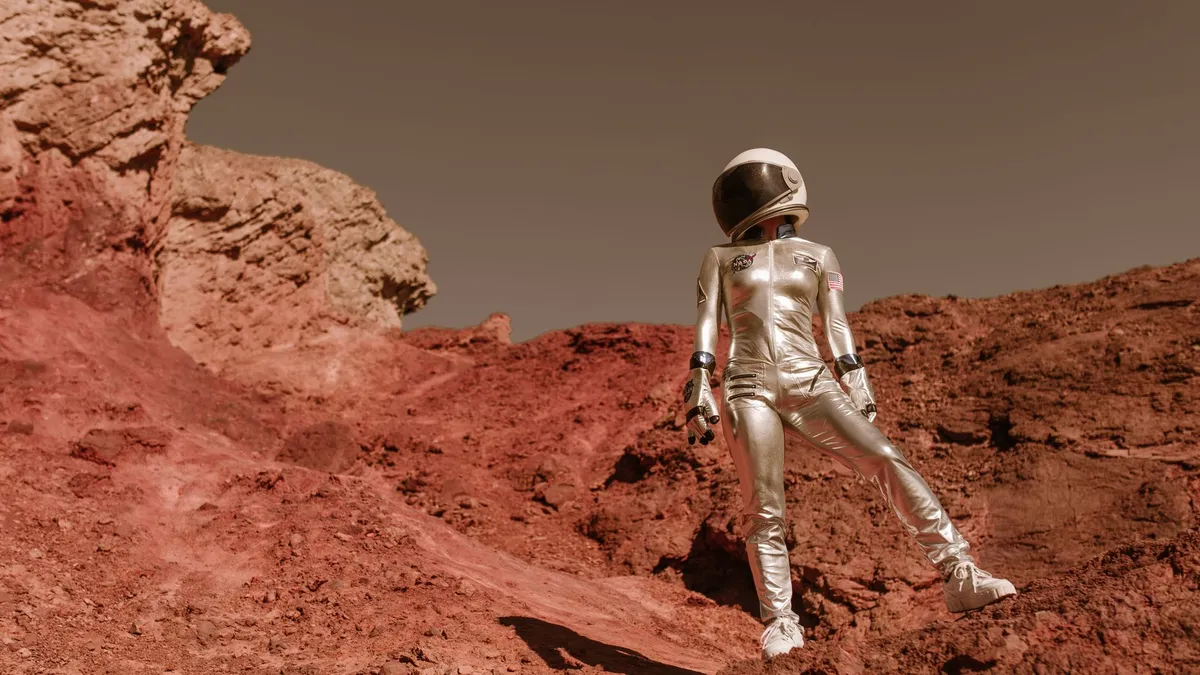
The first permanent Mars settlers — whether they arrive in the 2040s as NASA's current long-range planning suggests, or later — will face an environment so alien that existing English vocabulary will simply fall short. A new dialect, call it Martian English or something future linguists haven't named yet, will grow out of necessity, humor, and shared survival.
The Raw Material: What Life on Mars Actually Looks Like
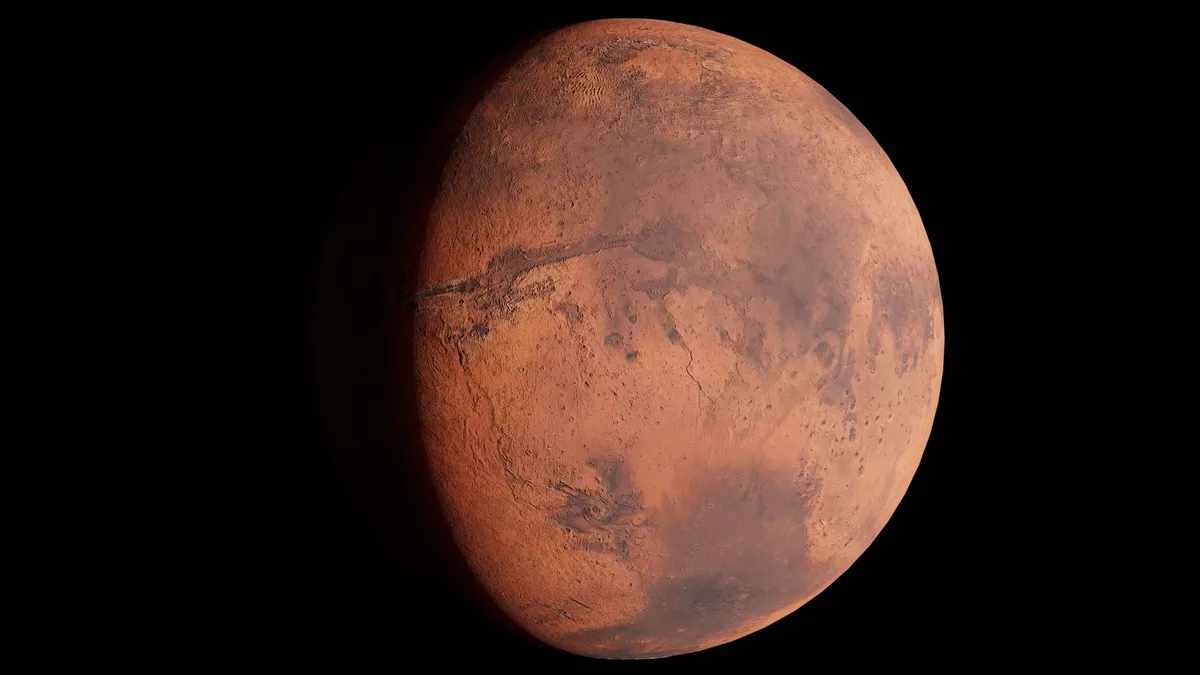
To predict the slang, you have to understand the daily reality. Mars has an atmospheric pressure roughly 0.6% of Earth's — step outside without a suit and you're dead in minutes. The average surface temperature is around -60°C (-80°F), swinging as low as -125°C near the poles. A Martian day, or sol, is 24 hours and 37 minutes — already a real term used by NASA mission controllers since the Viking landers in 1976.
Colonists will live in pressurized habitats, depend on MOXIE-style electrolysis systems to generate oxygen from CO₂, grow food in artificial-light greenhouses, and manage constant radiation exposure because Mars has no global magnetic field. These aren't abstractions — they're the texture of daily life that breeds slang.
Words That Might Already Be Taking Shape
Some candidate terms practically write themselves:
- Sol — Already real. NASA engineers have used this since the 1970s to describe a Martian day. Colonists will almost certainly keep it and build around it. "See you next sol" will sound as natural as "see you tomorrow."
- Dusted — Mars dust storms can last weeks and blanket solar panels, halt operations, and isolate communities. "Getting dusted" could mean being blindsided, overwhelmed, or stuck waiting. The planet-encircling storm of 2018 that ended the Opportunity rover's mission gave the world a preview of how disruptive Martian dust truly is.
- Surfacing — Going outside in a pressure suit may become its own verb, the way sailors say they're "going topside." "We're surfacing at 0800" could describe a routine EVA the way we'd describe a morning commute.
- Earthsick — A likely successor to homesickness, with its own specific weight. With a one-way communication delay of 3 to 22 minutes depending on orbital positions, you can't call home in real time. That particular loneliness will need a word.
- Redding out — Losing your temper or panicking under the psychological pressure of confined habitat life. Mars analog studies, including simulations run at the HI-SEAS habitat in Hawaii, documented how interpersonal tension spikes in isolated groups. A word for losing it was probably invented on day three.
- Thin — Used as an adjective for anything that feels scarce, fragile, or barely enough. "That plan is pretty thin" takes on extra meaning when the atmosphere itself is 100 times thinner than home.
Borrowed Words and Local Pride
Settlers will also borrow from the geography. Mars features named landmarks from decades of robotic exploration — Olympus Mons, Valles Marineris, Jezero Crater (where Perseverance has been operating since February 2021). Expect those names to spawn idioms. "That's an Olympus problem" might mean something impossibly large. "We're in the Valles" could signal being deep in a difficult situation.
Children born on Mars — the first true Martians — will likely develop the sharpest divergence from Earth English. Linguists who study language evolution note that second-generation speakers in isolated communities drive the fastest change. Those kids won't have firsthand experience of rain, open sky, or unfiltered sunlight. Their metaphors will come from pressure gauges, grow lights, and airlocks.
Why This Matters Beyond Word Games
Language isn't decorative. It encodes how a community understands its world. When Martian colonists develop their own idioms, contractions, and in-jokes, that's the moment a colony stops being an outpost and starts being a culture. Linguists, anthropologists, and mission planners already take this seriously — the psychological health of a long-duration crew depends partly on shared identity, and nothing builds identity faster than shared language.
Whatever words emerge from those first red-dirt habitats, they'll tell us something true about what it means to be human somewhere new.
Frequently Asked Questions
How would language change on Mars?
Isolation, distinct daily life, and new shared experiences would spawn Martian slang and eventually dialect, as colonists coin words for local realities — dust, low gravity, habitat life — that Earth English never needed.
Will Martians speak differently from Earthlings?
Over generations, probably yes. Distance and separate culture drive linguistic drift, so a recognizable Martian way of speaking would likely emerge much as regional dialects did on Earth.
What might Martian slang describe?
Everyday Martian realities — pressurized habitats, oxygen systems, greenhouse food, constant radiation, and dust — are exactly the kind of shared experiences that generate new vocabulary and idioms.