Welcome to the Mars Olympics
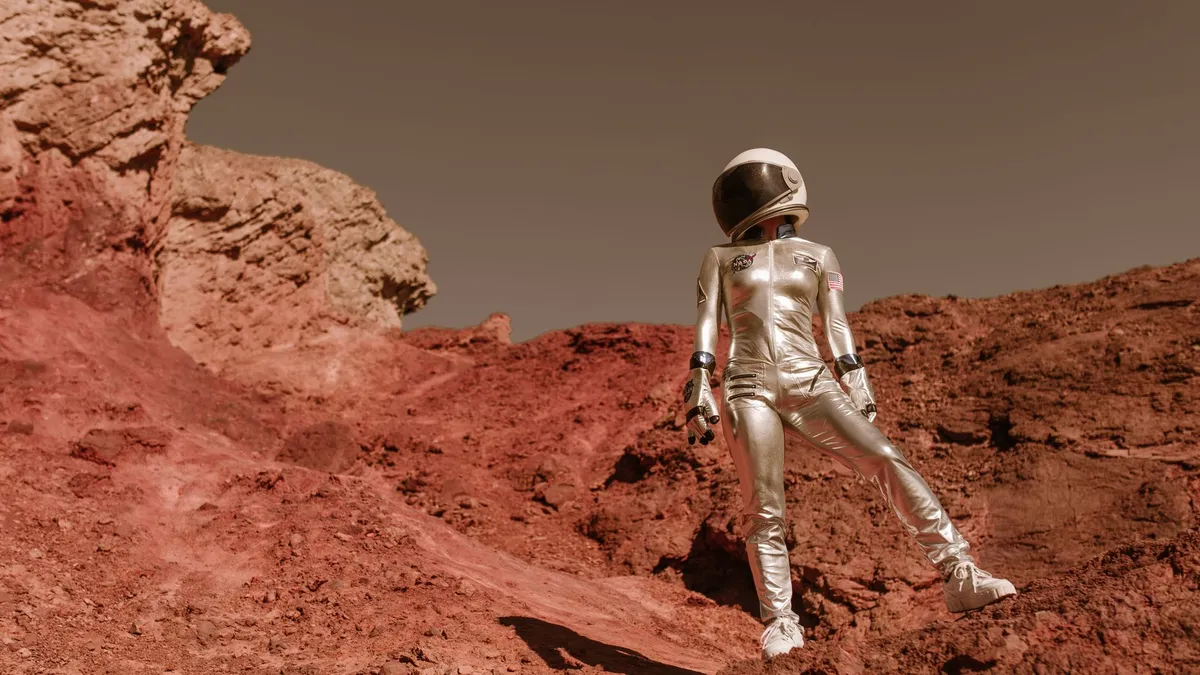
Imagine the year is 2085. A packed stadium in Olympus City hushes as the starting pistol fires. The sprinters explode from the blocks — and then something strange happens. They begin to float. Each stride carries them half a meter into the air. They look less like runners and more like astronauts bounding across the lunar surface.
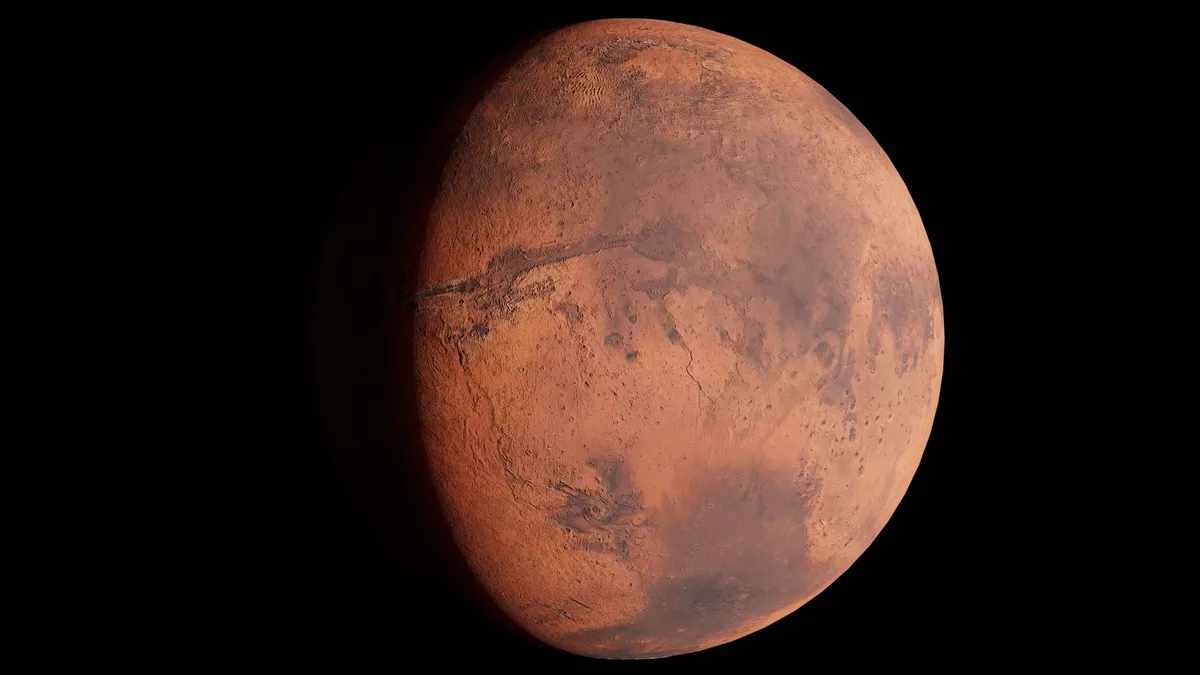
This isn't science fiction speculation — it's applied physics. Mars has a surface gravity of 3.72 m/s², roughly 38% of Earth's 9.81 m/s². Every athletic record, every competitive benchmark, every technique that human bodies have spent millennia optimizing would need to be rewritten from scratch. Here's what the first Mars Olympics might actually look like.
Track and Field: The Numbers Get Wild
Sprinting
Counterintuitively, sprinting on Mars wouldn't be dramatically faster — at least not at first. Speed depends on how quickly you can push against the ground and how long your foot stays in contact. Lower gravity means less traction and longer airtime between strides, which can actually disrupt a sprinter's rhythm. Biomechanics researchers studying locomotion in reduced gravity (including NASA studies done in parabolic flight conditions) suggest that optimal running speed may not scale linearly with gravity. Runners would need entirely new techniques, likely adopting longer, loping strides.
The Long Jump
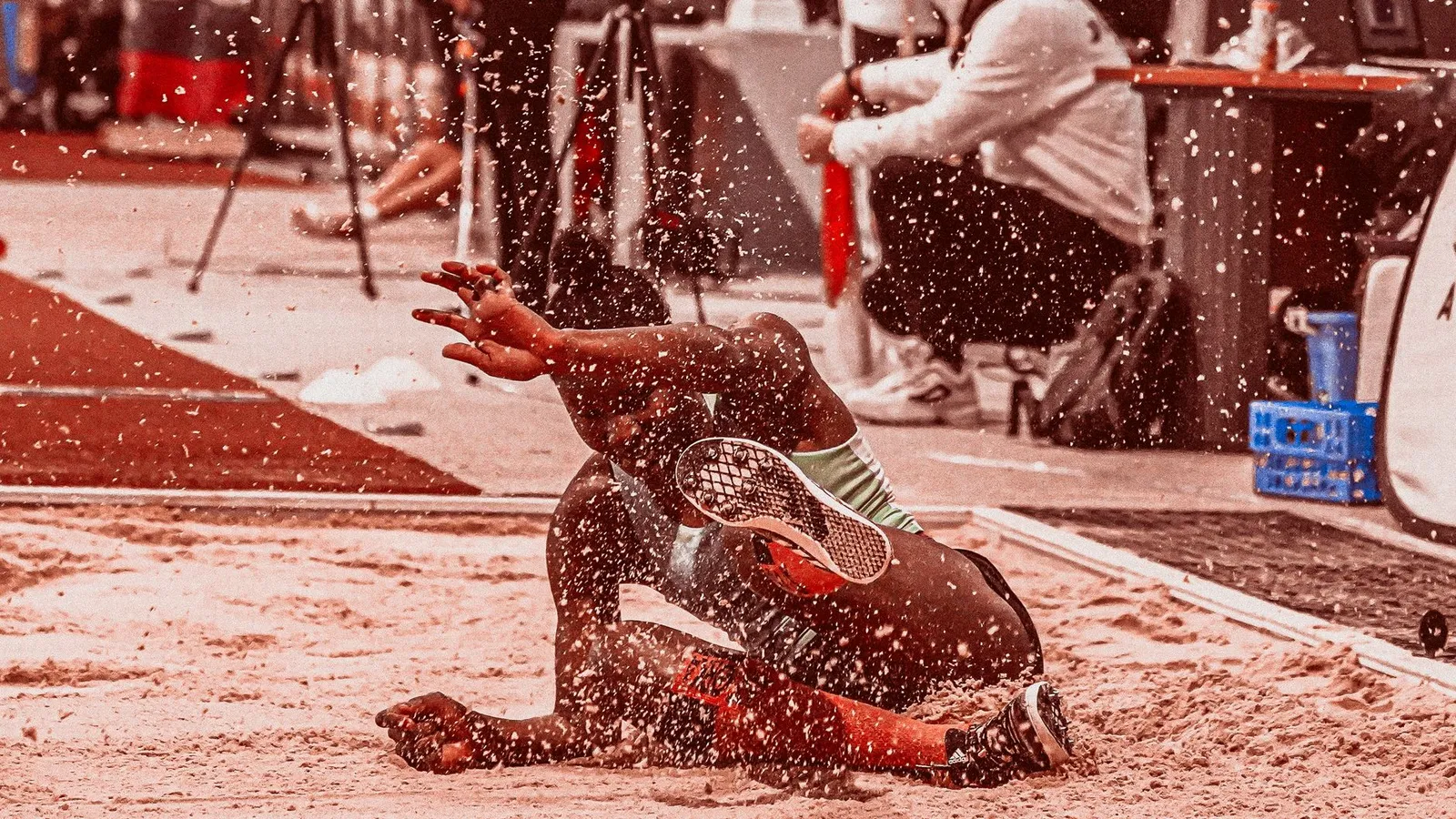
This is where things get spectacular. The world record long jump on Earth — 8.95 meters, set by Mike Powell in 1991 — is constrained by gravity pulling the athlete back down. On Mars, a jumper leaving the ground at the same velocity and angle would travel approximately 2.6 times farther, landing somewhere around 23 meters from the board. The jump itself would last several seconds rather than less than one. Spectators would need to relocate the landing pit entirely.
The High Jump
Using the same physics, a high jumper clearing 2.45 meters on Earth (the current world record set by Javier Sotomayor in 1993) could theoretically clear roughly 6.4 meters on Mars at equivalent muscular output. The Fosbury Flop technique would still work, but athletes would have far more time in the air to adjust their body position — potentially enabling entirely new mid-flight techniques no Earth coach has ever imagined.
Shot Put and Discus
Throwing events would see dramatic increases in distance. The shot put world record of 23.37 meters (set by Ryan Crouser in 2021) could extend to over 60 meters under Martian gravity, assuming equivalent throwing force. The discus, which benefits from aerodynamics, would behave differently in Mars's thin atmosphere — about 0.6% of Earth's sea-level pressure — meaning it would lose the aerodynamic lift it gets on Earth. Throwers would need to rethink their release angles entirely.
Strength and Power Sports
Weightlifting
A barbell loaded with 200 kg on Earth weighs only about 76 kg on Mars. Clean-and-jerk world records would be shattered immediately — but only if measured in kilograms lifted. If competitions are standardized to measure the mass moved (in kilograms) rather than the weight felt, Earth records would still stand as the benchmark. The more interesting question: could athletes lift masses on Mars that would be physiologically impossible on Earth, pushing human muscle performance into entirely new territory?
Gymnastics and Acrobatics
Perhaps no discipline would be more transformed than gymnastics. Lower gravity means far more airtime on every tumbling pass, every vault, every bar release. A gymnastics routine that takes 30 seconds on Earth might run significantly longer on Mars as athletes sail through the air. The Code of Points — gymnastics' scoring system — would need a complete overhaul. Quadruple somersaults, currently at the edge of human possibility on Earth, could become standard difficulty on Mars.
Swimming and Endurance Events
Swimming would be one of the least-changed events, since water provides its own resistance independent of gravity. Marathon running presents a fascinating case: the cardiovascular demand would be lower since the body weighs less, but muscles would still fatigue. Colonists who have lived on Mars for years would develop physiology adapted to the environment — potentially giving them an advantage in low-gravity events but making them vulnerable if they ever returned to Earth competition.
The Real Challenge: The Athletes Themselves
The most complex variable in any Mars Olympics isn't the physics — it's the human body. Research on astronauts aboard the International Space Station shows that even in microgravity (far more extreme than Mars), bones lose density at roughly 1–2% per month without countermeasures. Martian colonists would face lower but still significant bone and muscle adaptation over years. The first Mars Olympians might not be Earth visitors at all, but a new generation of humans whose bodies have been shaped by an entirely different world.
The Mars Olympics wouldn't just be a new venue for old sports. It would be the birth of a new athletic tradition — one that humanity has never seen before, built for a planet we're only beginning to know.
Frequently Asked Questions
How would the Olympics change on Mars?
At 38% gravity, jumping and throwing events would see dramatically longer distances and heights, sprinting and running would adopt a bounding gait, while water-based events would change least because water still provides resistance.
Would records be broken on Mars?
By Earth standards, spectacularly — but Mars would need its own record books, since lower gravity makes direct comparison meaningless. Events would be rebalanced for the new physics.
Which sports change least in low gravity?
Swimming and other water events change the least, because buoyancy and water resistance dominate over gravity, unlike jumping or throwing events that are transformed.