Where There Are Rules, There Are Rule-Breakers
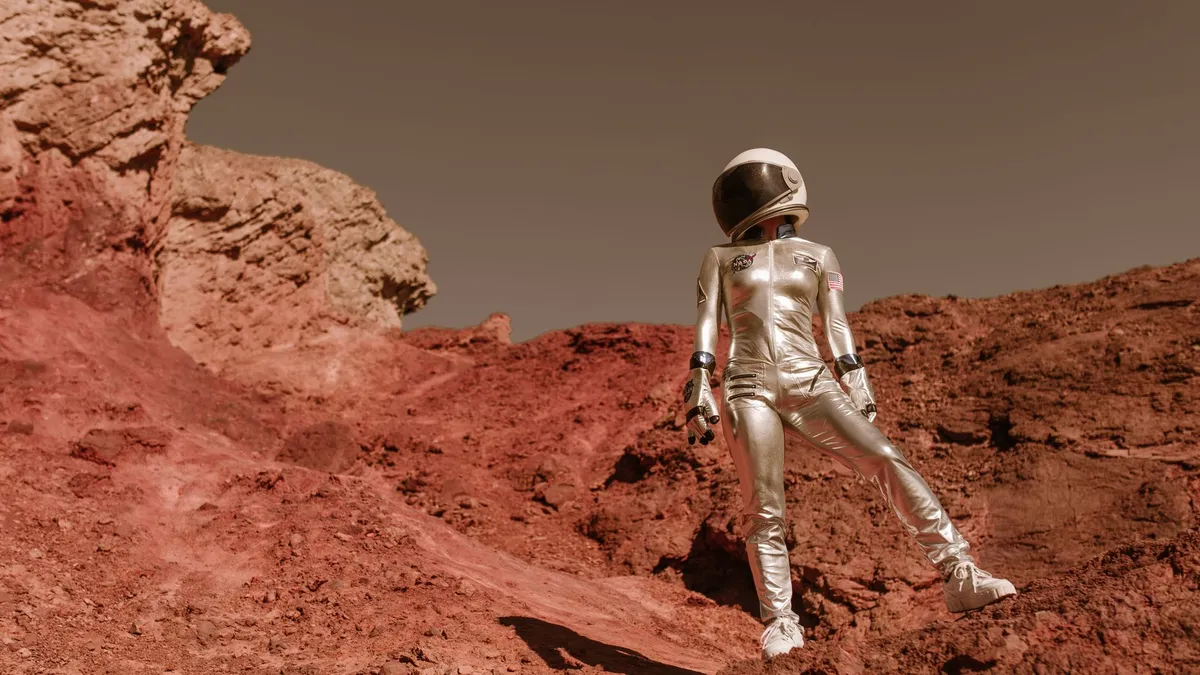
Every human settlement in history has produced a shadow economy. From contraband tobacco in colonial Virginia to black-market insulin in modern America, people find ways to trade outside official channels when the incentives are strong enough. Mars will be no different — and the conditions of early colonization may actually make illicit commerce more likely, not less.
This isn't dystopian fantasy. It's the kind of problem that space policy researchers, legal scholars, and mission planners are beginning to take seriously as timelines for permanent habitation grow more concrete. NASA's Moon to Mars architecture and SpaceX's Starship program both envision sustained human presence on Mars within the coming decades. With people come economies. With economies come crime.
The Economics of Scarcity on Mars
A Mars colony's early years will be defined by extreme resource scarcity. Every kilogram launched from Earth currently costs thousands of dollars in propellant and infrastructure — SpaceX has targeted a long-term goal of reducing Starship launch costs to around $100 per kilogram to low Earth orbit, but Mars delivery costs will remain orders of magnitude higher for decades. In that environment, almost every physical good becomes precious.
Black markets thrive on exactly this kind of scarcity combined with unequal access. Imagine a colony where caloric intake, water rations, and breathable air are centrally managed. A colonist who figures out how to divert 10 liters of water per week, or who has smuggled a cache of high-calorie food supplements from Earth, holds real economic power — regardless of what the official colony charter says about resource distribution.
Economists who study frontier and isolated economies — including research on Antarctic stations and submarine crews — consistently find that informal barter networks emerge within months of people arriving in resource-constrained environments. On Mars, those networks would have nowhere to hide and no easy exit, which creates a uniquely pressurized version of underground commerce.
What Would Be Traded?
The commodities of a Martian black market would reflect what the colony controls most tightly:
- Consumables: Extra food rations, vitamins, alcohol (almost certainly prohibited or strictly limited given safety concerns), and pharmaceutical drugs would top the list.
- Bandwidth and data access: Communication with Earth will be rationed. Private or unmonitored data channels would carry enormous value.
- Labor and favors: In a small, closed community where everyone's skills are on record, trading unofficial services — repairs, medical advice, psychological support — outside official channels becomes a form of currency.
- Fabricated goods: With 3D printing central to Mars mission plans (NASA and ESA both include in-situ manufacturing as a core survival technology), someone with unauthorized access to a fabricator and raw feedstock could produce tools, parts, or luxury objects outside colony oversight.
- Information: Knowledge of water ice deposits, structural weaknesses, or mission schedules would be extraordinarily valuable — and dangerous.
The Legal Vacuum Problem
Here's where it gets genuinely complicated. The 1967 Outer Space Treaty — still the foundational document of international space law — declares that no nation can claim sovereignty over Mars. That means no nation's criminal code automatically applies. A colonist who runs an unauthorized trading ring on Mars exists in a legal gray zone that no court has ever adjudicated.
Mission operators like NASA or a private company such as SpaceX would likely govern early colonies through contractual agreements signed before departure — essentially, colonists would agree to a private legal code as a condition of participation. Legal scholars have compared this to the authority held by ship captains under maritime law, or to the governance structures of Antarctica's research stations, where the Antarctic Treaty System creates jurisdiction based on a person's nationality rather than location.
But enforcement is the real problem. A colony of 100 people 140 million miles from Earth — at average Mars-Earth distance — cannot call for backup. The mission commander's authority is real but ultimately depends on community consent. History suggests that when formal enforcement mechanisms are weak, informal economies fill the void.
Designing Crime Out of the Colony
The most practical response isn't more rules — it's better design. Space habitat researchers increasingly argue that transparent resource accounting, fair distribution systems, and meaningful work for all colonists reduce the incentive for black markets before they form. The key insight from studying isolated communities is that people trade outside official channels mostly when they feel the official system is unjust or inadequate.
Radical transparency in resource allocation — made technically feasible by the networked, sensor-rich environment of a Mars habitat — could make hidden hoarding nearly impossible. But it also raises its own questions about privacy and autonomy in a place where every calorie and liter of oxygen is monitored.
Mars colonization will force humanity to answer questions about governance, justice, and economics that we've barely begun to ask. The black market problem isn't a reason to stop — it's a reason to plan smarter.
Frequently Asked Questions
Would there be crime on Mars?
Almost certainly. Wherever resources are scarce and rules are still forming, informal trade and rule-breaking follow. On Mars, the most valuable contraband would be survival essentials — extra rations, water, oxygen, and medicine.
What would a Mars black market trade in?
Likely life-critical resources like calories, water rations, and breathable air, plus restricted tech and personal luxuries, precisely because those items are tightly controlled in a survival economy.
How would colonies prevent crime?
With a mix of resource accounting, community enforcement, and a governing charter, since formal legal frameworks under the Outer Space Treaty don't yet address everyday crime on Mars.