The Most Extreme Weather in the Solar System
Imagine strapping on a sail and riding a storm that blankets an entire planet. On Mars, that's not science fiction — it's a question future settlers may actually have to answer. Mars experiences some of the most dramatic weather events in the solar system, including regional storms covering millions of square kilometers and global dust events that can persist for months at a time.
The 2018 global dust storm — officially a planet-encircling dust event, or PEDE — was powerful enough to end NASA's Opportunity rover mission. Dust opacity levels (measured as "tau") climbed above 10.8 at Opportunity's location in Perseverance Valley, cutting off enough sunlight to permanently drain the solar-powered rover's batteries. A storm that killed a rover is also a storm that demands respect — and maybe, eventually, inspires adventure.
What Mars Dust Storms Actually Look Like
Martian dust storms are born from the planet's thin atmosphere — about 1% the density of Earth's — and its highly elliptical orbit. When Mars is closest to the Sun (perihelion), solar heating intensifies near the southern hemisphere, driving powerful convective winds that lift fine dust particles — averaging just 1.5 to 3 micrometers in diameter — high into the atmosphere.
Wind speeds during major storms typically reach 60 to 70 miles per hour (roughly 97 to 113 km/h). That sounds formidable, but here's the twist: because the Martian atmosphere is so thin, the actual force on an object is far lower than an equivalent wind on Earth. A 60 mph Martian gust exerts roughly the same physical pressure as a 6 mph breeze on Earth. You'd feel it — but it wouldn't knock you over.
That atmospheric thinness is both the opportunity and the challenge for any would-be Martian storm surfer.
The Physics of Riding a Martian Storm
For sailing or kite-based sports, what matters isn't just wind speed — it's dynamic pressure, which depends on air density. On Mars, generating meaningful lift or propulsion would require either enormous sail surfaces or extremely lightweight equipment. Engineers at NASA's Jet Propulsion Laboratory have already demonstrated that aerodynamic principles do apply on Mars: the Ingenuity helicopter, which flew its first flight on April 19, 2021, uses rotor blades spinning at roughly 2,400 RPM — about five times faster than a comparable Earth helicopter — to generate lift in the thin air.
A Martian sand yacht or dust surfer would face similar constraints. Sails might need to be 10 to 20 times larger than their Earth equivalents to harness meaningful force. But in Mars's gravity — just 38% of Earth's — a large, lightweight sail structure becomes far more feasible to build and maneuver.
Dust as Hazard, Not Just Spectacle
Any future sport built around Martian weather would need to reckon seriously with dust as a hazard. Martian dust contains perchlorates — salts detected by the Phoenix lander in 2008 — which are toxic to humans and potentially damaging to mechanical systems. Dust accumulation is also what degraded the solar panels on both Spirit and Opportunity rovers over time.
Suits and equipment would need robust dust-sealing systems, and any activity during a major storm would require monitoring atmospheric opacity in real time. NASA's Mars Climate Sounder instrument aboard the Mars Reconnaissance Orbiter has tracked dust storm development since 2006, providing the kind of meteorological data that future human mission planners — and extreme sports enthusiasts — would rely on heavily.
A Sport Waiting for Its Planet
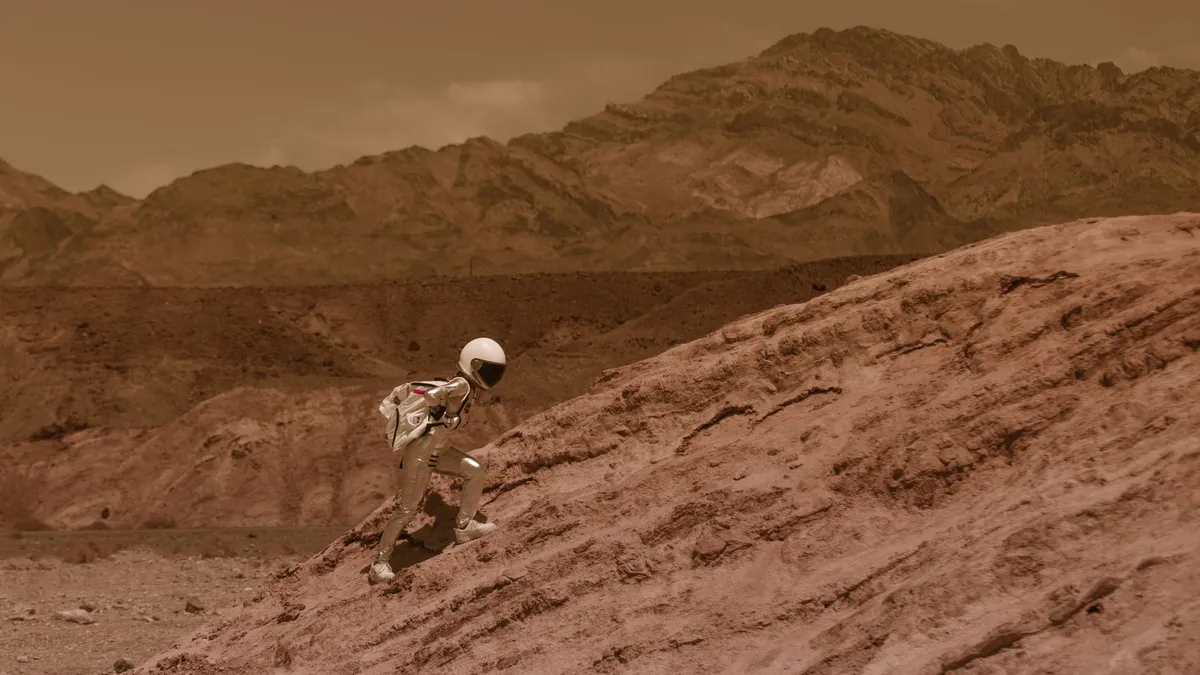
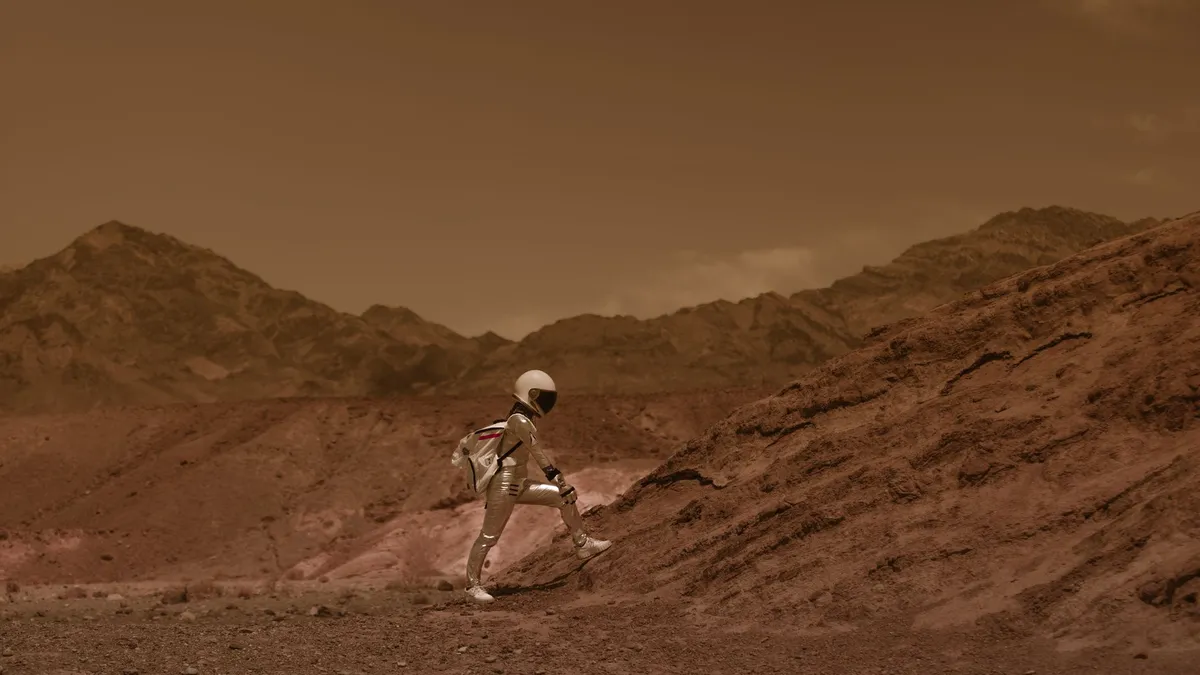
No human has yet set foot on Mars, and the first missions will prioritize survival over recreation. But history suggests that wherever humans go, they find ways to play. Antarctica has ski races. The International Space Station has zero-gravity gymnastics. Mars will have its own sports culture, shaped entirely by its environment.
- Low gravity (3.72 m/s²) enables longer jumps and slower falls
- Massive sail surfaces could make dust-wind surfing viable during regional storms
- Pressurized suits limit mobility but advances in flexible suit design are ongoing
- Storm forecasting from orbital assets like MRO would be essential for safety
The dust storms of Mars are not obstacles to ignore — they are part of the planet's identity. And if humanity's history of turning wild landscapes into playgrounds is any guide, some future Martian will look at a wall of red dust on the horizon and see not a threat, but a wave.
Frequently Asked Questions
How big do Mars dust storms get?
Martian dust storms can grow from regional events covering millions of square kilometers into planet-encircling storms that last for months. The 2018 global storm was powerful enough to end NASA's Opportunity rover mission.
How strong are Mars dust storm winds?
Winds can reach 60 to 70 miles per hour, but because the atmosphere is so thin, the actual force is far weaker than on Earth — a 60 mph Martian gust pushes about as hard as a 6 mph breeze at home.
Are Mars dust storms dangerous?
Yes. They block sunlight, threaten solar-powered equipment, and carry toxic perchlorate dust that can damage machinery and harm humans, so any surface activity during a storm would require careful monitoring and dust-sealed suits.