The Biggest Mountain in the Solar System
If you want to stand on the highest point in the solar system, you need to go to Mars. Olympus Mons, a shield volcano in the Tharsis region, rises approximately 21.9 kilometers (72,000 feet) above the Martian datum — the Martian equivalent of sea level. For comparison, Mount Everest reaches 8.85 kilometers above Earth's sea level. Olympus Mons is roughly 2.5 times taller.
But height alone doesn't capture the sheer scale of this mountain. At its base, Olympus Mons spans about 600 kilometers across — wide enough to cover the entire state of Arizona. If you were standing at the center, the outer edges would be hidden beyond the horizon. This isn't a dramatic spike of rock. It's a gently sloping giant, built up over billions of years of lava flows.
Why the Slopes Are Deceptively Gentle
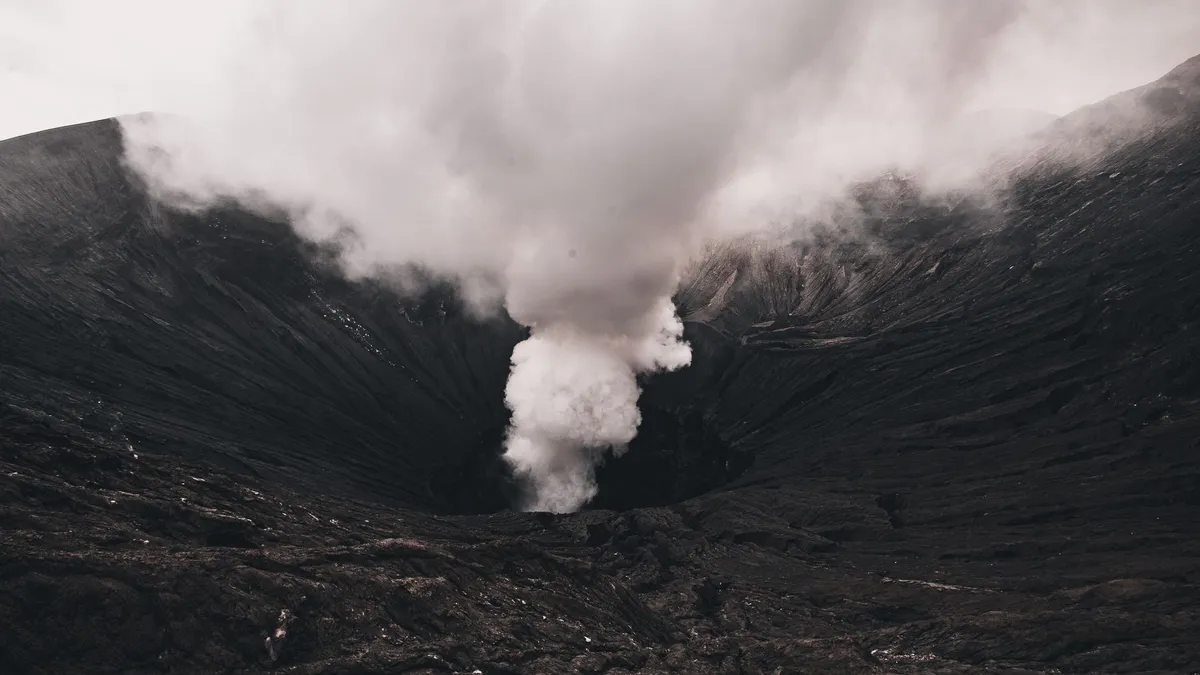
Here's the counterintuitive part: Olympus Mons is enormous but not particularly steep. The average slope angle is only about 5 degrees — less than many highway on-ramps. This is characteristic of shield volcanoes, which form from low-viscosity lava that spreads wide rather than piling high. In theory, you could drive a rover up significant portions of the flanks without fighting extreme gradients.
The real obstacles aren't the angles. They're the edges.
The Escarpment: A Wall at the Bottom
Olympus Mons is surrounded by a dramatic cliff face called the escarpment, which in places drops 8 kilometers — taller than Everest on its own. This sheer outer wall would be one of the most technically demanding climbs in the solar system before you even began the gentle 600-kilometer slog to the summit. Any serious future expedition would need to identify a breach or low point in this escarpment to establish a viable ascent route.
The Atmosphere Problem
Mars has a thin atmosphere — surface pressure averages about 0.6% of Earth's at sea level. At the summit of Olympus Mons, atmospheric pressure drops even further. Unlike on Earth, where altitude sickness is a major concern above 5,000 meters, the challenge on Mars is more fundamental: there's virtually no breathable oxygen anywhere on the planet to begin with. Future climbers would be entirely dependent on pressurized suits or habitats from the moment they landed, not just when they reached altitude.
There's an interesting wrinkle, however. Because Olympus Mons is so tall, its summit actually punches above a significant portion of the Martian atmosphere. Dust storms — which can occasionally encircle the entire planet — may not reach the upper slopes. The summit could offer relatively clear skies even when the lowlands are choked with dust.
Radiation Exposure
Mars lacks a global magnetic field and has only a thin atmospheric shield, so the surface already receives significantly more radiation than Earth. At higher elevations, that shielding decreases further. NASA's Curiosity rover measured radiation levels on the surface averaging about 0.67 millisieverts per day — already higher than typical human exposure on Earth. At the summit of Olympus Mons, estimates suggest exposure would be somewhat higher still. Any extended expedition would require serious radiation mitigation strategies, including shielded sleeping quarters and careful mission timing relative to solar activity.
What an Actual Climb Might Look Like
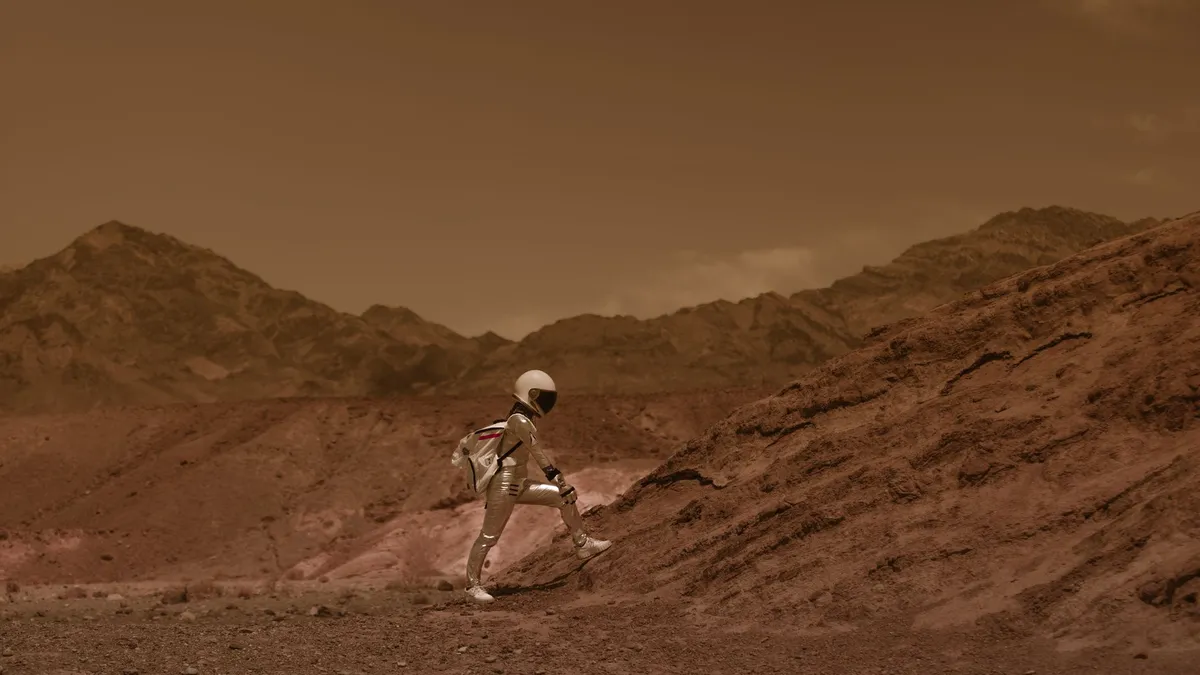
Assume for a moment that humans are on Mars with access to pressurized rovers and surface habitats. A summit attempt on Olympus Mons would likely unfold something like this:
- Phase 1 — Base camp approach: Traverse from a landing site in the Tharsis region to the base of the escarpment, approximately 100–200 kilometers depending on entry point.
- Phase 2 — Escarpment ascent: The most technically demanding section. Climbers would need ropes, anchors, and potentially rocketing equipment. This could take days.
- Phase 3 — Flank traverse: Once above the escarpment, the remaining ~600 kilometers to the caldera rim are a long, low-angle slog — more like a polar traverse than a mountain climb. Pressurized rover support would be essential.
- Phase 4 — Caldera rim: The summit caldera is roughly 80 kilometers wide and 3 kilometers deep. Standing at its edge would be one of the most extraordinary views in human history.
Why It Matters Beyond the Bragging Rights
A crewed expedition to Olympus Mons would be scientifically valuable. The volcano's lava flows span billions of years of Martian geological history. Samples from different elevations and time periods could dramatically sharpen our understanding of how Mars evolved — and whether it ever sustained conditions suitable for life. The summit region, with its unique atmospheric position and exposure history, would offer data unavailable anywhere else on the planet.
No mission has been formally proposed for a crewed Olympus Mons ascent. But as Mars exploration matures, it's not a question of whether humans will attempt it — it's a question of when they'll be ready.
Frequently Asked Questions
How tall is Olympus Mons?
Olympus Mons rises roughly 22 kilometers above the surrounding plains — about two and a half times the height of Mount Everest — making it the tallest volcano and one of the tallest mountains in the solar system.
Would climbing Olympus Mons be hard?
Technically the slopes are gentle, averaging only about 5 degrees, so it would be a very long walk rather than a vertical climb. The real challenges are the sheer distance, the surrounding cliff escarpment up to 8 kilometers high, and surviving in a pressure suit.
How long would it take to climb Olympus Mons?
Because of its enormous width — roughly 600 kilometers across — reaching the summit would be an expedition of many days or weeks on foot, far longer than any mountain ascent on Earth despite the gentle grade.