On July 20, 1976, NASA's Viking 1 lander made history by becoming the first spacecraft to successfully touch down on the surface of Mars and conduct long-term science operations. Its landing site, located within the sweeping plains of Chryse Planitia — a vast, low-lying basin in the northern hemisphere of Mars — marked humanity's first true foothold on another planet. The lander immediately began transmitting photographs, weather data, and the results of soil experiments that scientists hoped might reveal signs of microbial life, making it one of the most ambitious planetary missions ever attempted.
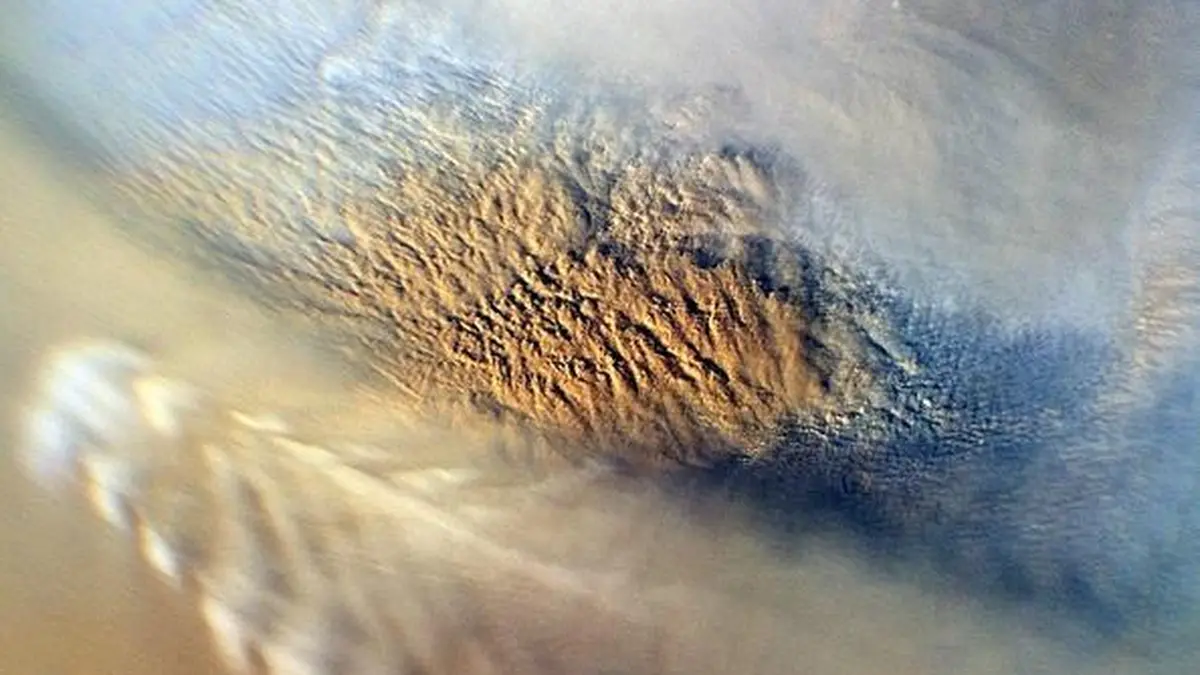
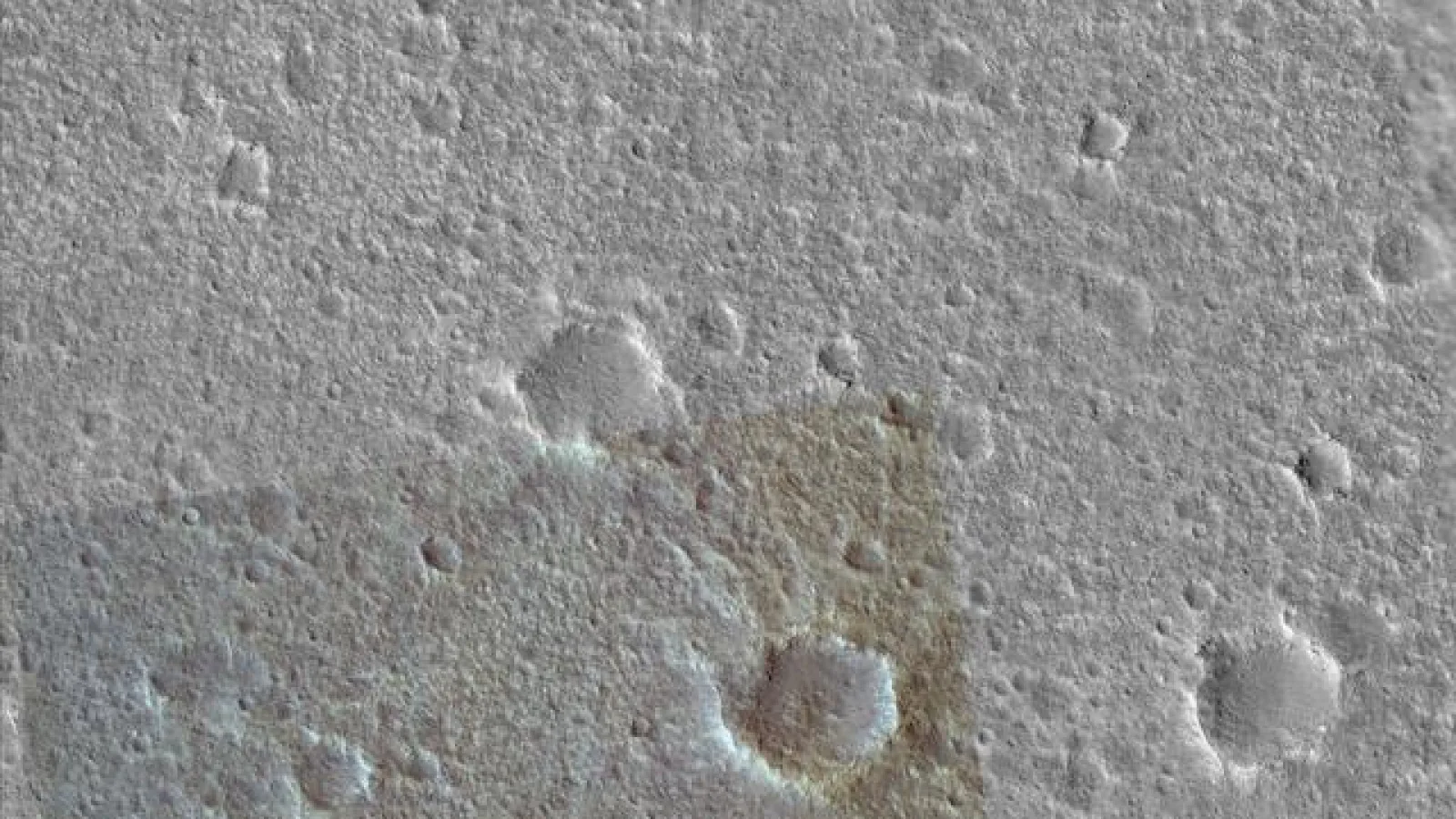
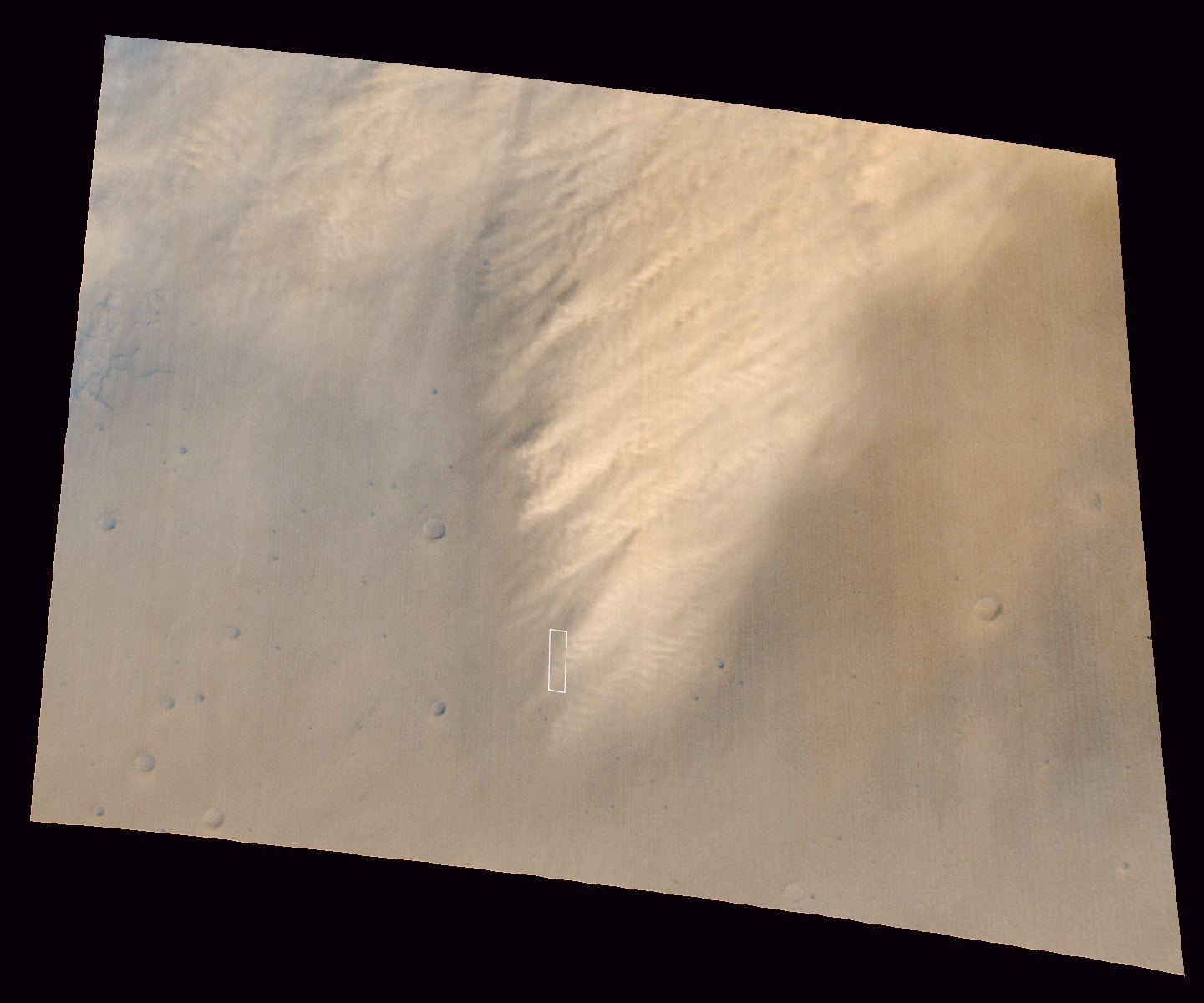
More than two decades later, NASA's Mars Global Surveyor spacecraft attempted to locate the Viking 1 lander from orbit. On April 12, 1998, the orbiter captured a wide-angle image of Chryse Planitia, with the estimated landing zone marked within a white rectangle. However, the effort was hampered by a significant dust storm sweeping through the region at the time. Light-colored plumes are clearly visible in the image, streaking toward the upper right as Martian winds drove suspended dust across the landscape. The entire region captured spans roughly 100 miles across, yet even the high-resolution narrow-field follow-up images failed to definitively pinpoint the lander due to the increased atmospheric haze obscuring surface details.
This challenge highlights one of Mars's most defining and scientifically fascinating characteristics: its dynamic and often dramatic dust activity. Martian dust storms can range from local events to planet-encircling phenomena capable of blocking sunlight for months at a time. The fine iron-oxide particles that give Mars its characteristic reddish hue are easily lofted by winds and can remain suspended in the thin atmosphere for extended periods, dramatically reducing surface visibility from orbit and posing real hazards for solar-powered spacecraft operating on the surface.
Chryse Planitia itself is scientifically significant beyond its historical role as Viking 1's landing site. The region shows clear geological evidence of ancient catastrophic flooding, with terrain carved by enormous water flows billions of years ago. Understanding these landscapes remains central to modern Mars exploration, as liquid water is considered a fundamental prerequisite for life. Viking 1 operated on the Martian surface until 1982, leaving behind a legacy that continues to inspire every mission launched toward the Red Planet today.