The Invisible Threat Beneath the Red Sky
When you picture the hazards of living on Mars, radiation and freezing temperatures probably top the list. But Mars dust — that fine, rust-colored powder coating every surface on the planet — may be one of the most persistent and underestimated threats to human health. It's not just dirt. It's a chemically toxic, electrostatically charged, microscopically sharp aerosol that would be almost impossible to avoid, and potentially lethal if managed poorly.
Perchlorates: The Chemical Threat in Every Breath
The most alarming chemical finding in Martian soil is the widespread presence of perchlorates — salts containing the ClO₄⁻ ion — detected by NASA's Phoenix lander in 2008 and later confirmed across broader regions by the Curiosity rover. Phoenix measured perchlorate concentrations in the Martian arctic soil at roughly 0.5 to 1 percent by weight. Subsequent analysis suggests similar or higher concentrations may exist across much of the planet.
That number matters enormously for human health. Perchlorates interfere with the thyroid gland's ability to absorb iodine, suppressing hormone production. The U.S. Environmental Protection Agency's reference dose for perchlorate in drinking water is 0.7 micrograms per kilogram of body weight per day — a standard set because even small chronic exposures can disrupt thyroid function. At Martian soil concentrations, even a few milligrams of ingested or inhaled dust per day would vastly exceed safe exposure limits.
Chronic perchlorate exposure is linked to hypothyroidism, disrupted metabolism, and — particularly in fetuses and young children — developmental neurological damage. For adult astronauts on a long-duration mission, repeated low-level exposure could gradually impair thyroid regulation, affecting energy, cognition, and cardiovascular health over months or years.
There's a secondary chemical hazard, too. When UV radiation hits perchlorate-rich dust, photochemical reactions can generate reactive oxygen species, including hydrogen peroxide. Laboratory simulations published in Scientific Reports in 2017 found that UV-activated Martian soil simulant killed bacteria significantly faster than either UV or perchlorates alone — evidence that Mars dust has combined toxicity mechanisms that may be worse than the sum of their parts.
Particle Size and the Respiratory Problem
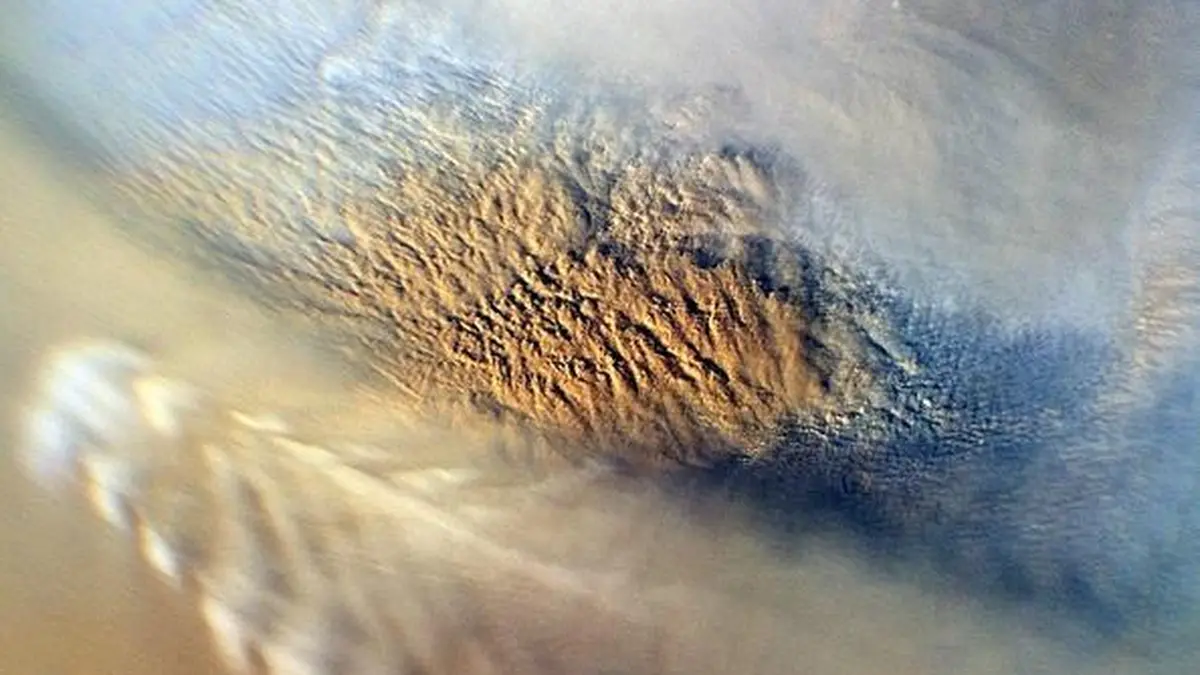
Mars dust is extraordinarily fine. Dust particles suspended in the Martian atmosphere during global storms average around 1.5 to 3 micrometers in diameter — comfortably within the range classified as PM2.5 (particles smaller than 2.5 micrometers), the size category most dangerous to human lungs. Particles this small bypass the nose and upper airway entirely, penetrate deep into the alveoli, and can remain lodged in lung tissue indefinitely.
Chronic inhalation of fine mineral silicate particles — a major component of Martian regolith — causes silicosis, a progressive and irreversible scarring of lung tissue. Mars dust also contains iron oxides, sulfates, and chloride compounds, all of which can trigger inflammatory responses in respiratory tissue. The combination of fine particle size, perchlorate chemistry, and reactive surface compounds makes Martian dust a multi-vector respiratory threat.
Electrostatic Charge: Why Dust Sticks to Everything
Mars has a thin atmosphere — about 0.6 percent of Earth's surface pressure — and extremely low humidity. These conditions allow Martian dust particles to accumulate powerful electrostatic charges through triboelectric effects (friction-based charge transfer) and UV photoionization. NASA's Curiosity rover has documented dust devils generating electric fields exceeding 4,000 volts per meter.
That electrostatic charge has serious engineering consequences. Dust clings tenaciously to suit visors, solar panels, and sensor equipment. The Mars Exploration Rovers Spirit and Opportunity lost significant power generation as dust accumulated on their solar arrays — a problem that ultimately contributed to Spirit's failure in 2010. For human suits, electrostatically charged dust doesn't just dirty the visor; it works its way into seams, joints, and airlock equipment, dramatically increasing the risk of carrying contamination inside a habitat.
Engineering Solutions: Keeping Dust Out
Airlock Dust Removal
The primary line of defense is the airlock itself. NASA and ESA engineering studies propose dedicated "dustlock" antechambers where astronauts undergo active dust removal before entering the main habitat. Proposed methods include electrostatic precipitators — devices that apply a strong electric field to attract and collect charged particles — as well as pressurized gas jets to dislodge particles from suit surfaces. Some designs incorporate ultraviolet germicidal irradiation chambers that would simultaneously deactivate any biological contaminants.
HEPA Filtration and Air Handling
Any breach of suit integrity or airlock seal could introduce dust into the habitat. High-efficiency particulate air (HEPA) filters, which capture 99.97 percent of particles 0.3 micrometers or larger, are a baseline requirement for habitat air handling systems. Engineers are also investigating electrostatic air filtration as a supplement, since it performs well against the charged ultrafine particles most likely to evade mechanical filters.
Suit Design
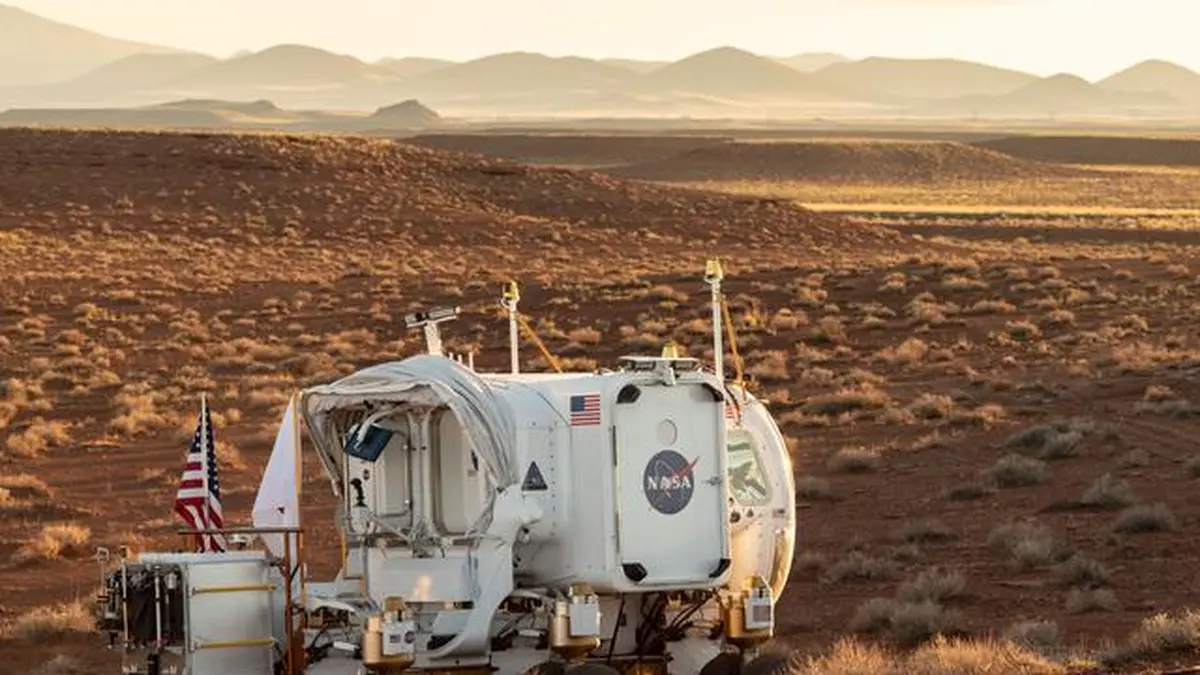
NASA's ongoing work on advanced planetary suits — including the xEMU (Exploration Extravehicular Mobility Unit) architecture — addresses dust contamination with smoother outer fabrics that reduce particle adhesion, improved joint sealing to limit ingress, and modular components that can be replaced or decontaminated without breaching the inner suit environment. Visor coatings that reduce electrostatic attraction are under active development.
The Bottom Line
Mars dust is not a background nuisance — it is an active chemical, respiratory, and engineering threat. Managing it will require layered defenses: rigorous airlock protocols, robust filtration, carefully designed suits, and strict limits on the amount of time surfaces remain unprotected outside. Getting this wrong on a multi-year mission wouldn't just be an inconvenience. Given perchlorate toxicity alone, chronic exposure could produce measurable thyroid dysfunction within months. The engineering community is taking it seriously. Future astronauts will need to as well.