Mars Gravity: The Number That Changes Everything
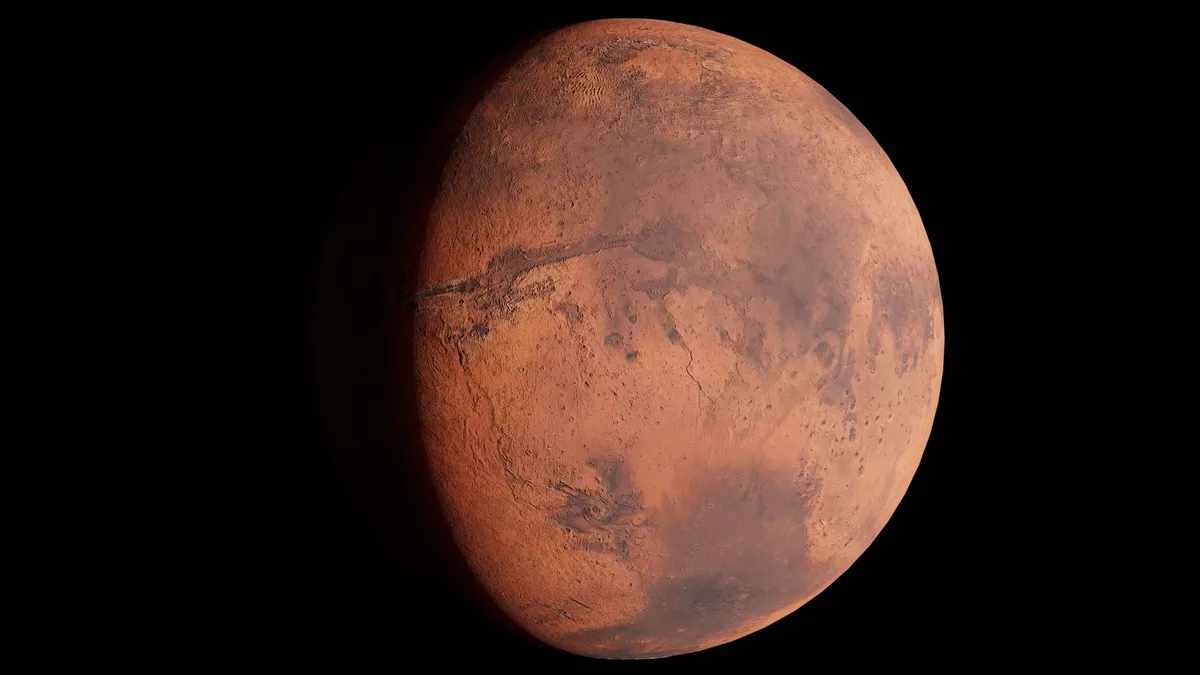
Mars has a surface gravity of 3.72 meters per second squared — roughly 38% of Earth's 9.81 m/s². That single number reshapes nearly every physical activity you can imagine, including something as familiar as shooting hoops. Before the first Martian colonists are worrying about terraforming timelines or habitat pressurization, someone is going to want to know: could you dunk?
The short answer is almost certainly yes. The more interesting answer involves orbital mechanics applied to a basketball, some surprising complications, and a few numbers that will make you want to book the next seat on a SpaceX Starship.
How High Could You Actually Jump?
A person who can jump 60 centimeters (about 24 inches) vertically on Earth — a respectable but not elite leap — would jump approximately 158 centimeters, or just over five feet, on Mars, assuming the same muscular effort. That calculation comes directly from scaling jump height inversely with gravitational acceleration: height is proportional to v²/2g, and if g drops to 38% of its Earth value, height increases by a factor of roughly 2.63.
An NBA player with a 90-centimeter vertical leap on Earth would theoretically clear about 237 centimeters — nearly 7.8 feet — on Mars. A regulation basketball rim sits at 305 centimeters (10 feet). That same player, who might barely graze the top of the backboard on Earth, would be launching well above the rim on Mars. Dunking would not be a feat reserved for the athletically gifted. It would be table stakes.
Hang Time: The Real Show
Hang time — the duration a person stays airborne — scales with the square root of the inverse of gravity. A 0.7-second hang time on Earth becomes approximately 1.13 seconds on Mars. That might not sound dramatic on paper, but in practice it looks like slow-motion video played back in real life. Players would float. Passes would arc lazily through the air. The game's entire tempo would shift.
The basketball itself would behave differently too. A standard NBA ball thrown with a chest pass at 7 meters per second would travel significantly farther before dropping to chest height. Shooting percentages developed on Earth would be useless. Every muscle memory a player has built over years of practice — the precise arc on a jump shot, the force behind a bounce pass — would need complete recalibration.
The Complications Nobody Mentions
Here's where the fantasy collides with physics. Any Mars habitat capable of hosting a basketball court would need to be pressurized to support human life, likely between 34 and 101 kilopascals depending on the atmospheric mixture chosen (NASA's research into reduced-pressure habitats suggests 34 kPa with elevated oxygen is feasible). Lower air pressure means less aerodynamic drag on the ball, making it fly even farther and making spin-based shots behave unexpectedly.
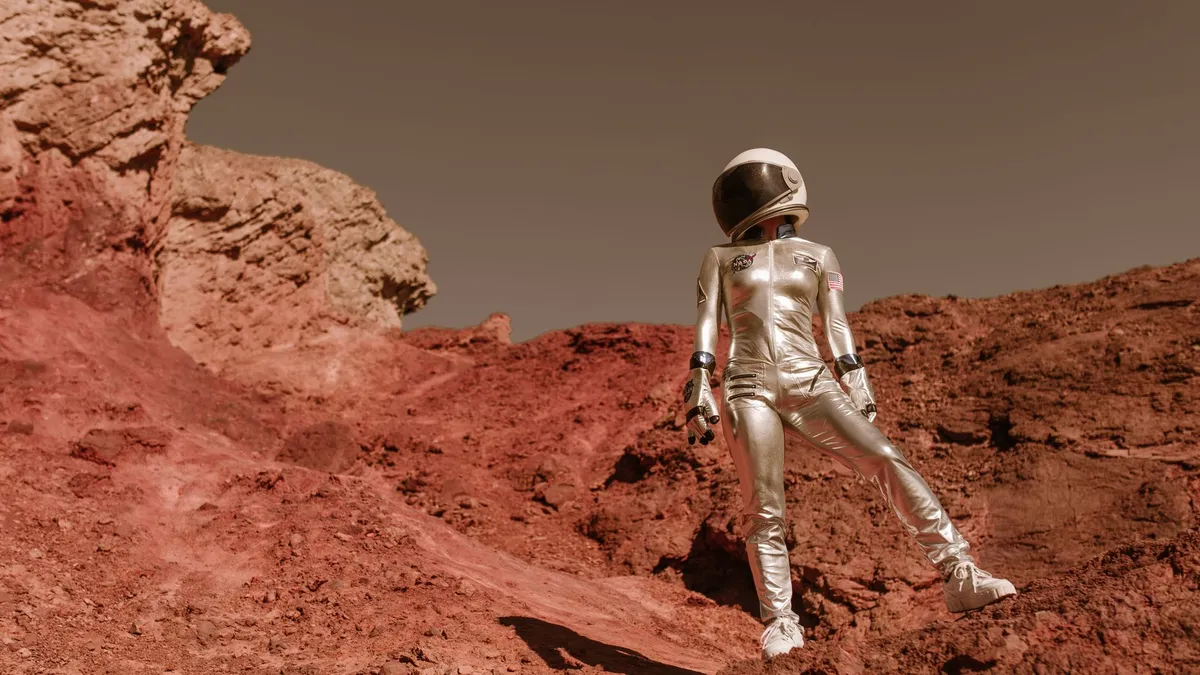
There's also the question of what you're wearing. Early colonists wouldn't be playing in sneakers — they'd be in pressurized suits, though internal habitat courts could eventually be built where shirtsleeves are possible. The suit's mass and rigidity would substantially dampen any jumping advantage. Even a lightweight intravehicular suit adds 10–15 kilograms of awkward inertia.
And then there's the floor. Traction, balance, and lateral movement all depend on gravity pressing you into the surface. With 62% less downward force, cutting sharply on a hardwood floor becomes a genuine challenge. Defensive footwork as we know it would have to be reinvented.
What This Tells Us About Life on Mars
The basketball thought experiment isn't just fun — it's a useful lens for understanding the physical reality of long-term Mars habitation. Colonists will experience chronic low-gravity effects on bone density and muscle mass, which NASA has studied extensively through the International Space Station's long-duration missions. Astronauts on the ISS lose roughly 1–2% of bone mass per month in microgravity; Mars's partial gravity would slow that process, but not eliminate it.
Exercise regimens on Mars will need to account for a body that can jump five feet but is also gradually losing the skeletal density needed to do so safely. Sports and physical play aren't just recreation — they're part of the physiological toolkit for keeping a human body functional in an alien environment.
So yes, you could probably dunk on Mars. But you'd be doing it in a pressurized room, with restructured shooting mechanics, while your bones quietly adjusted to a world that is trying, in its gentle Martian way, to make you forget what Earth felt like.
Frequently Asked Questions
Could you dunk a basketball on Mars?
Easily. At about 38% of Earth's gravity, a jump that clears a few inches on Earth would lift you roughly two and a half times higher on Mars, putting the rim within reach of almost anyone — so the game would need rebalancing.
How would basketball change on Mars?
Higher jumps, longer hang time, and slower-falling shots would transform the game. Rim height, court size, and rules would likely change to keep it challenging in low gravity.
Would the ball behave differently on Mars?
Yes. Lower gravity means longer, flatter arcs and more hang time, while the thin indoor habitat air (pressurized to be breathable) would affect bounce and shooting touch.