Not a Sol Like Any Other
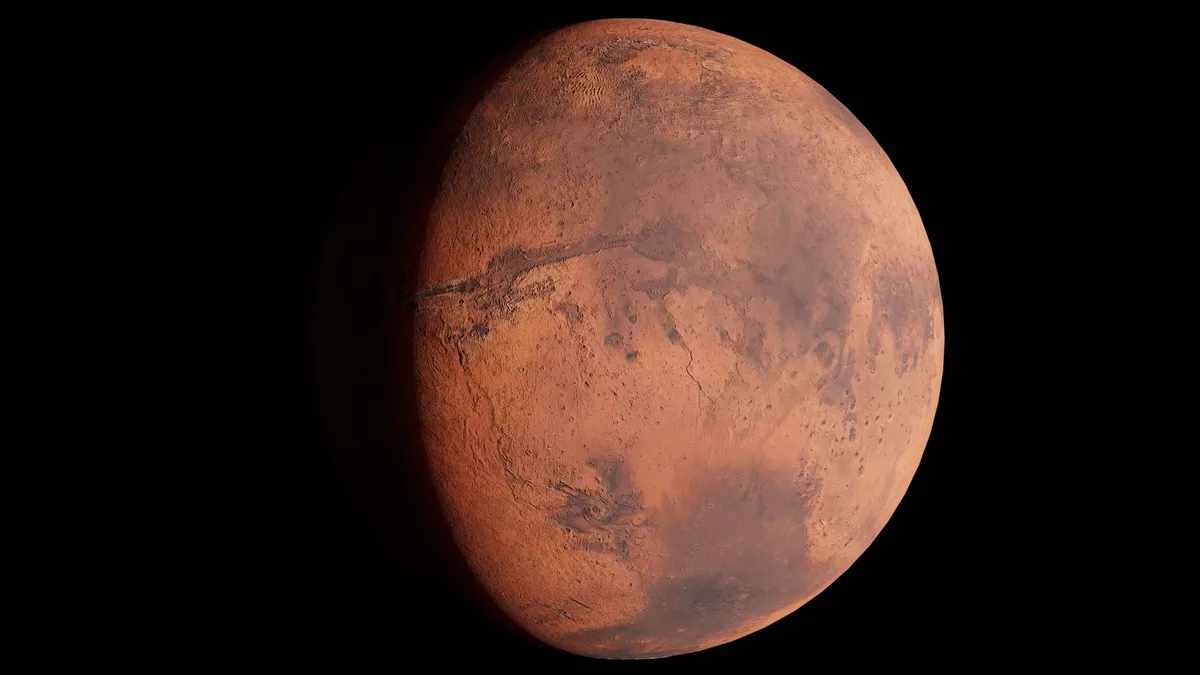
A Martian day — called a sol — lasts 24 hours and 39 minutes. That extra 39 minutes might sound trivial, but over weeks it drifts your body clock away from any Earth-based schedule. NASA researchers who operated the Curiosity and Perseverance rovers on Mars time reported significant sleep disruption after just a few weeks on sol scheduling. For a permanent colonist, this isn't a short-term inconvenience. It's the rhythm of an entirely new life.
Here's what a realistic sol might look like for an early settler at a mid-latitude habitat — say, near the Hellas Planitia rim or in the resource-rich Isidis Basin region — sometime in the late 2040s.
0600 Sol-Time: Wake-Up and Systems Check
Before coffee, before anything, the habitat speaks first. Early colony modules — based on designs like NASA's Mars Ice Home concept or the inflatable HERA analogue habitats tested in Houston — will run continuous automated diagnostics, but the morning crew check is non-negotiable. A colonist's first 20 minutes are spent reviewing overnight data: atmospheric pressure inside the hab, CO₂ scrubber efficiency, power reserves from the solar array or small fission reactor (NASA's Kilopower project demonstrated a 10-kilowatt fission system designed exactly for this role), and the status of the water reclamation loop.
Any anomaly in hull integrity or life support gets flagged immediately. This isn't drama — it's discipline. The habitat is the difference between life and a 95 psi atmosphere of mostly carbon dioxide outside.
0730: Nutrition and the Food Reality
Breakfast is functional before it is enjoyable. Early missions will rely heavily on pre-packaged, calorie-dense provisions similar to those used on the ISS, where astronauts consume roughly 2,000–3,000 calories per day from shelf-stable foods. Over time, greenhouse-grown food supplements this — we'll get to that — but in the early years, variety is limited and meals are engineered around nutritional completeness rather than pleasure.
Vitamin D supplementation is mandatory. Mars receives roughly 43% of the solar energy that Earth does, and colonists spend most of their time indoors. Bone density loss is a serious concern: ISS astronauts lose approximately 1–2% of bone mass per month without aggressive countermeasures.
0900: EVA Preparation
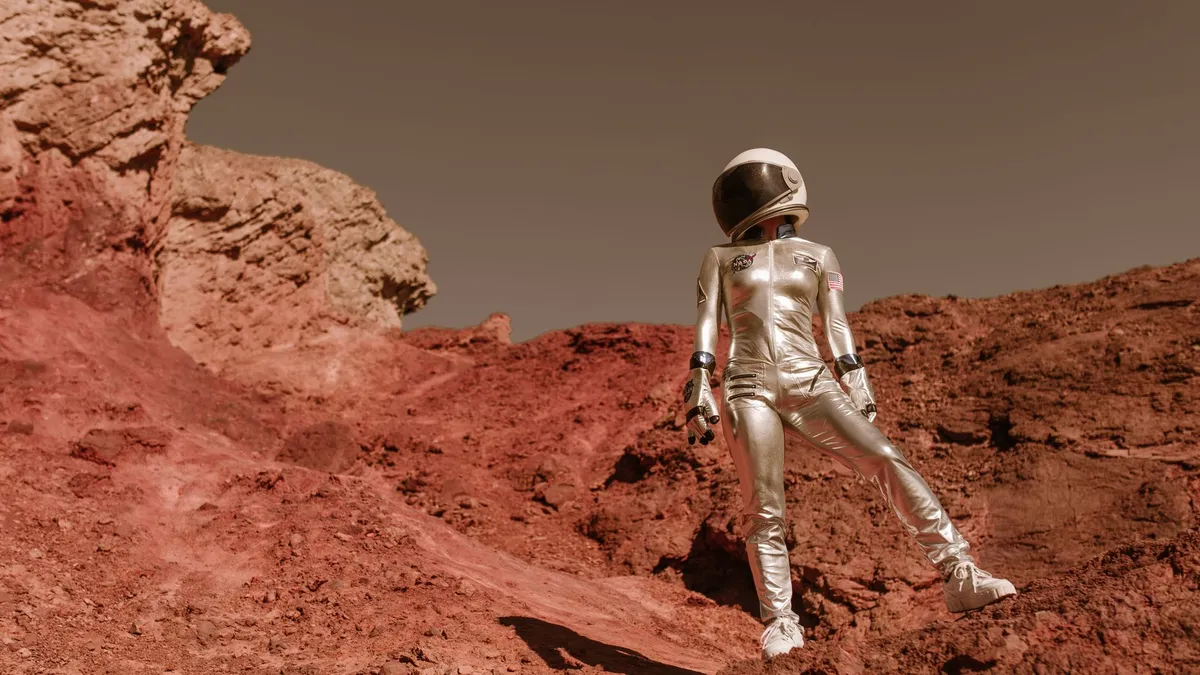
Not every sol involves going outside, but when it does, preparation consumes nearly two hours. A Mars surface suit — likely an evolution of the xEMU suit NASA developed for the Artemis program — must be pressure-checked, CO₂ cartridges verified, and communication systems tested. The buddy system is absolute: no solo EVAs. Two colonists suit up together, run through a checklist that mirrors Apollo-era discipline, and confirm their excursion plan with the habitat's remaining crew.
Dust is the persistent enemy. Martian regolith particles are fine, oxidizing, and potentially toxic with prolonged exposure. Every EVA ends with a decontamination airlock pass and suit inspection. Engineers at NASA's Johnson Space Center have studied perchlorates — reactive chemical compounds found throughout Martian soil — as a serious health hazard requiring careful mitigation in suit and habitat design.
1000–1400: Surface Work
Outside, the sky is a pale butterscotch. Surface work might involve deploying solar panel arrays, maintaining the MOXIE-derived oxygen production system (NASA's MOXIE instrument on Perseverance successfully produced oxygen from Mars's CO₂ atmosphere in 2021, a proof of concept for life support-scale systems), or conducting geological surveys to locate subsurface water ice. Temperatures at mid-latitudes swing dramatically — from around -20°C at midday to -73°C at night — so EVAs are timed to the warmest part of the sol.
Physical exertion in a pressurized suit is exhausting. Studies from Antarctic analog missions and ISS operations consistently show that complex manual tasks in constrained conditions take two to three times longer than they would in a shirt-sleeve environment.
1500: Greenhouse Tending
The colony greenhouse is equal parts food source, psychological anchor, and oxygen supplement. Based on concepts developed through NASA's Advanced Plant Habitat — used aboard the ISS to grow radishes, lettuce, and wheat — a Mars greenhouse would use LED grow lighting tuned to plant-optimal wavelengths, hydroponic or aeroponic systems to conserve water, and carefully monitored nutrient cycles. A colonist might spend 45 minutes checking plant health, adjusting nutrient solution pH, and harvesting anything ready to eat. Fresh food isn't just nutrition — research from Antarctic overwinter stations consistently shows it has a measurable positive effect on crew morale.
1700: Exercise — Not Optional
Two hours of structured exercise per sol is not a lifestyle choice. It is a medical requirement. Resistance training and aerobic work, using equipment like the ARED (Advanced Resistive Exercise Device) proven on the ISS, are necessary to combat muscle atrophy and bone loss in reduced gravity. Mars's gravitational pull is 38% of Earth's — enough to reduce the load on bones and muscles significantly over months and years.
1930: The Communication Window
Depending on orbital geometry, the one-way communication delay between Mars and Earth ranges from about 3 minutes to over 22 minutes. There are no real-time conversations. Messages are composed, sent, and answered across gaps of 6 to 44 minutes round-trip. Mission control sends daily digests; colonists respond in kind. It is, by necessity, a more deliberate and self-reliant existence. Psychologists studying long-duration isolation — including the HI-SEAS Mars analog missions in Hawaii — identify communication lag as one of the most psychologically challenging aspects of deep space living.
2100: Wind Down and the Longest Night
Lights dim on a programmed schedule to support circadian rhythm management — a practice already used on the ISS. Colonists may read, pursue personal projects, or decompress through whatever entertainment was uploaded before departure. Sleep itself takes place in small private quarters designed around acoustic isolation and temperature control, both identified as critical for sleep quality in NASA's human factors research.
The sol ends 39 minutes later than yesterday's equivalent on Earth. Over a 500-sol mission, that accumulated drift adds up to more than 13 hours of biological displacement. Managing it is not a minor detail. On Mars, it is part of the job.