For a few decades around the turn of the twentieth century, millions of people believed Mars was home to a dying civilization of intelligent beings who had crisscrossed their drying world with a vast network of canals. That belief was wrong in nearly every detail. But it captured the public imagination as few scientific ideas ever have, and the man most responsible for it was a wealthy Bostonian named Percival Lowell.
The Canals That Weren't There
The story began with a mistranslation. In the 1870s the Italian astronomer Giovanni Schiaparelli mapped faint linear features on Mars and called them canali — Italian for "channels," a neutral, natural-sounding word. In English it became "canals," a word that implies deliberate construction. That single mistranslated syllable helped launch decades of speculation about Martian engineers.
Percival Lowell seized on the idea with the zeal of a convert. He built a private observatory in the clear high-altitude air of Arizona, specifically to study Mars, and spent years peering at the planet and sketching what he saw. He recorded an elaborate, geometric web of straight lines spanning the Martian globe, and he interpreted them boldly: these were canals, he argued, built by an intelligent race to carry water from the polar ice caps to their parched equatorial cities. He laid out this vision in popular books that sold widely and lodged the idea of a living, engineered Mars deep in the public mind.
How the Mind Fooled the Eye
The trouble was that the canals did not exist. Other astronomers, using equally good or better instruments, often could not see them at all. What Lowell had recorded was a product of the human visual system straining at the very edge of what his telescope could resolve. When the eye is presented with scattered, indistinct dots and smudges at the limit of perception, the brain tends to connect them into lines and patterns that are not really there. Lowell, convinced of what he expected to find, saw a network of straight canals in what was actually random, disconnected detail.
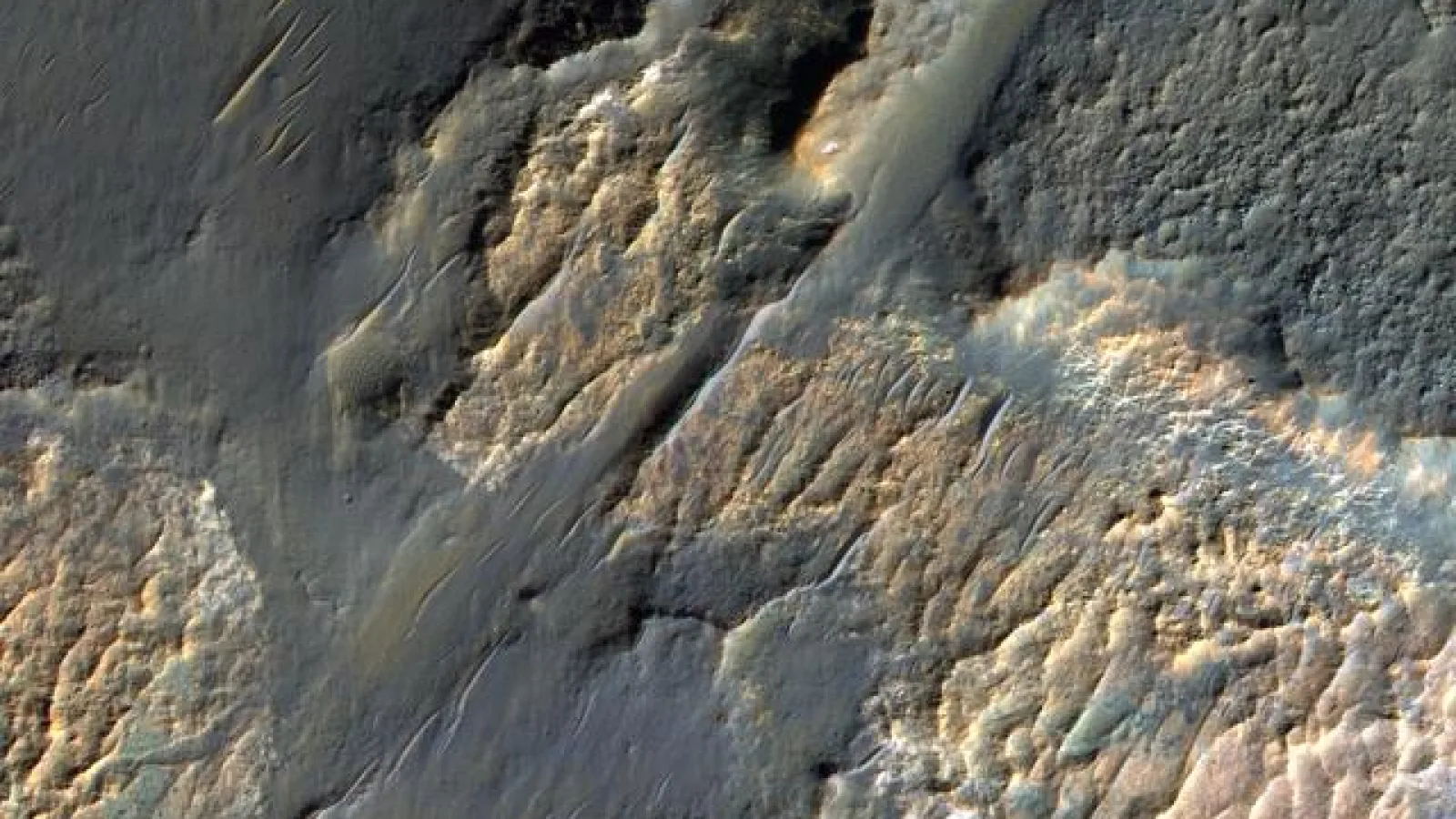
As telescopes improved and, decades later, as the first spacecraft flew past Mars and sent back close-up photographs, the canals vanished for good. The images revealed a cratered, dry, and lifeless-looking surface — no canals, no cities, no dying civilization.
A Productive Mistake
It would be easy to dismiss Lowell as simply wrong, but his error was strangely productive. His vivid vision of an inhabited Mars inspired a generation of writers and dreamers and helped seed more than a century of Mars fiction. The idea of Mars as a place with inhabitants, a history, and a story of its own — an idea that still drives our fascination with the planet — owes a real debt to Lowell's canals, even though they were never there.
His observatory, too, outlived his mistake and went on to make genuine contributions to astronomy. Lowell is a reminder that in science even a spectacular wrong answer, honestly pursued, can push a field forward — and that the desire to find life on Mars is far older than any rover.
Frequently Asked Questions
Who was Percival Lowell?
Percival Lowell was a wealthy American astronomer who, around the turn of the twentieth century, popularized the idea that Mars was covered in artificial canals built by an intelligent civilization. He founded Lowell Observatory in Arizona to study the planet.
Were there really canals on Mars?
No. The "canals" originated from a mistranslation of the Italian word canali (channels) and from optical illusions at the limit of telescope resolution. Spacecraft later confirmed no such structures exist.
Why do Lowell's canals still matter?
Although scientifically wrong, Lowell's vision of an inhabited Mars inspired more than a century of science fiction and helped shape the lasting public fascination with the possibility of life on the Red Planet.