Two Visions of the Red Planet
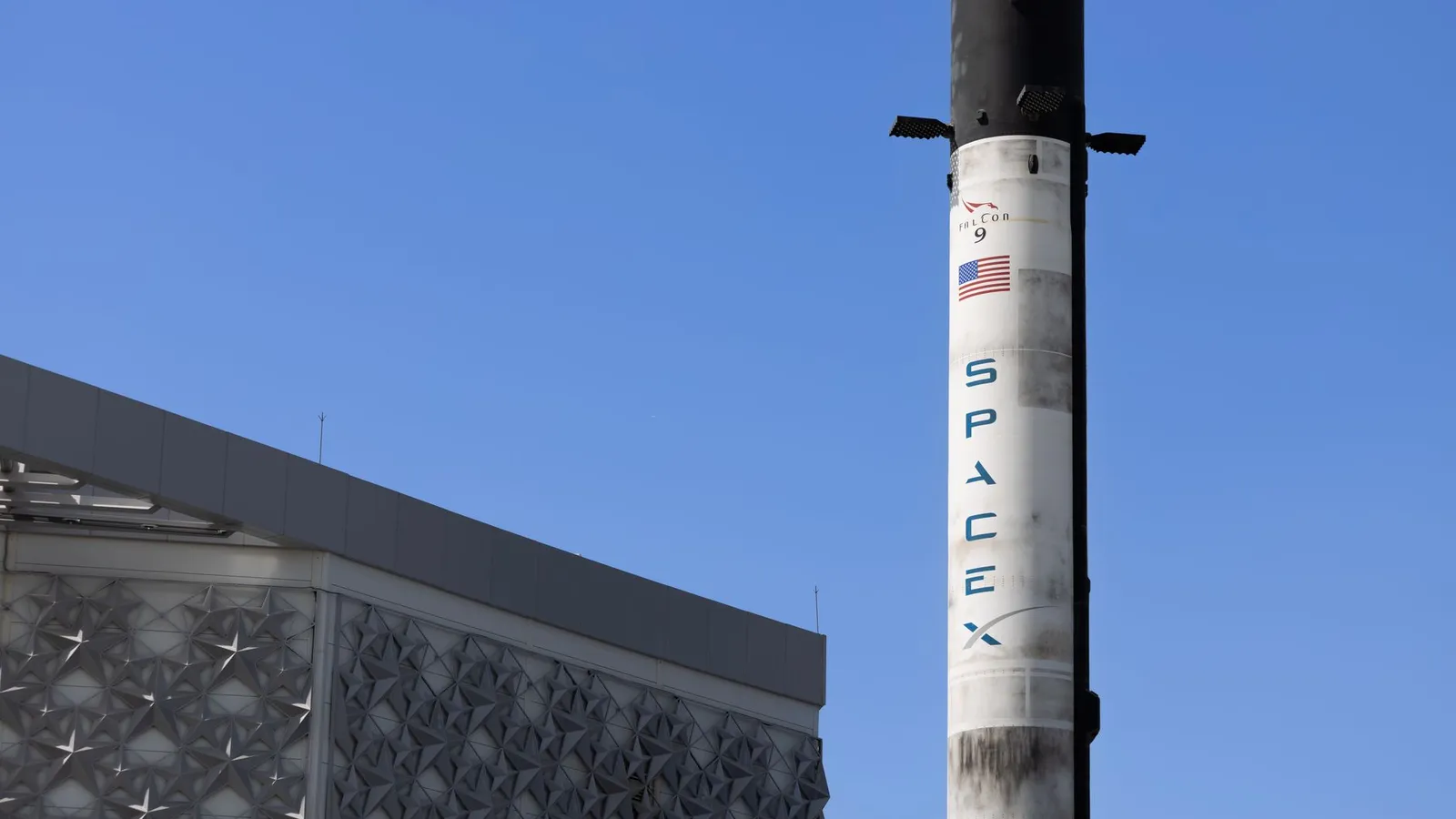
When people argue about Mars, they often end up arguing about Elon Musk or Kim Stanley Robinson — rarely both at once. Musk is the SpaceX founder who has made a crewed Mars landing the stated organizing mission of his aerospace company, targeting early human missions sometime in the 2030s with the Starship launch system. Robinson is the Hugo Award-winning science fiction author whose Mars Trilogy — Red Mars (1992), Green Mars (1993), and Blue Mars (1996) — remains the most scientifically serious and philosophically rich fiction ever written about human settlement of another world.
They are, on the surface, an odd pair to compare. One builds rockets; the other builds sentences. One is a billionaire CEO; the other is an avowed critic of capitalism's role in space exploration. And yet if you read Robinson carefully and follow Musk's public statements closely, the overlap is more substantial than their mutual fans might expect — and the disagreements are sharper and more instructive than the obvious ones.
Where They Actually Agree
Mars Is the Right Destination
Both men believe Mars is the most important target for human expansion beyond Earth — not the Moon as a permanent settlement, not orbital habitats, not Venus. Musk has been explicit: SpaceX's long-term purpose, as he has stated publicly for over a decade, is to make humanity multiplanetary, with Mars as the primary site. Robinson's trilogy implicitly endorses the same priority. His fictional colonists arrive on Mars in 2027 aboard a ship called the Ares, and over three novels spanning two centuries, the planet becomes the canvas for the entire human future.
The Timeline Is Long
Neither envisions Mars colonization as a quick project. Musk has repeatedly revised his timelines — early predictions of humans on Mars by 2024 have shifted to the late 2020s or early 2030s for initial crewed landings, with a self-sustaining city being a multigenerational goal requiring perhaps a million people and decades of effort. Robinson's trilogy unfolds across roughly 200 years. The message from both: if you're expecting a destination, you're thinking about this wrong. Mars is a process.
The Engineering Challenges Are Genuinely Hard
Musk's Starship development program — featuring full-stack test flights from Boca Chica, Texas, with Integrated Flight Test 4 in June 2024 achieving successful splashdowns of both the Super Heavy booster and the Starship upper stage — reflects a brutal awareness of the engineering distance between Earth and Mars. Robinson's novels are packed with technically grounded problem-solving: perchlorate-contaminated soil, radiation exposure during the roughly seven-month transit, the challenge of building pressurized habitats at 0.6% of Earth's atmospheric pressure at the surface. Both take the difficulty seriously.
Where They Fundamentally Disagree
Who Gets to Go — and Who Decides
This is the deepest fault line. Musk's model is explicitly corporate and market-driven. SpaceX is a private company, and his vision for Mars involves selling tickets, building a self-financing colony, and leveraging commercial incentives to drive expansion. Robinson has been a consistent and pointed critic of this approach. In interviews and in his 2020 novel The Ministry for the Future, he has argued that leaving Mars development to private capital risks replicating the worst dynamics of colonial exploitation. His fictional Mars is eventually governed by a decentralized democratic council — not by a company or a single nation-state.
Terraforming: Moral Imperative or Moral Catastrophe?
Robinson's trilogy is structured around this exact argument. The character Sax Russell represents the terraforming faction: Mars should be made habitable, its atmosphere thickened, its surface warmed, because a living world serves life better than a dead one. Ann Clayborne represents the opposing view: Mars has its own geological and possibly biological history worthy of preservation, and terraforming is a form of destruction. Robinson doesn't fully resolve this debate — he presents it as genuinely hard. Musk, by contrast, has publicly embraced terraforming with enthusiasm, once suggesting detonating nuclear devices over Mars's poles to release CO₂ and warm the planet. Scientists have largely pushed back on this specific proposal; a 2018 NASA-funded study concluded that the available CO₂ in Mars's crust and polar caps is insufficient to produce a breathable atmosphere even if fully released.
Speed Versus Deliberation
Perhaps most fundamentally, Musk optimizes for speed. Move fast, iterate, accept losses, get there. Robinson's novels are a case for slowness — for understanding a place before you change it, for building institutions before you build cities. It's a tension that will matter enormously when humans actually arrive.
Why Both Matter
You don't have to choose between them. The most useful frame might be this: Musk's urgency may be what gets humanity to Mars; Robinson's caution may be what determines whether anything good happens once we arrive. Read the trilogy before you book the ticket.
Frequently Asked Questions
What do Elon Musk and Kim Stanley Robinson agree on about Mars?
Both regard Mars as the primary destination for human expansion, both treat colonization as a long, multi-decade process rather than a quick trip, and both take the engineering difficulty of getting there and surviving very seriously.
Where do Musk and Robinson disagree about Mars?
Their sharpest split is over who controls settlement — Musk favors a private, market-driven model, while Robinson has publicly criticized leaving Mars to private capital and imagines democratic governance instead. They also differ on terraforming and on prioritizing speed versus deliberation.
Has Elon Musk proposed terraforming Mars?
He has publicly expressed enthusiasm for terraforming, including a suggestion to warm the poles to release carbon dioxide. Scientists have largely pushed back, noting studies that find insufficient accessible CO₂ on Mars for a breathable atmosphere.