The Workforce Behind the Red Planet
Getting humans to Mars isn't a single moonshot moment — it's decades of coordinated work by thousands of specialists across dozens of disciplines. NASA's Moon to Mars architecture, SpaceX's Starship development program, and ESA's long-range exploration planning all depend on a workforce that doesn't fully exist yet. These are the careers that will build it.
1. Aerospace Engineer
What they do: Aerospace engineers design, test, and refine the vehicles that travel through space. For Mars, that means propulsion systems capable of a 7-month transit, heat shields rated for atmospheric entry at roughly 5.4 km/s, and structures that can land on a planet with 38% of Earth's gravity.
Why Mars needs them: Every mission architecture — from NASA's Space Launch System to SpaceX's Stainless Steel Starship — requires continuous engineering iteration. The entry, descent, and landing problem for crewed Mars missions remains one of the hardest unsolved challenges in spaceflight.
How to get there: A bachelor's degree in aerospace, mechanical, or electrical engineering is the entry point. NASA and major contractors like Lockheed Martin, Boeing, and SpaceX recruit heavily from ABET-accredited programs. Internships at NASA centers — particularly JPL, Johnson Space Center, and Langley — are highly competitive and often lead to full-time roles.
2. Astrobiologist
What they do: Astrobiologists study the origin, evolution, and potential distribution of life in the universe. On Mars, they analyze data from missions like Perseverance — which has been caching rock samples in Jezero Crater since 2021 — to determine whether the planet ever harbored microbial life.
Why Mars needs them: Before humans arrive, we need to understand whether Mars biology (past or present) exists and what protocols are required to avoid contaminating potential biosignatures. Once crews land, astrobiologists will guide sample collection strategies.
How to get there: Astrobiologists typically hold PhDs in biology, chemistry, geology, or planetary science, often combined. NASA's Astrobiology Program funds research at universities across the U.S. The NASA Astrobiology Institute and affiliated research groups are primary pipelines into the field.
3. Space Medicine Physician
What they do: Space medicine physicians monitor and protect crew health during missions. A crewed Mars mission lasting approximately 30 months round-trip — including surface time — presents medical challenges that Earth-based healthcare cannot address in real time due to communication delays of up to 24 minutes each way.
Why Mars needs them: Astronauts face bone density loss, muscle atrophy, radiation exposure, vision impairment from intracranial pressure changes, and psychological stress. A Mars crew will need an onboard physician capable of autonomous diagnosis and treatment with no possibility of emergency evacuation.
How to get there: An MD or DO degree, followed by residency in emergency medicine, surgery, or internal medicine, provides the foundation. NASA's Flight Surgeon program accepts physicians who then complete aerospace medicine training. The University of Texas Medical Branch at Galveston runs a dedicated Space Medicine Fellowship program.
4. Robotics Engineer
What they do: Robotics engineers design autonomous and semi-autonomous systems for planetary exploration and construction. Mars rovers — Curiosity and Perseverance among them — have demonstrated what robotic systems can achieve. Future missions will require robots that can build habitats and prepare landing sites before humans arrive.
Why Mars needs them: Pre-positioning resources on Mars using robotic systems is a core element of most crewed mission architectures. NASA's MOXIE experiment aboard Perseverance, which produced oxygen from Martian CO₂ in 2021, was operated remotely — a preview of the autonomous systems that will support a crewed base.
How to get there: Degrees in robotics, mechanical engineering, computer science, or electrical engineering are all viable entry points. Strong programming skills in ROS (Robot Operating System), Python, and C++ are increasingly essential. JPL in Pasadena is the world's leading center for planetary robotics.
5. Planetary Geologist
What they do: Planetary geologists study the surface, subsurface, and geological history of other worlds. On Mars, they identify sites with accessible water ice, evaluate terrain stability for landing and construction, and interpret the rock record for signs of past habitability.
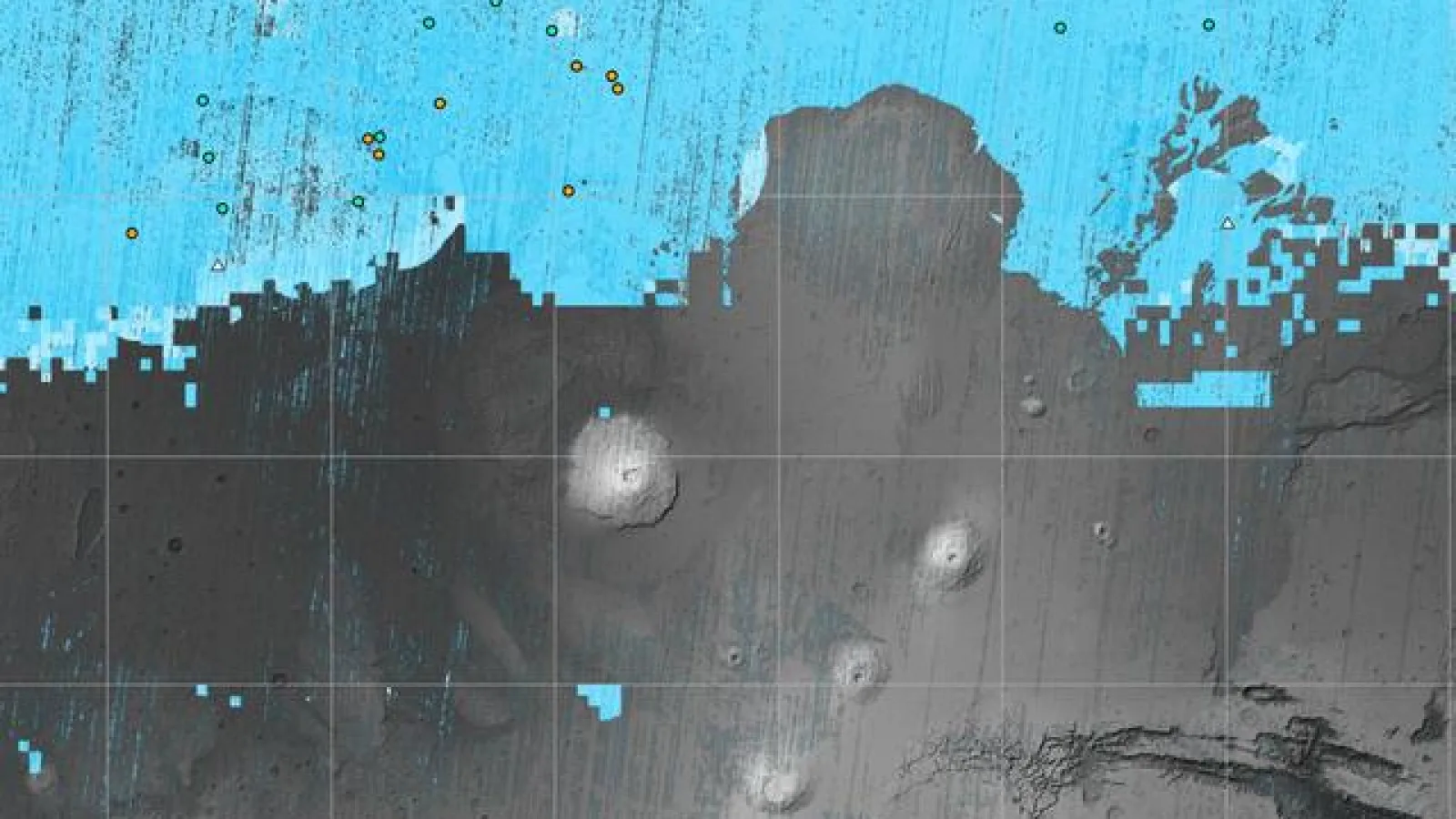
Why Mars needs them: Selecting safe and resource-rich landing sites is critical to mission survival. Data from SHARAD (the radar sounder on Mars Reconnaissance Orbiter) has already mapped subsurface ice deposits that could be used for water and rocket propellant production.
How to get there: A geology or earth science degree with coursework in remote sensing and geochemistry is the foundation. Graduate research focused on planetary surfaces, particularly using datasets from Mars Reconnaissance Orbiter or MAVEN, positions candidates well for roles at NASA, USGS Astrogeology Science Center, or universities.
6. Life Support Engineer
What they do: Life support engineers design and maintain Environmental Control and Life Support Systems (ECLSS) — the technology that manages air, water, temperature, and pressure inside crewed spacecraft and habitats. The ISS ECLSS recovers approximately 93% of crew water from humidity and urine, a benchmark that Mars systems will need to meet or exceed.
Why Mars needs them: Unlike ISS, a Mars habitat cannot receive regular resupply missions. Every system must function reliably for years with onboard repair capability. Engineers must design for redundancy, repairability, and resource closure in ways that current spacecraft don't require.
How to get there: Chemical, mechanical, or environmental engineering degrees are the most direct routes. Systems engineering experience is highly valued. Johnson Space Center houses NASA's primary life support engineering teams and is the key recruiting hub for this specialty.
7. Space Psychologist
What they do: Space psychologists assess crew mental health, design team selection protocols, develop countermeasures for isolation and confinement, and support crews during long-duration missions. NASA's Human Research Program has identified behavioral health as one of the top risks in its Mars mission research portfolio.
Why Mars needs them: A Mars crew will spend months in a confined spacecraft, then years on a hostile planet, with no possibility of emergency return and communication delays that make real-time psychological support from Earth impossible. Research from Antarctic overwinter stations and submarine deployments informs, but doesn't fully replicate, this challenge.
How to get there: A PhD in clinical, experimental, or organizational psychology with a focus on human factors or aerospace applications is typical. The Human Research Program at JSC and university partners conduct funded research in this area. NASA also employs psychologists in astronaut selection and in-mission support roles.
8. Agricultural Scientist
What they do: Agricultural scientists working on space food systems develop methods for growing crops in controlled environments with limited water, artificial lighting, and non-Earth soil analogs. NASA's VEGGIE system on the ISS has successfully grown lettuce, radishes, and other crops since 2014.
Why Mars needs them: A crewed Mars mission cannot carry all food for a 30-month expedition. Partial food production on the Martian surface — using regolith, recycled water, and LED-lit growth chambers — would reduce resupply mass and improve crew psychological wellbeing. Longer-term settlement depends on developing a full food production system.
How to get there: Degrees in plant biology, horticulture, soil science, or controlled environment agriculture provide the scientific foundation. Research experience in hydroponics, aeroponics, or bioregenerative life support systems is directly applicable. The Kennedy Space Center's Space Crop Production group is a key entry point.
9. Communications Engineer
What they do: Communications engineers design the systems that transmit data, voice, and video between Mars and Earth. The Mars Relay Network — currently using orbiters including MRO, MAVEN, and TRACE GAS Orbiter — relays data from surface assets. A crewed mission requires orders-of-magnitude higher bandwidth with greater reliability.
Why Mars needs them: With a maximum Earth-Mars distance of approximately 401 million kilometers, real-time communication is physically impossible. Engineers are developing delay-tolerant networking protocols and high-gain antenna systems designed for deep space links. NASA's Deep Space Network, operated from Goldstone, Madrid, and Canberra, will need significant expansion to support crewed Mars operations.
How to get there: Electrical engineering or computer science degrees with specialization in RF systems, signal processing, or network protocols are the core pathways. JPL and NASA's Glenn Research Center are the primary centers for deep space communications research and development.
10. Mission Controller
What they do: Mission controllers monitor all aspects of a spacecraft's health and crew activities from ground-based facilities. Flight controllers at Johnson Space Center's Mission Control manage ISS operations around the clock in rotating shifts, tracking power systems, trajectory, life support, and crew schedules simultaneously.
Why Mars needs them: While communication delays mean Mars crews will operate with significant autonomy, ground teams will still manage long-range planning, systems analysis, and emergency procedures. Mission controllers will interpret data, coordinate across engineering teams, and serve as the primary interface between Earth and the crew.
How to get there: NASA hires flight controllers from engineering backgrounds — typically aerospace, electrical, or systems engineering. The path typically runs through contractor roles or NASA co-op programs, followed by years of training in specific systems disciplines before certification as a flight controller.
Building the Mars Generation
None of these careers exists in isolation. The people who land humans on Mars will work at the intersection of multiple disciplines, building systems and solving problems that don't yet have textbook answers. The workforce pipeline starts now — in university labs, at NASA internships, in startup engineering teams, and in research programs designing technologies that won't fly for another decade. The question isn't whether these jobs will exist. It's whether you'll be ready when they do.